Category: Uncategorized

  • Jim Crow laws 

    Jim Crow laws 

    This article is written by Pranav Sethi studying at NMIMS School of Law, Navi Mumbai. This article elaborates on Jim Crow laws dealing with racial segregation and discrimination faced by Black people in opportunities and public places.

    It has been published by Rachit Garg.

    Introduction 

    “I have a dream that my four little children will one day live in a nation where they will not be judged by the color of their skin, but by the content of their character.” – Martin Luther King, Jr.

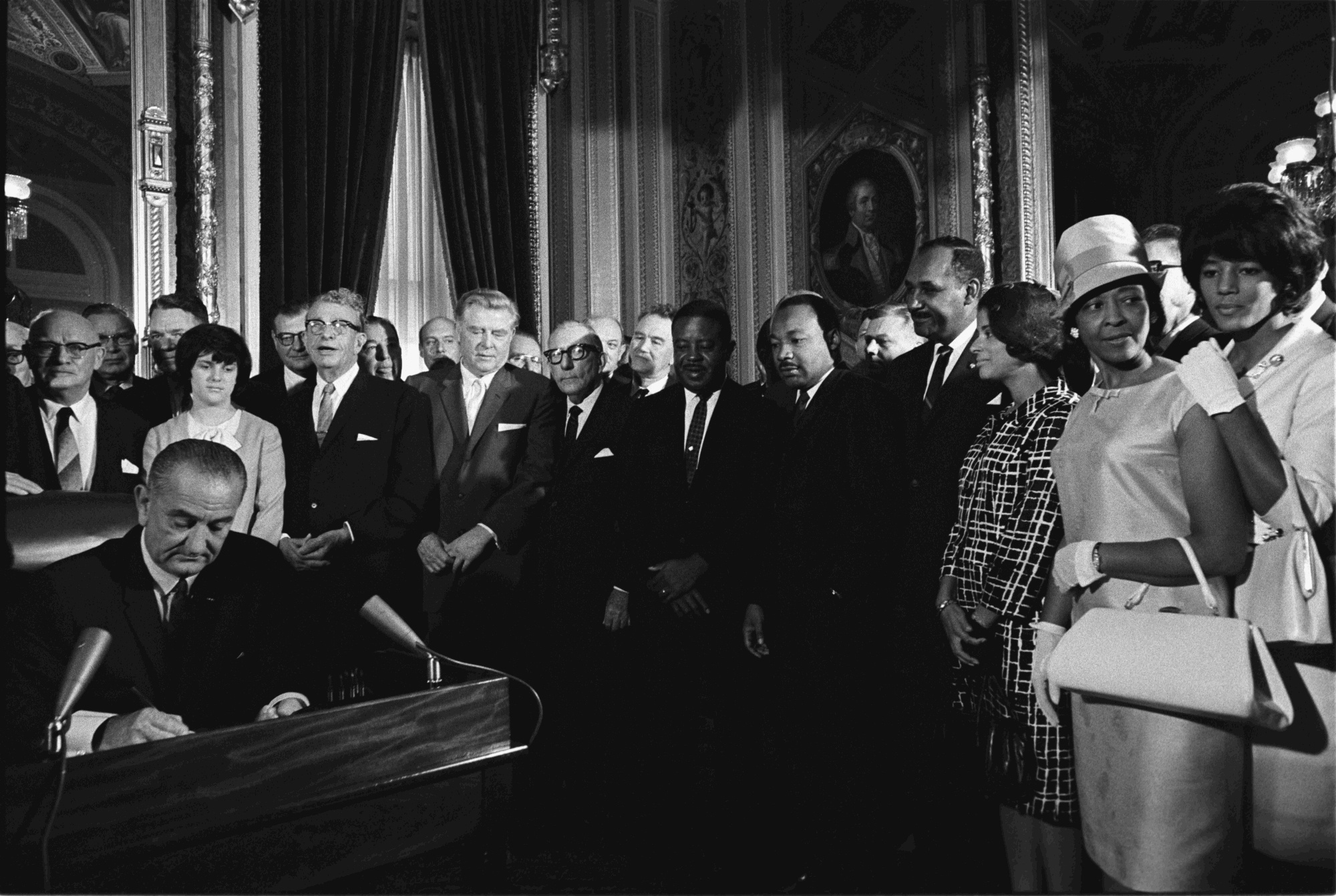
    Jim Crow laws divided Americans over race in 26 states from 1881 till 1964. The legislation established legally recognized separation, or the legislative segregation of Americans based on race. People throughout many American regions, cities, and states, both north and south, remained in divided neighborhoods and joined either all-White or all-Black schools. In Jim Crow states, legal segregation was justified by the “majesty of the law.” The “rule of law” imposed punitive measures and penalties on anyone who disobeyed segregation laws and enactments.

    The main prevalent Jim Crow laws made it unlawful for anybody to marry a person of a different race. It even required business owners to divide their customers based on skin color and safeguarded their right to refuse service to someone based on race. The Confederate States of America was formed when 11 states broke away from the Union in 1861, and these states followed Jim Crow laws. After they left the union, the Confederate states had only one objective in mind: the protection of slavery and White supremacy. Abraham Lincoln fought to keep the Union together and to abolish slavery. 

    Just after the Civil War, the Thirteenth Amendment was incorporated into the Constitution which effectively ended slavery in the United States. It had a minimal implication on the mindsets and beliefs that were used to justify and maintain the view that keeping other people as slaves and limiting individuals’ autonomy and any understanding of equality was acceptable. The Jim Crow laws sought to deprive autonomy and equality to the oppressed African Americans. The struggle against Jim Crow separation and for complete constitutional protections for all Americans started in the courts, then it shifted to the city and finally to Congress. 

    Origin of Jim Crow laws

    The word “Jim Crow” refers to a set of laws and regulations issued by Southern states and municipal authorities between 1877 and 1965 that legalized segregation (physical separation of people centred on race, gender, religion, or class). It also refers to the approach to life in the South in which Whites and Blacks survived in 2 massively unequal societies. The White had all the force, fortune, and advantages, while the Black confronted daily, somewhat neverending incidents of fear and embarrassment, with little free expression, little capital, and no fair treatment.

    The term Jim Crow was inspired by a song and dance schedule done by a performer in one of the famous theatre shows that toured the country from the 1820s to the 1870s. In one of the travelling performances, White actor Thomas Dartmouth “Daddy” Rice played Jim Crow, an elderly Black slave. Rice took the stage wearing ‘blackface.’ He used burnt cork to darken his face and hands, dressed in shabby overalls, moved across the stage in bare feet, and carried a banjo. His routine would include jokes, a song and a dance performance called “Jim Crow,” which was demonstrated in a White version of the Black language.

    It is unclear how the term “Jim Crow” came to be connected with segregation legislation, but by the 1890s, it had come to mean an entire way of life. It represented an entire society founded on fear, racism, and violence that had an impact on every African American residing in the South. 90% of Black Americans lived in the 11 states that made up the former Confederacy until the 1920s. Thousands of African Americans were killed by White mobs during the early Jim Crow era (1880–1900) of the nineteenth century, and the Black population lost all of the political, legal, and citizenship rights they had attained during the Civil War (1861–1865). Jim Crow meant entertainment, laughter, and fun for White people. The term signified weakness, embarrassment, and dishonour in African American families.

    The term “Jim Crow Law” was first used in a newspaper story recounting a congressional debate in 1884. The phrase first appeared in 1892 as the heading of an article in the New York Times regarding Louisiana’s requirement for segregated railroad cars. The song and dance parody “Jump Jim Crow,” which was first presented by White actor Thomas D. Rice in blackface in 1828, is frequently cited as the inspiration for the term “Jim Crow.” Jim Crow had evolved into a derogatory term for “negro” by 1838 as a result of Rice’s reputation. Further, Jim Crow laws were created when southern governments enacted racial segregation laws against African Americans at the end of the 19th century.

    Segregation of blacks in America 

    American civilization is characterized by racial domination, division, and unfair opportunity. Black people managed to endure centuries of slavery while being excluded from formal education. Although American society views education as the path to opportunities, schools frequently represent and contribute to inequality by providing the finest instruction to the most advantaged students in the wealthiest and most highly educated neighborhoods. Public schools, which educate and aid in socialization for nine out of every ten children in America, are the most crucial cultural institutions. In reality, the weaker schools tend to be home to the least fortunate and most marginalized people. Many parts were facing residence discrimination wherein even Black children from prosperous middle-class households frequently finish up in institutions that are much lesser demanding than White institutions. The 1876 election crisis was resolved by an agreement to stop government implementation of Black rights after the Civil War and the passing of three amendments to the Constitution that guaranteed equal rights to Blacks.

    Stripped off of the basic rights of black people by taking away their voting rights

    The first step towards removing Black men’s civil rights was to deny them the ability to vote by violent means and through court cases. Southern states started enacting academic tests, poll taxes, complex registration procedures, and ultimately Whites-only Democratic Party primaries to bar Black voters starting in the 1890s.

    On November 10, 1898, in a massacre in Wilmington, North Carolina, a White mob overthrew a biracial government that had been duly elected and replaced it with White extremists. The day before the attack, Democratic Alfred Waddell, the mob’s leader, recited the so-called White Declaration of Independence, declaring: “We will no longer be ruled, and will never again be ruled by men of African origin.” The death toll was worsened by mass killings of around 60 people. The murders brought into sharp relief the separatist violence that threatened Black Americans in the Jim Crow South. 

    Guinn v. United States

    In the case of Guinn v. United States (1915), the government filed a lawsuit against the state officials named as defendants, saying that they plotted to deny some voters the opportunity to cast a vote in a state election. The state employees were found guilty. On appeal, the state officials argued that the states had the authority to choose suffrage requirements and that the Fifteenth Amendment did not remove this authority. However, the government maintained that the clause of an Oklahoma Constitutional Amendment that fixed a voting criterion based on a date before the Fifteenth Amendment’s ratification was in violation of the Fifteenth Amendment’s self-executing prohibitions. Two issues were forwarded to the US Supreme Court by the Circuit Court of Appeals for the Eighth Circuit. Further, in the Judgment the Oklahoma Constitution Amendment was declared invalid by the court, ruling that it was unenforceable in its attempt to deprive citizens of the right to vote in accordance with pre-Fifteenth Amendment standards. The Court also provided a positive response to the second certified question. The state constitutional amendment, according to the court’s reasoning, established a voting requirement but was actually a revival of circumstances that the self-executing power of the Fifteenth Amendment had eliminated.

    Racist coverage by newspapers for supporting white supremacy

    Responses from the two major candidates, Hoke Smith, publisher of the Atlanta Journal, and Clark Howell, editor of the Atlanta Constitution, aggravated White feelings towards Blacks. Smith advocated for a state literacy test in order to disempower African Americans and “keep them in their place.” In his newspaper columnists, Howell alleged Smith of becoming “too friendly toward blacks” and claimed that he could do a better job by showcasing and safeguarding White supremacy in the state. Candidates’ controversial statements would include warning messages about “black beasts” wandering the streets. Both newspaper articles were printed daily during the summer that carried headlines pertaining to cases involving attacks on White women by “black brutes,” none of which were true, and this resulted in falsely denigrating Black people’s character. 

    One of the primary reasons for the devastating unrest was fake news from newspapers. Additional printings of both newspapers showed up with unconfirmed stories about four midday threats by Black “brutes” on White women. Thousands of White men and boys assembled downtown and marched across a predominantly Black middle-class neighborhood armed with weapons, bats, and rocks. The first act of brutality was when a group of White people broke into a Black barbershop and murdered five Black customers by beating them. Walter White, then 13 years old, who would go on to become the executive secretary of the National Association for the Advancement of Colored People (NAACP), saw a group of White people attack and kill a young Black man with a twisted foot with a stick.

    Numerous White-owned newspapers published across the country for decades encouraged the racial hate lynchings and murders of thousands of Black Americans. These publications frequently highlighted the violence of White lynch mobs in their headlines and described the horrifying details of the lynchings. Many White journalists watched as Black men, women, youths, and children were put to death from trees and brutally killed during Jim Crow lynchings. White mobs frequently posed on courthouse lawns while laughing for photographs that appeared on the covers of major newspapers.

    Separate but equal principle

    Under the “separate but equal” principle outlined in the Supreme Court’s Plessy v. Ferguson ruling in 1896, the federal courts permitted the former Confederate states to implement extensive racial control and separation structures (the “Jim Crow” system). It found out that while segregation was strictly maintained, administrators determined that hardly any equal opportunity for Black children was sufficient and left political control of “equality” to their choice. For instance, the Supreme Court unanimously approved the abolition of high schools for Black children just three years after the Plessy matter. 

    The civil rights movement was sparked in 1954 by the majority ruling of the Supreme Court in Brown v. Board of Education, that explained in the sphere of public education, the notion of separate but equal has no place. Separated schools have an inbuilt bias towards each other. The Court concluded that segregation produced suffering that was highly unlikely ever to be reversed.

    State and municipal leaders struggled persistently to prevent or slow down progress, despite the fact that segregation by law in formal schooling was declared unconstitutional in the Brown v. Board of Education decision of 1954. Thousands of school districts maintained nearly complete separation up to the civil rights movement, and the passage and implementation of the Civil Rights Act of 1964 resulted in significant improvements in the South in the late 1960s. 1965–1969 was the only time when the federal government actively and strategically used its authority to enact desegregation laws. For several more years, the federal courts independently expanded the standards, but the Nixon Administration willfully disregarded enforcing the Civil Rights Act 1964, and by 1974, its four Supreme Court appointments had resulted in significant restrictions.

    To end segregation in Northern schools, neither the judiciary nor the executive branch created important regulations. Due to the initiatives it founded, it was extremely challenging to obtain a request and unlikely to consider the suburbs, where by that time the most prestigious and well-funded schools, as well as the White populations, have been largely focused. The Supreme Court delayed taking action and said little of anything about desegregating Northern and Western city school districts until two decades after the Brown decision. A nationwide equalisation of educational assets was likewise rejected by the Supreme Court.

    Under Nixon, Ford, and other Republican presidents, the federal government strongly opposed urban desegregation, and by 1981, the only important federal funding source for municipal initiatives encouraging diversified education had been cut off. In the Oklahoma School District case from 1991, the Supreme Court ruled that current desegregation plans mandated by federal courts must be repealed and school districts should be allowed to resume segregation-producing practices.

    The desegregation approach was described as a short-term solution that was in implementation until equitable educational achievements were achieved. Many different forms of voluntary municipal desegregation programs were banned by the High Court in a 2007 ruling. It was a remarkable turn of events. 

    After a while, the focus shifted to other concerns, like Black control and Afro-American teaching methods, which were implemented in a number of the country’s largest urban centres by the 1980s and eventually in hundreds of school systems. However, these initiatives had little impact on academic results, and attendance in these institutions fell partly as an outcome of unsatisfactory test scorecards. Until the final years of the Obama Presidency, when Secretary of Education John King brought up the integration problem once more, the emphasis had shifted from boosting standards to disciplining “failed” schools by the 1980s. Congress even rejected President Obama’s proposal for funding of the voluntary implementation initiatives.

    Since 1990, schools have remained progressively more divided across the nation. The big civil rights laws and court rulings made the South the most unified region of American education within a few years of King’s murder, and the benefits persisted for 2 decades. Then, as federal courts and bureaucracies became more conservative, they disregarded the objectives of combined schools and effectively reversed most of what’s been accomplished. Today’s level of segregation in schools is higher than it was in the late 1960s. The entire concept of integration was attacked during the conservative era that began with the Reagan Administration, criticized as a failure, and all but faded away from discussions of the public schooling system for years. Black students were sent back to neighborhood schools that were separated and had high concentrations of hardship after desegregation programs, most of which had been beneficial, were abandoned. Many of the effectively promoted voluntary desegregations purposely combined magnet schools that had gained popularity among both Whites and Blacks abandoned their inclusion objectives and turned into more White for the selective exam institutions.

    Jim Crow laws v. Separate Car Act

    The U.S. Supreme Court had the authority to address constitutional validity in a Louisiana court case. A law prohibiting passengers from boarding a railroad coach or division towards which by race he does not confirm. This legislation was approved by the legislature in 1890. Other states had a related law; Tennessee had passed it first in 1881, and many other states had done the same in the late 1880s.

    However, no one had filed a lawsuit challenging these laws. Homer Adolph Plessy, a New Orleans-based African American shoemaker, was a member of the Citizens’ Committee. He questioned the constitutional validity of the Separate Car Law. He was exceedingly light-skinned and seven-eighths White, so his race may not have been clear to others, but according to state law, that constituted him as “colored.” He was detained after he refused to board the “colored car,” as requested by the conductor. These things happened as planned. In order for a court to decide whether the 1890 separate car law was legally valid, the Citizens’ Committee had ordered Plessy to purchase a ticket, ride in the Whites-only car, and get himself detained. The initial Jim Crow law mandated that White and Black passengers on trains get “equal but separate” facilities.

    Following the discriminatory demarcation that was supposed to prevent him from doing so, he sat in the Whites’ lone trail car. When Plessy resisted being moved to the “colored” car, the train conductor and a private investigator were waiting to detain him. This resulted in Plessy being prosecuted for infringing the Separate Car Act of 1890 and initiating the case that ultimately resulted in the famous Supreme Court decision, Plessy v. Ferguson (1896).

    Implication of the Separate Car Act, 1890

    The Louisiana State Government established the Separate Car Act of 1890, which mandated that all passenger trains provide separate carriages with equal amenities for Black and White Americans. This law served as a benchmark for White Americans’ attitude towards African Americans from the end of Reconstruction to the turn of the twentieth century. African Americans were gradually acquiring power in society without the framework of exploitation, and they started to challenge racial stereotypes and demand more liberties. White Americans found this strange and terrifying, and this concern, particularly in the south, led to a growing urge to divide the races and impose more regulations.

    Furthermore, Southern African Americans witnessed the promise of legal equality reflected in the 13th, 14th, and 15th Amendments in Constitution infringing on people’s rights and institutionalizing racism as White supremacy re-established itself throughout the South. Due to his mixed race, Homer Plessy consented to be the plaintiff in Plessy v. Ferguson. He selected the empty seat in the Whites-only trail vehicle after the Citizens’ Committee of New Orleans persuaded him to do so since Plessy “looked White.” Albion Tourgee, a New York attorney who would later recognize Plessy in court, used this tactic. He believed that having someone of mixed ancestry commit the offence would simply serve to emphasise the arbitrary character of the term “colored.” The Separate Car segregation law, according to Plessy, infringed the Equal Protection Clause of the Fourteenth Amendment, which prohibits states from depriving “any person within their jurisdiction of the equal protection of the laws,” according to a petition he filed against the judge in his trial. 

    Despite Plessy’s claim, the Supreme Court decided on May 18, 1896, four years after his arrest, that the 14th Amendment’s protections only extended to political and civil rights (such as voting and jury duty), not to social equality (such as sitting on a railcar). The idea of “separate but equal” as a basis for separation was established by the Plessy v. Ferguson ruling. Jim Crow laws were capable of surviving for the following 60 years because separate but equal facilities, particularly in the south, were recognised as the criterion.

    Landmark cases in which Jim Crow laws were challenged in courts 

    There had been several landmark cases that challenged Jim Crow law’s segregation of Blacks and Whites in public spaces. Even at schools, colleges, and public transport, this discrimination between Blacks and Whites for opportunities was made legal. At the end of the day, this was about to be challenged by certain cases that would further mark landmark rulings.

    Murray v. Pearson (1952)

    It was in the case of Murray v. Pearson determined by the Maryland Court of Appeals that “the state has assumed the duty of education under the law, but has excluded kids of one race from the only appropriate provision created for it, and has excluded them simply because of their color.” On January 15, 1936, the Court upheld the lower court’s decision ordering the university to unite its student body immediately, setting a precedent for segregation to be unconstitutional in Maryland moving forward.

    Facts of the case

    Commencing in 1933, Thurgood Marshall (who had previously been turned down from law school due to its racial acceptance policies) made the decision to question this conduct in the Maryland legal system. He was dismayed that the University of Maryland School of Law was turning away Black candidates purely because of their race. In 1935, Marshall contended before a Baltimore City Court that Donald Gaines Murray was denied admission to the University of Maryland’s School of Law primarily based on his race and that he was equally capable as White candidates.

    Marshall argued in the circuit court proceeding that Murray was not given a “separate but equal” education as mandated by the Fourteenth Amendment by Maryland (using the legal standard at that time). A law school in another state might not educate an aspiring lawyer for a job in Maryland because rules vary from state to state. Marshall reasoned that Murray should be permitted to study at a White university since the State of Maryland had not established an equivalent law school in terms of infrastructure and specialization for Blacks.

    Judgment 

    The judge delivered a writ of mandamus directing University President Pearson to enroll Murray. The decision was challenged by the Maryland Court of Appeals, which in January 1936 upheld the lower court’s decision. The Court uniformly made the decision not to prohibit racial segregation in schools but to compel the state to uphold the Fourteenth Amendment of the United States Constitution and guarantee essentially equal treatment in all institutions it delivers with public money. Due to Maryland’s decision to only provide one law school for students to use, that law school was mandated to be accessible to all students, irrespective of race.

    Missouri ex rel Gaines v. Canada (1938)

    In the case of Missouri ex rel Gaines v. Canada, the National Association for the Advancement of Colored People’s first significant victory in the fight against racial discrimination in public schooling at the U.S. Supreme Court. Chief Justice Charles Evans Hughes overturned a Missouri statute that forbade African Americans from attending law school at its state institution and instead funded their fees to study at a public law school in a neighboring state in a 6-2 ruling. Lincoln University, the state’s only historically Black public university, did not have a law school.

    Facts of the case

    In 1935, Lloyd Gaines earned his degree from Lincoln University, a public institution designed exclusively for Black students. He enrolled at the University of Missouri Law School because Lincoln University did not offer a law school. He was denied entry and informed that doing so would be against the constitutional provisions, statutes, and policymaking of Missouri. Gaines claimed that his rights under the Fourteenth Amendment were infringed by the Board of Regents’ refusal to enrol him, so he filed a lawsuit to order them to do so. His applications were rejected by the Court, and the Missouri Supreme Court further upheld the decision.

    Questions raised

    Judgment 

    The Court found that denying Black students in Missouri the opportunity to continue professional legal training constituted a violation of their legal rights to take advantage of an entitlement that the State had established. The Court also concluded that paying student fees in another jurisdiction did not end discriminatory practices. The candidate was found to be qualified for equivalent treatment under the law, and the state was required to provide that security for them inside the state’s boundaries, according to the court’s ruling. The Court concluded that the petitioner had a right to admission to the state university’s law school in the absence of any suitable arrangements for his legal education.

    Sweatt v. Painter (1950)

    The United States Supreme Court found in the classic case of Sweatt v. Painter that independent law school facilities could not offer a legal education comparable to that offered at the University of Texas Law School, one of the top-ranked law schools in the country.

    Facts of the case 

    A Black man named Heman Marion Sweatt submitted an application for enrollment in the University of Texas Law School in 1946. Sweatt’s application was immediately denied due to his race and the state law that only allowed White people to attend the institution. When Sweatt requested the state courts to accept his enrollment, the University made an effort to offer Black law students separate but equal facilities. A separate law school for African American students provided petitioners with advantages that were essentially equal to those provided to White university students of Texas, therefore the appeal court rejected a writ of error and maintained lower court rulings that rejected mandamus. The petitioner requested a writ of certiorari, alleging that his right to equal protection as guaranteed by U.S. Constitution Amendment XIV had been violated.

    Question raised

    • Whether the Equal Protection Clause of the Fourteenth Amendment was violated by the University of Texas Law School?

    Judgment

    The Equal Protection Clause mandated that the petitioner be accepted to the University of Texas Law School, according to the United States Supreme Court, which ruled in opposition. The Court was unable to determine any appreciable equity between the educational possibilities provided to White and Black law students by the state, regardless of whether the University of Texas was contrasted with the first or most recent African American law school. The separate school, according to the Court, would be superior in a variety of categories, such as professors, academic achievement, library resources, and the possibility of opportunities for interpretation of legal texts. The Court also determined that students’ capacity to perform in the legal industry was affected by their simple isolation from most law students. The petitioner had a legal right to receive legal education in line with that given to learners of other races, and such teaching was not provided by a separate law school. 

    McLaurin v. Oklahoma State Regents for Higher Education (1950)

    The Oklahoma law that required segregation in academic learning was overturned in McLaurin v. Oklahoma State Regents, an important case that served as a preface to the 1954 ruling in Brown v. Board of Education Topeka by the U.S. Supreme Court. The lawsuit got started when George W. McLaurin was turned down by the University of Oklahoma for enrollment in its doctoral program in teaching, stating the segregation statute that makes it unlawful to run a school where both Blacks and Whites were trained. In Oklahoma City’s federal court, McLaurin initiated a lawsuit. A three-judge ruling overturned the legislation to the extent that it prevented McLaurin from enrolling at the University of Oklahoma in a ruling that was fair and even thoughtful.

    Facts of the case 

    George McLaurin, a former senior Black professor, submitted to the University of Oklahoma on January 28, 1948, in order to acquire a doctorate in education. According to Oklahoma law, it was a crime to operate or manage a school where both White students and African Americans were admitted or taught. Therefore, school officials were compelled to refuse him admittance based purely on his colour. In order to obtain membership, McLaurin raised this concern.

    On October 6, the Tribunal for the Western District of Oklahoma ruled that portions of the Oklahoma Act that barred McLaurin from enrollment were discriminatory and that the State had a responsibility to give him the education he desired as soon as it started so for candidates from any other class. With this decision, the Board of Regents of the University decided to admit McLaurin, but on segregation grounds.

    The institution attempted to separate McLaurin from other students on campus even though it could no longer grant him admission. He had to sit alone in another part of the classroom, on a different chair in the library, and at a different table from the other kids in the cafeteria (and occasionally eat at a later time). The Oklahoma City Federal Court upheld the discrimination, noting that the Constitution “does not abolish distinctions based upon race… nor was it intended to enforce social equality between classes and races.” Though traditional in courts up until that point, such thinking was probably losing all credibility and trust in the judiciary.

    Judgment

    In June 1950, the U.S. Supreme Court ruling overturned the lower court judgment after hearing McLaurin’s appeal in April 1950. According to the Court, Chief Justice Fred Vinson stated that the treatment of McLaurin differently constituted a violation of the equal protection clause of the Fourteenth Amendment – it was noted that, “Such restrictions impair and inhibit his ability to study, to engage in discussions and exchange views with other students, and, in general, to learn his profession.” The Court found that the appellant’s personal and existing rights to the equal enforcement of the laws were violated by the requirements under which he was compelled to complete his studies.

    Brown v. Board of Education of Topeka (1954)

    In the case of Brown v. Board of Education of Topeka, it was a historic Supreme Court ruling wherein the Court decided that government laws mandating racial discrimination in public institutions are unlawful, even when the separate schools are of equivalent level. The Court’s judgement overturned Plessy v. Ferguson, having declared the “separate but equal” concept unlawful for American public universities and academic institutes in 1896. It was a key win for the civil rights movement and a paradigm for several similar impact lawsuits, paving the way for unity.

    Facts of the case

    In Plessy v. Ferguson (1896), which declared that racial segregation in public establishments was lawful as long as the Black and White arrangements were equal, which made racially segregated schools legal in major parts of the United States in 1954. By the mid-nineteenth century, civil rights organizations had organized objections on constitutional grounds to challenge racial discrimination. In the early 1950s, NAACP lawyers filed multiple lawsuits in Kansas, South Carolina, Virginia, and Delaware in support of Black schoolchildren and their families, requesting court rulings to direct school authorities to allow the participation of Black students in White public institutions.

    It was in the 1940s when the NAACP (National Association for the Advancement of Colored People) was initiated to challenge the racial segregation of students in academic institutions. The NAACP in Topeka urged a group of African American parents to attempt to enroll their kids in schools with only White students to ensure equal treatment and opportunities are made available to Black students as well. One of the parents, named Oliver Brown’s request as well as all of the parents’ repeated requests were denied. Mr. Oliver Brown was informed that his daughter would have to attend a separate African American school rather than the neighborhood White school since she could not join the latter.  Further, one of the lawsuits was filed against the Topeka, Kansas School Board of Education. 

    The NAACP’s important argument was that segregation, by its very nature, was an infringement of the equal protection provision of the Fourteenth Amendment, despite its assertion that the education provided to African Americans (observing facilities, teachers, etc.) was substandard compared to that provided to Whites. The case was heard by the U.S. District Court in Kansas, which noted how segregation of children in public schools had a negative impact on the coloured children and amounted to ‘a sense of inferiority’ but then also upheld the “separate but equal” doctrine.

    The Court further combined three other class-action school segregation lawsuits brought by the NAACP in October 1952 with Brown v. Board of Education. The cases that were combined were: 

    1. Gebhart v. Belton (1952) in Delaware, 
    2. Davis v. County School Board of Prince Edward County (1952), and 
    3. Briggs v. Elliott (1951) in South Carolina.

    On December 9, 1952, the case Brown v. Board of Education was under examination. Thurgood Marshall represented the plaintiffs and later became the first African American Hon’ble Judge to be appointed to the Supreme Court (1967–1991). On December 8, 1953, the case underwent a second round of arguments to evaluate whether the Fourteenth Amendment’s drafters would have interpreted the provision to be contrary to racial segregation in public schools. The 1954 ruling determined that the relevant historic record was unclear.

    Issues involved in the case

    1. Whether racially divided public institutions were fundamentally unequal and so outside the purview of the doctrine of separate but equal?
    2. Whether the Fourteenth Amendment of the Constitution framers would have interpreted Jim Crow laws as being contradictory to racial discrimination in public schools?

    Judgment

    The Brown family and the other plaintiffs were successful in getting a majority 9-0 ruling from the Supreme Court in May 1954. All the justices supported a particular perspective prepared by chief justice Earl Warren that makes up the ruling. He pronounced the unanimous decision of the Court, asserting that, “We conclude that in the field of public education, the doctrine of “separate but equal” has no place. Separate educational facilities are inherently unequal”.

    The Court emphasised that Congress did not specifically intend for the Fourteenth Amendment to force integration of public schools when it was written in the 1860s. However, integration was not forbidden by that Amendment. The Court noted that the Fourteenth Amendment still provides equal access to education. According to the Court, public education has evolved into a crucial element of an individual’s public sphere in the 20th century, serving as the cornerstone for democratic citizenship, typical socialization, and specialized training. Any youngster who is refused a quality education in this situation is unlikely to be successful in life. Therefore, once a state has committed to providing equal educational opportunities, such education becomes a right that must be delivered to both Blacks and Whites on an equal level.

    Children of African origin who were forced to attend segregated school systems due to their race experienced a sense of inferiority as a result of this policy, which lowered their learning motivation and denied them access to the higher education they would have received in racially integrated schools. It was stated that recent psychological research “amply supported” this conclusion. The notion of “separate but equal” has no place in the world of public education. 

    The Supreme Court did not immediately attempt to deliver a recommendation on the application of its decision right away because it observed some pushback, particularly in the southern states. Instead, it requested desegregation plans from the attorneys general of every state for legislation allowing segregation in public schools. Desegregation was to continue with “all deliberate speed” according to a plan that the Justices issued in May 1955, following additional hearings before the Court on the issue.

    Heart of Atlanta Motel, Inc. v. United States (1964)

    Considered in light of the Civil Rights Act of 1964’s direct initiatives to allow access to public services and places of public accommodation, such as restaurants and hotels, the Heart of Atlanta Motel, Inc. v. United States case is particularly relevant. Due to its placement in the United States Code, the law’s employment-related sections are frequently made reference to as “Title VII.” The Act was enacted on July 2, 1964, and the Supreme Court heard the Heart of Atlanta case on October 5, 1964. The case was resolved on December 15, 1964. It has crucial relevance when comparing the support for this act to earlier Civil Rights Act approved by Congress that were either not enforced properly or were governed illegally. 

    Facts of the case 

    Racial segregation in establishments of public accommodation was prohibited by Title II of the Civil Rights Act of 1964 if it had an impact on commerce. In the case of Heart of Atlanta Motel, Inc. v. United States Black Americans were not permitted in Atlanta, Georgia’s Heart of Atlanta Motel. Under Title II, the government sought to prevent the motel from being discriminated against on the grounds of race.

    The owner-operator of the appellant motel, who practised racial discrimination in the renting of its rooms, requested a review of the judgement by challenging the legality of Title II of the Civil Rights Act of 1964. All individuals have the right to be free from unequal treatment or discrimination of any type based on race, appearance, religion, or national origin at any institution or place, unless such discrimination or inequality is needed by any law, statute, ordinance, regulation, rule, or order of a State or any organisation or political party thereof. This right is specifically stated in Section 202 of Title II of the Civil Rights Act of 1964.

    The Act’s Section 203 forbids the diverting or withdrawal of any advantages or rights guaranteed by Sections 201 or 202, as well as the intimidation, threat, or coercion of any person with the intent to disrupt the procedure of any such right or the punishment of any such person for intending to apply a right. The district court ruled that Title II of the Civil Rights Act of 1964 is constitutional and prohibited the owner-operator of the motel from turning away African American visitors based on race. The owner of the motel requested additional review.

    Issues involved in the case

    • Is the authority granted to Congress by the Commerce Clause sufficient for them to enforce Title II of the Civil Rights Act on private companies?
    • Did Congress infringe Section I of the 14th Amendment when it ordered the current owner of the Heart of Atlanta Motel to refuse to accept clients on the basis of race or ethnic background?
    • When Congress attempted to restrict the owner’s ability to manage his property as he saw fit, did it infringe the Fifth Amendment’s Due Process Clause?
    • Considering the 13th Amendment, can convincing the hotel’s owner to welcome African Americans be regarded as a form of forced subjection?

    Judgment 

    The United States Supreme Court ruled that the Civil Rights Act was an appropriate use of commerce power and that Congress had the authority to restrict race segregation by motels that cater to tourists, no matter how small their operations looked to be. In upholding the decision, the Court stated that the power of Congress over interstate commercial activity applied to those jurisdictional actions that also do quite impact it or the activity of Congressional control over it, making provisions of those operations a suitable way for Congress to express its authority over interstate commercial activity. The Court decided that the government could prohibit the motel from discriminating on the grounds of race over the Commerce Clause in a unanimous ruling written by Justice Clark. The motel’s proximity to Interstates 75 and 85 and the fact that the majority of its business came from outside Georgia demonstrated that it had an effect on interstate commerce, which is all that is required for Congress to use its Commerce Clause power.

    Dred Scott v. Sandford (1856)

    A Black slave named Dred Scott fought for his freedom for ten years in the Dred Scott case, also known as Dred Scott v. Sandford. The case eventually made it to the United States Supreme Court, its judgment enraged abolitionists, fueled the anti-slavery struggle, and set the stage for the Civil War.

    Facts of the case 

    In Missouri, Dred Scott was a slave. He lived in the Louisiana Territory, where slavery was outlawed by the Missouri Settlement of 1820, and in Illinois, which was a free state between 1833 and 1843. Scott’s master, Emerson, brought him to the Wisconsin Territory in 1832, where slavery was forbidden, to perform different jobs. Emerson let Scott marry while he was there and when he went to Louisiana, he left Scott and his wife behind in Wisconsin. Scott tried to buy his freedom from Emerson’s wife after his death in 1843, but she refused. Scott then filed a lawsuit for his freedom in federal court against Sandford, the executor of Emerson’s estate. He maintained that he remained a free man when he moved permanently to Wisconsin, a federal territory that forbade slavery.

    When Scott eventually made it back to Missouri, he sued for his freedom there by arguing that because he had lived in a free territory, he was now a free man. Scott filed a new lawsuit in federal court after suffering a loss. No ‘Black’ or descendant of slaves, according to Scott’s master, could be a citizen in the sense of Article III of the Constitution.

    Issue raised 

    • Whether Scott was a free man or still a slave? 

    Judgment 

    Whether Scott had actually been free was the biggest question up for discussion before the Supreme Court. Black people were not and could not be citizens of the United States, the Court said in a 7-2 ruling on March 6, 1857, and for that reason, Scott lacked the legal right to file a lawsuit in federal court. The Missouri Compromise was declared unlawful by the court because it was determined that Scott had never been free and that Congress had overreached its limits when it prohibited or prohibited slavery in the territories. This viewpoint should not have been examined by the Court after it was determined that there was no jurisdiction.

    Loving v. Virginia (1967)

    The Supreme Court overturned state laws prohibiting interracial marriage in the US in the case of Loving v. Virginia. Richard and Mildred Loving’s marriage was unlawful under Virginia state law. They were both plaintiffs in the lawsuit. The Lovings made an appeal to the U.S. Supreme Court with the assistance of the American Civil Liberties Union (ACLU), which roundly determined that so-called “anti-miscegenation” laws were in violation of the 14th Amendment. The ruling is sometimes recognised as a turning point in the abolition of “Jim Crow” segregation rules.

    Facts of the case 

    Mildred Jeter, a Black woman and Richard Loving, a White man, both natives of Virginia, were married in the District of Columbia in June 1958 in accordance with its laws. The Lovings moved back to Virginia and started a family in Caroline County soon after getting married. A special prosecutor filed an accusation against the Lovings at the Circuit Court of Caroline County’s October Term in 1958, accusing them of breaking Virginia’s law against interracial marriages. The trial court deferred the punishment for a term of 25 years on the basis that the Lovings move out of state and do not come back to Virginia jointly for 25 years after the Lovings pleaded guilty to the charge and received a one-year prison sentence. 

    The Lovings moved to the District of Columbia after being found guilty. They brought a motion to set aside the punishment and dismiss the judgment in the state trial court on November 6, 1963, arguing that the statutes they had broken were unconstitutional under the Fourteenth Amendment. The Lovings filed a class action lawsuit in the United States District Court for the Eastern District of Virginia on October 28, 1964, after the motion had not yet been settled. They asked for a meeting held by a three-judge court to rule Virginia’s anti-miscegenation laws unlawful and to prevent state officials from carrying out their convictions. Following the state trial judge’s denial of the motion to dismiss the sentences on January 22, 1965, the Lovings filed an appeal with Virginia in the Supreme Court for Appeals.

    Issue raised 

    • Whether miscegenation laws were in violation of the 14th Amendment?

    Judgment day

    After amending the punishment, the Supreme Court of Appeals maintained the legality of the anti-miscegenation laws and maintained the charges. Since Virginia’s ban on interracial marriage was a state categorization based purely on race, the Court dismissed Virginia’s objections and imposed severe scrutiny on its law prohibiting it in a decision penned by Chief Justice Warren. The Court did not consider the maintenance of racial equality to be a legitimate state aim to accept the forceful racial categorization, even though the law legally equally applied to all racial groups (in that members of any race cannot marry outside their race). The Virginian state’s goal of maintaining racial purity was only a misguided attempt to advance White supremacy, the Court noted, and state laws outlawing interracial marriage were a direct response to slavery.

    Conclusion 

    The battle to end Jim Crow segregation and secure all Americans’ constitutional protections started in the courts, spread to the streets, and finally entered Congress. After more than 80 years of brutal killings, mass killings, assassinations, embarrassments, exclusion, discriminatory treatment, protest movements, rallies, bans, legislators’ discussions and obstructionism, racist court rulings, racist police abuse, and the complete failure of all lawful rights and protections, the effort was impactful. In 11 American states, Jim Crow brought in a totalitarian, racist culture. African Americans who lived in those states went through a lot of hardship and frustration during that period. Many thousands of people died, and many more lost the idea of equality and justice. As it has been rightly said by the former President of the United States Barack Obama, “Change will not come if we wait for some other person or some other time. We are the ones we’ve been waiting for. We are the change that we seek.”

    Frequently Asked Questions (FAQs) 

    What impact did Plessy v. Ferguson have on Jim Crow laws in the South?

    On May 18, 1896, the US Supreme Court changed the course of history because on that date, the Court asserted state-imposed Jim Crow laws in its Plessy v. Ferguson “separate but equal” judgement. For the following fifty years, it served as the official justification for racial segregation in the United States.

    How was the 14th Amendment a failure in protecting Black people?

    The ability to exercise one’s rights in safety is a more limited understanding of civil rights. According to this concept, the Fourteenth Amendment’s reformers failed because, although giving African Americans the legal right to behave as full citizens, they were unable to do so without danger to their own lives and the lives of their families.

    What was the difference between de facto and de jure segregation?

    Legally speaking, racial segregation is defined as the division of societies into racial groups in accommodation, education, and other uses of public areas and civic life. It can either be sovereign from state actions, which means de jure or de facto, occurring due to natural preference or social circumstances. De jure segregation is regarded as unlawful in the US, necessitating a proactive solution. The state is not responsible for seeking recourse where segregation is recognized as de facto. Racial discrimination that is not required by law is known as “de facto segregation.” Individual preferences, biases, and social conventions are the causes. Despite the Civil Rights Act of 1964 ending de jure segregation, it still existed. Black people were still supposed to sit in the back of buses even after the practice was abolished. To make room for White people, they were instructed to stand by the edge of the road before catching buses. Establishments that were supposedly “separate but equal” were still functioning. African-American kids continued to experience harassment in US public schools due to White people’s continued support of de facto segregation.

    References 


    Students of Lawsikho courses regularly produce writing assignments and work on practical exercises as a part of their coursework and develop themselves in real-life practical skills.

    LawSikho has created a telegram group for exchanging legal knowledge, referrals, and various opportunities. You can click on this link and join:

    https://t.me/lawyerscommunity

    Follow us on Instagram and subscribe to our YouTube channel for more amazing legal content.

  • Party wall agreement

    Party wall agreement

    This article is written by Kishita Gupta, a graduate of the Unitedworld School of Law, Karnavati University, Gandhinagar. This article discusses the party wall agreement in accordance with the Party Wall etc. Act 1996 of the United Kingdom. The discussion will include the types of party wall agreements, when they are needed, and various other aspects in relation to the existing legislation.

    It has been published by Rachit Garg.

    Introduction

    Have you ever had a dispute with your neighbour? The dispute might have been regarding any petty subject such as loud noises, waste disposal, or any other similar situation. But have you ever had a dispute with your neighbour when you wish to start construction on your premises, which includes an extension of your building or some other work which may directly affect your neighbour? Well, if you are planning to start construction on any such premise that will directly affect the neighbouring premise, then you need to first get their consent through a party wall agreement. In order to regulate such disputes, the United Kingdom has legislation in place which is known as the Party Wall etc. Act 1996

    In this article, the author has attempted to analyse the party wall agreements through the UK’s statute, which is known as the Party Wall etc. Act 1996.

    What is the Party Wall etc. Act of 1996

    The Party Wall etc. Act of 1996, which extends to England and Wales, was introduced in order to prevent and settle disputes between neighbours when any building activity is planned that would affect the nearby homes.

    In essence, a party wall notice is required for any activity that might have an impact on a property’s structural stability or strength. A party wall surveyor will be able to provide more information if you are unsure whether the work you are doing calls for a contract.

    The Party Wall Act was created with the intention of protecting all parties, despite the fact that it may appear like a hassle. In the event that something unforeseen happens, you will be protected, provided your work completely corresponds with the notice provided.

    What is a party wall

    The first thing you should understand is what a party wall, which is also referred to as a common wall or a demising wall, is. It is a partition that separates two adjacent buildings and is used by the occupants. This can be two residences, two businesses, or a mix of the two. It is usually a structural and load-bearing wall, constructed along a property line with about half of the wall’s thickness on either side of it.

    There are numerous possibilities for legal ownership of the wall, it could belong to both tenants, to one of the others, or partly to one and the other. This is why arguments generally emerge when one party wishes to adjust something to do with the party wall.

    The Act recognises two types of party walls:

    Party wall type A

    When a wall runs along the border of a plot of land that is owned by two (or more) separate people, it is referred to as a “party wall.” Such a wall can be a “party fence wall,” a portion of one property, or it can divide two or more buildings. A wall is referred to as a “party fence wall” if it is not a part of a building and is used to divide fields that belong to various owners (for example, a garden wall). Wooden fences are excluded from this.

    Party wall type B

    If a wall is entirely on one owner’s property but is being used by two (or more) owners to divide their buildings, it is also referred to as a “party wall.” An example could be a situation where one person constructs the wall first and another simply builds their building up against it rather than creating their own wall. Sections on either side or above are not ‘party’; just the portion of the wall that separates things is. Additionally, the term “party structure” is used in the Act. This is a more general phrase that could refer to a wall, floor partition, or other structure dividing buildings or areas of structures that are reached by different stairs or entrances (for example, flats).

    Types of party wall agreements

    Now that we are aware of what a party wall is, we need to understand the various types of party walls, which are identified by the Party Wall etc. Act. Therefore, in this section of the article, the author has discussed the three types of party walls. These are as follows:

    Line of junction

    A line of junction is an arbitrary boundary separating the property of two adjacent proprietors.

    When lands owned by various parties are adjacent, Section 1 of the Party Wall etc. Act is applicable, and:

    1. along the line of junction are not constructed; or
    2. near the line of connection, are constructed only to the height of a boundary wall (not being a party fence wall or the external wall of a building),

    Both owners want to construct on any portion of the line of the junction.

    The notification, which must include a description of the intended work, must be given by the party intending to construct the wall at least one month before they intend the building work to begin.

    Party structure 

    When the owner of a property, also referred to as the “building owner,” plans to carry out any construction work covered by the Party Wall etc. Act of 1996, one of the notices that must be given is the party structure notice.

    A party structure notice relates to Section 2 works, which are concerned with existing party structures, such as party fence walls, floors, and partitions (basically, a boundary wall between lands in separate ownership that is built astride a boundary), party walls, floors, and partitions (that separate building or parts of buildings), and, in some cases, a neighbour’s independent property.

    These tasks frequently involve cutting holes for beams and padstone insertion, cutting in flashings, removing chimney breasts, and other similar tasks.

    It is important to note that when you are planning on sending a party structure notice, it must be sent at least two months before the intended start date of the work. Unlike the other two notices (the Notice of Adjacent Excavation and the Notice of Line of Junction), which must be served at least one month before work begins, this one is optional.

    In this figure, we can notice that the new beam and the new roof are built into the party wall. This is an example of a party structure party wall.

    Adjacent Excavation

    You might need to give your neighbour or the adjacent owner an Adjacent Excavation Notice if you want to develop an addition to your property that would require digging foundations. In accordance with Section 6 of the Party Wall Act of 1996, a notice must be given to an adjoining owner in the following situations:

    1. The first situation is where excavation is three metres or less from the neighbouring owner. According to Section 6(1), you must write an adjacent excavation notice if you are excavating foundations that are lower than the neighbour’s foundations and within three metres of their building. The horizontal distance to the closest garden wall, garage, and main house itself must be measured with a tape measure.
    2. The second situation is where foundations are excavated up to six metres away from an adjacent owner’s building and below a line drawn at a 45-degree angle from the bottom of its foundations, taken at a line parallel to their external wall. This is covered by the Party Wall Act, Section 6(2).

    When is a party wall agreement needed

    If you intend to do any building work close to or on a party wall, you must first get a party wall agreement. You are required to inform your neighbours, provide them with a party wall notice, and create a written party wall agreement. Although they won’t serve the notice on your behalf, a builder or an architect you hire should be able to give you advice in this regard.

    You must get a party wall agreement before beginning the following construction projects:

    1. Any work on the party walls that separate semi-detached homes from terraced homes.
    2. Work includes ‘party structures’ that are shared, such as the floors between apartments.
    3. Work on the garden’s perimeter walls.
    4. Excavation work or underpinning close to or adjacent to the party wall (within 3-6 metres).
    5. Converting a loft that requires cutting through a party wall.
    6. The installation of a damp proof course in a party wall.
    7. In case of building higher or thicker party barriers.
    8. Constructing an addition with a second story over a shared wall.
    9. Adding a new wall to the party wall or off it.

    Section 2 of the Act lists various categories of work that a building owner can get done. The rights that are most often invoked are:

    1. Cutting a hole through a wall to accept a beam’s bearing (for a loft conversion, for instance), or inserting a damp proof course completely through the wall.
    2. To expand the party wall’s height and/or thickness and, if necessary, remove any projections that prohibit you from doing so.
    3. To tear down and rebuild the party wall in order. 
    4. To support the wall’s entire thickness.
    5. To cut into an adjoining owner’s independent building if necessary to safeguard two adjacent walls by installing a flashing from the upper over the lower.

    Work where a party wall agreement is not needed

    Some party wall improvements can be so minimal that serving a notice under the Act wouldn’t typically be deemed to be necessary. Drilling into a party wall to add or replace recessed electrical cabling and sockets; cutting into a party wall to replaster, and fixing plugs and screws for standard wall units or shelving are all examples of activities that can be too minor to require notice under the Act. The important question is whether your proposed work could have an impact on the overall structural integrity and support functions of the party wall or harm the adjoining owner’s side of the wall. If you are unsure whether the proposed work necessitates a notice, you might want to consult with a building professional.

    Party wall notice

    It is certainly better to extensively discuss your intended work with the adjoining owners before giving written notice of your intentions to them (or have a professional counsel act on your behalf). If you and your neighbours have already resolved any potential issues, they should be willing to agree to your request if you serve them the notice. It is not necessary for you to appoint a qualified advisor to deliver the notification on your behalf.

    Despite the Act’s lack of an established form, the  notice must contain the information listed below:

    1. Name and home address (joint owners must all be named, for example, Mr. and Mrs. B Owner).
    2. The building’s address where work is to be done (this may be different from your main or current address).
    3. A thorough account of everything you intend to do, including any plans you may have (though you must still describe the work itself) (which must not be before the relevant notice period has elapsed).
    4. In the case of intended excavation, whether you intend to fortify or safeguard the adjoining owner’s building or structure’s foundations, the said intention must be specified in the notice. The notice must be accompanied by plans and sections displaying the location, depth, and proposed building’s position, as well as any proposed excavation or foundation.

    The notification needs to be dated, and it is good practice to make it clear that it is a notice issued in accordance with the Act. The adjoining owner(s) may accept the notice in person or via postal mail. You can address the notice to “The Owner,” including the address of the premises, and fix it to a prominent area of the grounds in case the neighbouring property is empty or the owner is unknown. The local authorities are not required to be informed of your notice.

    One has to serve the party wall notice at least two months before the day that works on the party wall is scheduled to begin. Even after reaching an agreement on the work, the adjoining owner is not required to consent to early work commencement. It is advisable that the building owner should serve the notice before the date when they are planning to start with the intended construction because it remains valid only for a year.

    Rights of the adjoining owner

    The adjoining owner has various rights when it comes to party wall agreements. Some of them are mentioned as follows:

    1. They can choose a surveyor to settle any disagreements;
    2. They can compel the taking of reasonable precautions to safeguard their property from potential harm;
    3. They should not experience any unnecessary discomfort;
    4. They are bound to receive compensation for any loss or harm brought on by pertinent works;
    5. Before beginning any significant work, they can request security for expenses as a precaution against the possibility of being left in a difficult situation if they have to stop early.

    There are no enforcement mechanisms under the Act for failed notice obligations. Nevertheless, if your neighbour begins work without giving you the required notice first, you may attempt to halt the construction with a court injunction or pursue other legal remedies. Before starting such a course of action, it is advisable that you seek competent legal guidance.

    What happens after the notice is served

    A person who receives notice of an impending work has the option to express his approval, disapproval, or indifference in writing. A dispute is deemed to have arisen if, after a period of 14 days following the service of your notification, the recipient has not taken any action.

    After receiving notice of intended work, a person has one month to submit a counter-notice outlining any extra or modified work he would like executed for his personal benefit. Within 14 days of receiving a notice, the recipient must inform the building owner of their intention to provide a counter-notice. 

    If you receive a counter-notice, you have 14 days to respond to it before a dispute is deemed to have started. Your receipt of the notice shouldn’t be unexpected. If you and your neighbours have already resolved any potential issues, they should be willing to agree to your request if you give them the notice.

    It needs to be noted that even with consent, you are still required to follow the Act’s requirements, such as avoiding unnecessary inconvenience and, when necessary, providing temporary protection for nearby buildings and property. The notice of consent just confirms that nothing is “in dispute” at that moment.

    In case the neighbours refuse to consent to the party wall agreement

    The simplest method to resolve any disagreement is through a respectful conversation with your neighbour. All agreements must be in writing. 

    The next best thing is to agree with the adjoining owners to choose a person who the Act refers to as an “Agreed Surveyor” to provide an “Award” if you cannot come to an agreement with them. The surveyor should not be the same individual you’re planning to hire or have already hired to oversee your construction. As an alternative, the award may be provided jointly by a surveyor appointed by each owner. A third surveyor will be chosen by the two appointed surveyors (who would be called in only if the two appointed surveyors cannot agree).

    Surveyors chosen in accordance with the Act’s dispute resolution system must always take into account the rights and interests of both owners when drafting an award. It is their responsibility to settle disputes amicably and practically.

    When each owner appoints a different surveyor, the surveyors are required to communicate with those owners and present the desired outcome for each owner. The surveyors, however, do not represent the various owners as their representatives. They must always act within their legal authority and work together to create a just and impartial decision.

    You can appoint a second surveyor on the adjoining building owner’s behalf if a dispute has developed and they refuse to name a surveyor in accordance with the dispute resolution procedure. You won’t be able to appoint an “agreed surveyor” in this situation. Your own surveyor will give you advice regarding the choice of a second surveyor on the adjoining owner’s behalf.

    Party wall surveyor 

    According to the Act, a “surveyor” is anyone who is not a party to the dispute. This implies that you can choose just about anyone to serve in this role. The surveyor should, however, be well-versed in both managing the Act’s administration and construction.

    The “Agreed Surveyor” should not be the person you and your neighbour have hired to oversee the construction. It is challenging to be in charge of seeing that the job is finished while also fully respecting the rights of the neighbours. If a person has previously been engaged by another party to handle a disagreement, your neighbour might be less willing to accept jointly designating that person.

    It must be noted that it is on the discretion of the surveyor (or surveyors) to decide who will be paying the fees for drafting the award and determining whether the work has been completed in line with the award. If the work is purely for the building owner’s benefit, the building owner will typically cover all expenses related to drafting the award.

    Surveyor’s duties

    The primary duty of a party wall surveyor is to draft an “award,” which is also known as the “party wall award.” The party wall award is a document that contains the following information:

    1. It outlines the task that will be done and specifies when and how it should be done (for example, not at weekends if the buildings are domestic properties).
    2. It also outlines any additional work that is necessary (for example, necessary protection to prevent damage).
    3. It frequently keeps a record of the neighbouring property’s state prior to the start of the work (so that any damage to the adjoining land or buildings can be properly attributed and made good).
    4. Further, it enables access for the surveyor(s) to observe the work as it is being done (to see that they are in accordance with the award). 

    When the work is finished, it is a good idea to maintain a copy of the award with your property deeds.

    Unless a court orders a modification, the award is final and enforceable. Each owner has 14 days to file an appeal against an award with the county court. Owners should only appeal to the county court if they think the surveyors’ decision is inherently flawed. An appeal should not be taken lightly, and an owner who is thinking about one may want to get legal counsel.

    Can I access the neighbouring property to get my work done

    An adjoining owner and/or occupier is required by the Act to grant access to any surveyors designated as part of the dispute resolution process, as well as to your workmen and your own surveyor, architect, etc., as needed to carry out the Act-required work (but only for those works).

    As noted above in the article, if you want to use these rights of access, you must notify the adjoining owner and occupant in advance by serving the party wall notice. The Act stipulates that a 14-day notice period is typically required. Refusing access to or obstructing someone who has a right to be somewhere under the Act is illegal and can be punished in magistrates’ court if the offender knows or has good grounds to believe that the person has a right to be there.

    Your workers and your own surveyor, architect, etc. may enter the premises after completing the required processes if they are accompanied by a police officer, in case the adjacent property is closed (for example, an uninhabited property). You should talk to your neighbour about access for future projects. As this will allow a finer finish to the side of the wall that they will witness, it is frequently in the adjoining owner’s best interests to grant access voluntarily to construct a wall or carry out works for which there is no statutory right of access.

    How to draft a party wall agreement

    Sample party wall agreements

    1. Line of junction 
    • A sample line of junction party wall agreement (new wall astride of the boundary) can be accessed by clicking here.
    • A sample of an acknowledgement letter for the above-mentioned notice can be accessed by clicking here.
    • A sample line of junction party wall agreement (new wall wholly on your own land) can be accessed by clicking here.
    • A sample of an acknowledgement letter for the above-mentioned notice can be accessed by clicking here.
    1. Party structure 
    • A sample party structure party wall agreement can be accessed by clicking here.
    • A sample of positive acknowledgement of the party structure agreement can be accessed by clicking here.
    • A sample of negative acknowledgement of the party structure agreement can be accessed by clicking here.
    1. Adjacent excavation
    • A sample adjacent excavation party wall agreement can be accessed by clicking here.
    • A sample of positive acknowledgement of the adjacent excavation agreement can be accessed by clicking here.
    • A sample of negative acknowledgement of the adjacent excavation agreement can be accessed by clicking here.

    Important terms to remember while drafting a party wall notice 

    While drafting a notice for a party wall, one needs to be aware of the following terms:

    1. Building owner – The property where the proposed work is to be done is owned by this person. If the property is owned jointly, the notice must include both names or all names.
    2. Building owner’s main address – The primary mailing address should be the building owner’s main address. It is necessary for it to match the building owner’s address.
    3. Building owner’s building – The address of the premise where work has to be carried out.
    4. Adjoining owner – The neighbour of the premise where the building owner wants the work to be carried out is known as the adjoining owner. In the notice, they will be referred to by their full name, if that name is known. If in such a case, the identity is unknown to the building owner, then the adjoining owner can be referred to as “The Owner.”
    5. Adjoining owner’s full address – The address will be the owner’s primary address if the adjoining owner, such as a landlord, does not reside on the property. This will be the address next to your property, i.e. the adjoining owner’s building, if the adjoining owner is an owner-occupier or if you are unsure of who the owner is.
    6. Date – Your notice was posted or served on this date. It is vital that the date of sending the notice is included to avoid any misunderstandings about when a notice was given.
    7. Title – If the person is known to you, then write their full name; otherwise, refer to them as ‘Sir or Madam.’
    8. Date of works – This needs to happen after the notice period, which is one month for Line of Junction and 3- or 6-metre Notices and two months for Party Structure Notices. You might want to include “or thereafter” if you are unsure about the precise start date for your work.
    9. Agreed surveyor name – It is advised that you provide the details of the individual you intend to utilise as the “agreed surveyor” with their name, address, and phone number.
    10. Building owner’s signature – Don’t forget to sign the notice. If there are joint owners, then all must sign unless someone has been appointed on their behalf to sign the notice.
    11. Descrition of wall – In case of a Line of Junction notice, specify the wall the building owner plans to construct, including its height, length, materials, etc. For the benefit of your neighbour, you might want to submit drawings or add further details, such as “forming part of a single-storey expansion.”
    12. Description of works – In case of a party structure notice, give complete information about the work you plan to do that will have an impact on the party structure or the building next door. Plans, sections, and construction specifications are required under Section 3(1)(b) if unique foundations are intended. If there are any available designs for your neighbour’s benefit in circumstances where a special foundation is not required, you may still want to provide them. However, if the works are adequately explained, this is not necessary.
    13. Description of the excavation and works – In the case of a 3/6 metre notice, if the plans clearly illustrate what is suggested, a straightforward explanation like “excavate to lay drainage/foundations” will do.
    14. Drawings – In the case of a 3/6 metre notice, drawings indicating the location of any planned construction or structure and the depth of the proposed excavation must be given in accordance with the Act. The position of the neighbouring building with respect to the excavations should also be shown on the drawings.
    15. Safeguarding the adjoining owner’s foundations – The adjoining owner must be enlightened or well informed if there is any intention of the building owner to support, fortify, or otherwise protect the building or structure’s foundation.

    Conclusion

    In conclusion, we can say that, as per all of our experience, keeping your neighbours satisfied and untroubled (within reason) typically achieves the desired result of eliminating any potential points of conflict prior to the issuance of notifications. If you feel that a dispute is about to arise and you need to appoint a party wall surveyor, the author advises that you convince your neighbour to accept a single surveyor who will look out for both of your interests. This is because you, the homeowner, will be responsible for all surveyors and associated costs. Party wall agreements are thus very important where a party wall is involved. 

    Frequently Asked Questions (FAQs)

    Does the Party Wall etc. Act of 1997 change who owns the party wall?

    No, neither the ownership of any walls nor the location of any boundaries are altered by the Act. Boundaries may still pass through the middle of a wall, allowing each owner to claim a portion of the wall. However, if owners think of themselves as joint owners of the entire party wall rather than the only owners of a portion of it, it might be easier to comprehend the fundamental ideas of the Act. The Act outlines the obligations an owner must fulfil before exercising his rights in relation to party wall improvements.

    Does the building owner have to hold off on initiating work for  a full one or two months after filing a notice?

    No, unless the adjoining owner expressly agrees in writing to the earlier start of the work.

    Does the Party Wall Act of 1997 supersede common law rights?

    Yes, but only in respect to Act-covered works, and then only when the proper notices have been given and the steps have been taken.

    What can be done to weatherproof a small gap created when someone constructs on their own property beside an exterior wall (for instance, an earlier back garden expansion constructed up to the adjoining owner’s side of the boundary line)?

    The Act permits any work “incidental to the connection of a structure with the properties neighbouring it,” but it is good practice to keep animals from getting into the tiny space between two adjacent independent structures or debris from collecting there. There are a number of specialised products that can efficiently close the space between two buildings without requiring any permanent alterations to either structure. Normally, this labour would be done by the building owner erecting the second structure.

    References

    1. Party wall agreements: What you need to know | FMB, Federation of Master Builders 
    2. All You Need To Know About Party Wall Agreements 
    3. Everything You Need To Know About Party Wall Agreements [UK] 
    4. What is a Party Wall Agreement? | CCIM Institute 
    5. https://uk.practicallaw.thomsonreuters.com/Document/I3351a765e8da11e398db8b09b4f043e0/View/FullText.html?navId=A8E22CCD554BD5F0C1651B84E1D8F437&transitionType=CategoryPageItem&contextData=(sc.Default)&comp=pluk&firstPage=true 

    Students of Lawsikho courses regularly produce writing assignments and work on practical exercises as a part of their coursework and develop themselves in real-life practical skills.

    LawSikho has created a telegram group for exchanging legal knowledge, referrals, and various opportunities. You can click on this link and join:

    https://t.me/lawyerscommunity

    Follow us on Instagram and subscribe to our YouTube channel for more amazing legal content.

  • Florida abortion law

    Florida abortion law

    This article is written by Gautam Badlani, a student at Chanakya National Law University, Patna. This article examines the provisions and judicial decisions relating to abortion in the state of Florida. This article also highlights the judicial position with respect to interplay between right to abortion and right to privacy by virtue of the state constitution of Florida. It further examines the judicial pronouncement of Dobbs v. Jackson Women’s Health Organization and gives an overview of Roe and Casey that were recently overturned.

    It has been published by Rachit Garg.

    Introduction 

    Abortion has been an issue of much scrutiny in the United States and has given rise to several debates. People are divided on the issue on the basis of their philosophies, life experiences, morals, beliefs and religious views. Conditions such as poverty, overpopulation and cost of living also affect the choice of people who seek an abortion. The existence of all such factors makes abortion a complicated issue. 

    In the United States, every state has its own abortion laws and abortion is permitted at varying stages across the different states. The restrictions on abortions include requirement for parental consent, informing the husband, mandatory counselling and waiting period and limited public funding. 

    Florida’s 15-week abortion law

    Recently, Florida passed a law that prohibited abortion after 15 weeks of pregnancy. Prior to this law, abortion was prohibited after 24 weeks of pregnancy. Section 390.0111, Florida Statute provides that once the gestational age of the fetus exceeds 15 weeks, the physician cannot perform an abortion. The law defines gestation as the development of the embryo from the first day of the woman’s last menstrual period. 

    The law also provides certain exceptions to this 15-week limit. Firstly, if it is certified by two physicians in writing that abortion is necessary to save the life of the pregnant woman or to prevent any permanent and substantial bodily impairment to the pregnant woman, then the 15-week limit can be breached. Moreover, where another physician is not available for consultation, the recording of reasons in writing by a single physician would also suffice. Secondly, if two physicians certify in writing that in their reasonable medical judgment, the fetus suffers from a fatal fetus abnormality, then the pregnancy can be terminated even beyond the gestational period of 15 weeks. 

    Besides reducing the permissible abortion period, the Act also provided for constituting the fetal and infant review committees which would analyze the data related to mortality and morbidity of fetal and infants. The committee would also be required to submit annual recommendations to the Department of Health. The director of every medical facility in which abortions are performed is required to submit a monthly report to the concerned agency. Physicians performing abortions outside the medical facilities are also required to submit such reports. 

    Judicial challenges to the law

    Florida’s new abortion law was challenged before a Florida Court. The single-judge bench blocked the law stating that it violated the privacy protection guaranteed by the state. An injunction was granted against the law as the court found that the law violated the constitution of Florida.

    Subsequently, an appeal was filed by the state before the First District Court of Appeal. The injunction granted by the Circuit Court was rejected by the Court of Appeal. The case regarding the constitutionality of the law thereafter went to the Florida Supreme Court. The Supreme Court will decide the final fate of the law. Civil rights activists, supporters of reproductive groups as well as religious groups have challenged the law in courts. The new law may be challenged on grounds of legal freedoms, religious freedoms and violation of free speech of the clergy. 

    Regulations relating to abortion

    Consent of the woman

    Section 390.01111 lays down the criterion which has to be fulfilled in order to consider the consent of the woman undergoing abortion to be voluntary. 

    Firstly, the physician who is to perform the abortion procedure or the referring physician has to inform the woman, at least 24 hours before the procedure, of all the material risks that are associated with the decision of undergoing or not undergoing the abortion. The gestational age of the fetus at the time when the pregnancy is supposed to be terminated. 

    Secondly, the physician has to inform the woman of the risks to her as well as the fetus if she decides to carry the pregnancy to term. 

    State health programmes

    Abortion is covered by the state health programme under the Affordable Care Act, 2010 only if the pregnancy results from incest, rape or abortion is necessitated by life endagerment. 

    Counselling Agencies 

    As per Fla. Stat. § 390.025(2), an agency providing counselling to any person regarding abortion has to firstly inform the person about the effects of abortion and also the alternatives to abortion. Moreover, where the person receiving the counsel is a minor, the agency must inform the parents of the minor. 

    The Counselling Agencies are mandated to register with the Agency for Public Health Administration. This law has been challenged as being violative of the Due Process Clause and Equal protection clause of the Fourteenth Amendment. 

    The person seeking an abortion has to recieve state directed counselling 24 hours prior to the abortion procedure. The counselling is aimed at discouraging the person from terminating the pregnancy. Moreover, a pre-abortion ultrasound is also mandated by law. 

    Privacy clause and the abortion laws

    In Florida, the Supreme Court has often relied on the privacy clause of the state Constitution to uphold the right of women to get an abortion.  Article I of the Constitution of the State of Florida deals with the rights guaranteed to the people of Florida under the state constitution. Section 23 guarantees the right to privacy and provides that every person has a right to be protected from government intrusion into their private life. 

    In re T.W.

    In the case of In re T.W. (1989), a statute requiring that minors obtain parental consent before opting for an abortion was under consideration before the Florida Supreme Court. As an alternative, the statute provided that if the minor was able to convince the court that she was sufficiently mature to decide for herself, then the parental consent requirement could be waived. 

    Facts

    • A minor had applied for the waiver of the parental consent requirement on the ground that she was mature enough to decide for herself and she would be subjected to abuse if her parents were asked to consent to her abortion. Moreover, she pleaded that her mother was ill and information about the daughter’s pregnancy would be an added burden on her. 
    • The trial court had given standing to the guardian ad litem (guardian appointed by the Court to suggest what solutions would best serve a child’s interests) and it was argued by the guardian ad litem that the portion of the statute which provided for a judicial bypass to the parental consent requirement was unconstitutional. The trial court had held that the alternative provided by the statute which permitted a judicial bypass to the parental consent requirement was vague and unconstitutional. 
    • Thereafter, the matter went to the District Court and the District Court held that the entire statute was constitutional as it failed to provide for a record hearing and did not lay down sufficient guidelines regarding the admissibility of the statute. Moreover, the statute did not provide for the appointment of a counsel to assist the minor. 

    Decision by the Court

    • The court primarily found that the appointment of the guardian was improper as only the attorney general had the standing to appear on the appeal. 
    • The court then referred to the case of Roe vs Wade (1973) and held that a woman has a fundamental right to privacy and the right to make a decision concerning abortion is a part of the right to privacy. 
    • The court noted that the constitution of Florida guarantees the right to privacy independent from the federal constitution. Hence, in order to be considered valid, the abortion law must pass the test of both the federal as well as state constitutions. 
    • The right to privacy guaranteed under the state constitution is much more wider and strict than the right to privacy guaranteed under the federal constitution. While the federal constitution permits intrusion into the privacy of the citizens to preserve significant state interests, the state constitution requires the safeguarding of compelling state interests in order to justify the intrusion in privacy. 
    • The phrase “government intrusion” used in Section 23 is not preceded by words such as “unreasonable” or “unwarranted” and this draws out the intention of the legislators to make the privacy right as strong and strict as possible. 
    • The court noted that the burden of justifying the state intrusion in the privacy of the citizens was on the state and it could be discharged by proving before the court that the concerned legislation is to serve a state interest and the state interest is accomplished by employing the least intrusive measures. 
    • The Court noted that during the first trimester (upto 12 weeks), the state cannot significantly restrict the right of women to seek an abortion. After the end of the first trimester, restrictions can be imposed by the state only in the least intrusive manner. 
    • Under the state constitution, the interest of the state becomes compelling only upon viability, that is, when the fetus is able to live meaningfully outside the womb, even if through medical measures. 
    • However, the statute in question intruded in the privacy of pregnant women from conception to birth. The court noted that such a significant intrusion in the privacy of the minor was not necessary to safeguard the health of either the minor or the fetus. 
    • Under Florida law, a minor can make life-and-death decisions concerning herself without parental consent and similarly can place her child for adoption without the consent of her parents. In such a scenario, mandating a minor to obtain parental consent before undergoing an adoption does not appear to protect compelling state interests. 
    • Resultantly, the result of the District Court was affirmed by the Supreme Court and it was held that the statute violated the state constitution.  

    Landmark Judicial decisions

    Roe v. Wade

    In the case of Roe v. Wade (1973), a Texas abortion law that proscribed abortion unless it was required as a life-saving measure was challenged before the US Supreme Court. 

    Facts

    • A class action suit was initiated by Roe, a pregnant woman, challenging the law. It was contended by her that she was not permitted to undergo an abortion under the abortion laws of the state as the pregnancy did not threaten her life. 
    • Moreover, she did not have the resources to travel to any other state and terminate her pregnancy safely. She contended that the Texas statute violated the rights guaranteed to her by the First, Fourth, Fifth, Ninth, and Fourteenth Amendments.
    • The state of Texas contended that at the stage of conception itself, life begins and exists throughout the pregnancy. Therefore, a compelling state interest is involved in protecting that life. 
    • The District Court had held that a conjoint reading of the Ninth and the Fourteenth Amendments clarified that single women as well as married couples had the right to decide whether to have children or not. The Texas statute was vague and unconstitutional as it unreasonably intruded in the rights of the plaintiffs.   

    Decision of the Court

    • The Court held that the right to privacy guaranteed by the Constitution was wide enough to include the right of the women to decide whether or not to undergo an abortion. If this choice is completely denied to a woman, it could not only cause medical harm to her but also psychological and mental trauma. 
    • However, the right to privacy is not absolute and can be regulated, to some extent, by the state. Thus, the right to abortion is unqualified and may be reasonably restricted to protect the interests of the state. 
    • A regulation can limit fundamental rights only if it safeguards certain compelling state interests. The state laws can be sustained only if the determinations of the state to protect potential life are constitutionally justified. 
    • The word “person” used in the Fourteenth Amendment to the US Constitution would not include an unborn child within its scope. An unborn child has never been recognized as an absolute person in law. 
    • The interest of the state in protecting the potential life grows as the pregnancy advances toward the complete term. It becomes necessary to determine the stage at which the interest of the state becomes compelling. 
    • The Court held that the concerned law violated the Due Process Clause of the Fourteenth Amendment and hence was unconstitutional. The Court noted:
      • Before the end of the first trimester, the decision regarding abortion must be left to the pregnant woman and the judgment of her physician. 
      • Subsequent to the first trimester, the State can, for safeguarding the state interests, impose certain reasonable restrictions on abortion.
      • It is subsequent to viability, that the State may proscribe the abortion procedure except where it is needed to safeguard the life or health of the pregnant woman.
    • The court thus concluded that the Texas law was unconstitutional as it restricted all abortions except those which were necessary to save the life of the mother and made no distinction between abortions sought at an early stage of pregnancy and those which were sought at a later stage. 

    Casey v. Planned Parenthood 

    Facts 

    • In the case of Planned Parenthood of Southeastern Pennsylvania v. Casey, Governor of Pennsylvania (1992), certain provisions of the Pennsylvania Abortion Control Act provided:
      • that a woman seeking abortion must provide informed consent and specify that she was informed about certain details 24 hours prior to the abortion.
      • Consent of atleast one parent was mandated in case of abortion of a minor.
      • The provisions also provided for a judicial bypass to parental consent for abortion of minor.
      • The woman was also required to inform her husband of the abortion.
    • These provisions were challenged as being unconstitutional.
    • The District Court had held that all the aforementioned provisions were unconstitutional. 
    • The Court of Appeal had, on the other hand, held that only the requirement to notify the husband was unconstitutional and the other requirements were upheld. 
    • Subsequently, the matter went to the Supreme Court.

    Decision of the Court

    • The Court, while reaffirming the decision of Roe v. Wade held that the state interests in the protection of life do not justify any plenary overriding of individual liberty. 
    • It is only at the state of viability that the state’s interests pass the constituonal justification to ban abortions.
    • Roe dealt with a controversial issue and such decisions have a strong precedential value to dissuade efforts to overrule them. 
    • However, it is pertinent to note that the trimester guidelines laid by the Court in Roe were read down in this case. 
    • Instead, the Court laid down the undue burden test to determine the validity of the abortion law. The undue burden test implies that the state can impose only limited restrictions on the exercise of right to abortion. This test is used by the Court to determine the permissible restrictions. 
    • The Court held that the State can take such measures which would inform and persuade the woman to chose childbirth and not undergo abortion. However, these measures must not amount to undue pressure.  
    • The Court held that if the object of the law is to put obstacles in the women’s path and prevent her from seeking abortion at the pre-viability stage, then the statute would not survive the test.  

    Dobbs v. Jackson Women’s Health Organization (2022)

    Facts

    • In the case of Dobbs v. Jackson Women’s Health Organization (2022), the Mississippi state law prohibiting abortion after the gestational age of 15-weeks, except in case of medical emergency or severe fatal abnormality, was challenged before the US Supreme Court. 
    • The District Court had enjoined the enforcement of the state Act and the Fifth Circuit had affirmed the decision of the District Court. 
    • The respondents had argued that the historical stand on abortion did not matter while determining whether a right is protected by the Fourteenth Amendment or not. Moreover, the fact that several states had not criminalised pre-quickening abortion in the late 18th and 19th century supported the argument that history supported abortions.  
    • The primary contention of the appellants was that the power to decide on the regulatory scheme for abortion should be left to the Legislative. 
    • The appellants pleaded that neither the constitutional structure nor the US history and traditions recognise right to abortion and hence the State has the authority to prohibit even the pre-viability abortions. 

    Decision of the Court

    • The Due Process Clause of the Fourteenth Amendment provides protection to two kinds of substantial rights. The first category of rights relates to the first 8 Amendments and the second category relates to such fundamental rights which are not expressly mentioned in the Constitution. 
    • In order to determine whether a right is covered by either of the categories, it becomes essential to ascertain whether the right is deeply rooted in the nation’s history. 
    • The Court noted that the right to obtain abortion is neither expressly  guaranteed by the Constitution nor deeply rooted in the history and tradition of the United States. There was no American law until the later 20th century which provided for a constitutional right to abortion. 
    • In common law, abortion was regulated at all stages and was made a criminal act beyond a certain stage. 
    • The Court thus ruled that abortion is not protected by the Fourteenth Amendment. 
    • In respect to the landmark cases of Roe and Casey, the Court noted that these cases failed to recognise the fact that the balance between the interest of the woman and the interest of a potential life may be interpreted differently by the people of different states. 
    • Hence, the power to decide on the desired regulation on abortion should be left to the elected representatives of the people. 
    • In respect to the principle of stare decisis, the Court held that it does not imply an inexorable command and the principle is the weakest when it comes to cases involving the interpretation of the Constitution. The court noted that there have been several instances where the Court had overturned established precedents. 
    • On the basis of the aforementioned analogy, the Supreme Court of the United States overturned the judgments of Roe v. Wade and Casey. 
    • The right to abortion not being a fundamental right, can be subjected to legitimate regulation by the State and such regulations cannot be read down by the Court on the basis of its own economic and social beliefs.
    • A law regulating abortion would have a strong presumption in the favour of validity. 
    • However, the Court expressly pointed out that the judgment concerned only the constitutional right to abortion and did not affect any established right. 
    • The Court concluded that the Mississippi abortion law was based on the legitimate interests of the state in protecting potential life and the Gestation Age Act, 2018 was based on rational considerations. Thus, the Court upheld the Constitutional validity of the state law. 

    Dissent

    • The dissenting opinion was given by Justices Breyer, Sotomayor and Kagan. 
    • The dissenting judges were of the opinion that Roe and Casey had strived for a balance between the woman’s right to abortion and the state interests in the life of the fetus. Roe v. Wade had itself recognized state interests in protection of fetus life and thus allowed more restrictions in respect to abortion as compared to other rights which are derived from the Fourth Amendment. In light of this balanced approach, there was no need to overrule the Roe judgement. 
    • The judges apprehended that the majority ruling empowered the states to enact laws banning abortions completely from the inception itself and this could force a woman to carry to term a preganancy resulting from rape or where the fetus is afflicted with life threatening diseases.  
    • Some States could prevent women from traveling to other states to get an abortion and could also restrict access to abortion medications. 
    • The dissenting judges further fear that the test of historical relevance could be used to erode further constitutional rights.
    • The dissenting judges noted that historical support for abortions rights should not have been considered by the Court and the focus should have been whether the right to abortion is protected by the Fourteenth Amendment. Historical support prior to Fourteenth Amendment would have rendered the mandate of the Fourteenth Amendment a mere reaffirmation of existing practice. 
    • The undue burden test laid down in Casey was rightly founded and did not gave rise to any major complexities. 
    • Lastly, the majority opinion failed to recognise that the principle of stare decisis is aimed at Instituonal and legal stability. They did not consider the impact on overruling Roe and Casey on the life of women.

    Conclusion

    The various states have various abortion laws as per their own legal systems, societal beliefs, and values. However, it is necessary to strike a balance between the values and goals. The goal of society is to protect individual autonomy and privacy while also securing the state’s interest in potential life. 

    The constitution of Florida is unique as it confers a very broad privacy right on the people. Privacy considerations are bound to influence the abortion laws of Florida and would be reflected in the judicial scrutiny of the statutes. In determining the validity of the 15-week abortion ban in Florida, the Florida Supreme Court will also consider the precendential value of the judgment of In Re T.W.. With Roe and Casey overturned, the judgment of the state Supreme Court with respect to the constitutional standing of the abortion law will have multifarious consequences.  

    Frequently Asked Questions (FAQs) 

    What is the equal protection clause and due process clause of the Fourteenth Amendment?

    The Fourteenth Amendment confers the right to equality on the people of the United States and provides that they should not be discriminated against by the state without any rational basis. This is known as the equal protection clause. Recognizing that some degree of classification may be necessary, the Amendment provides that a certain level of classification will be permitted provided the State is able to justify the rational basis of the classification. 

    The due process clause contained in the Fourteenth Amendment forbids the state from depriving any person of his life, liberty, or property without due process of law. The due process includes both substantive as well as procedural due process. 

    The due process clause has been interpreted by the courts to be broad enough to protect those rights which are not expressly mentioned in the Constitution, such as the right to privacy and  right to marry. Several individual rights, such as the right to bear arms and practice one’s religion, are rooted in the due process clause. 

    How many US states ban abortion?

    Abortion is severely regulated and restricted in 14 US states. Some states, such as Albama and Arkansas do not even provide an exception to the abortion ban for rape victims and instances of incest. Georgia bans abortion after the sixth week of pregnancy. Almost all states regulate abortion and ban it after a certain stage of pregnancy. The variation among the state laws is by virtue of the time duration after which the pregnancy is restricted. 

    References 


    Students of Lawsikho courses regularly produce writing assignments and work on practical exercises as a part of their coursework and develop themselves in real-life practical skills.

    LawSikho has created a telegram group for exchanging legal knowledge, referrals, and various opportunities. You can click on this link and join:

    https://t.me/lawyerscommunity

    Follow us on Instagram and subscribe to our YouTube channel for more amazing legal content.

  • All about unilateral contracts

    All about unilateral contracts

    This article is written by Sushree Surekha Choudhury from KIIT School of Law, Bhubaneswar. The article talks about unilateral contracts from the perspective of US laws. It also explains the elements, types, and revocation of unilateral contracts.

    It has been published by Rachit Garg.

    Introduction

    Let us begin this learning experience with a story this time, shall we? I once had a neighbor who had a fluffy little puppy. His name was Bruno. They lived like a happy little family until one day, when Bruno was lost. We woke up to screams and tensions in the neighborhood, and upon asking, we got to know that Bruno had gone missing. But they could not just let go, right? They had to do something. So, they came up with ads and posters that made an offer to whoever found Bruno, to be rewarded with a sum of $2,000. So, what followed this was people trying to find Bruno to get rewarded. People took it as a competition and started looking for Bruno. One fine day, Bruno was found and the happy neighbors fulfilled their promise by rewarding Mr. X with the said $2,000. This may seem like just another day in life, but in the legal world, we call it a unilateral contract. In this case, an offer was made by my neighbors to find Bruno. Mr. X accepted the offer and fulfilled the obligation. In return, the offeror fulfilled his promise by rewarding Mr. X with $2,000. This is a classic unilateral contract where one party makes an offer and the other accepts it by fulfilling the obligation, for a promised consideration. 

    In this article, we shall learn more about unilateral contracts and their application in the US. 

    Understanding unilateral contracts

    Contracts are a part of the everyday lives of individuals. Most of us believe that only big companies, institutions, or the government enter into contracts significantly. But that is not true. Individuals and companies, too, enter into contracts more often than we realize. Contracts are used regularly for running businesses, keeping up with supply chains, etc. Contracts are of two types: unilateral contracts and bilateral contracts. They differ from one another in the way they are executed and the elements they possess. A typical bilateral contract involves an offer, acceptance, and a promise for consideration, and both parties are obligated to perform their part of the contract. 

    Unilateral contracts are different from bilateral contracts in this way, that it does not create an obligation on another party to perform. A unilateral contract is an offer made by one party with a fixed consideration that would be received by the individual who performs the obligation. In a unilateral contract, the typical exchange of promise between a promisor and a promisee for the performance of an obligation is absent. A promise in a unilateral contract is that when a person performs the obligation established by the contract, consideration is promised for such performance. 

    How do unilateral contracts work?

    Unilateral contracts function differently from bilateral contracts. A unilateral contract contains the following elements:

    • Contracting parties are those to which one person or organization makes an offer unilaterally. This offer could be to the whole world or to another specific party/individual. 
    • The other party is not obligated to perform the obligation set out in the contract. 
    • Unilateral contracts are not made on the basis of a promise. When an offer is made, an individual can further become the offeree to perform the obligation. This will establish an offeror-offeree relationship between the parties. Even so, the offeree is not obligated to fulfill the obligation.
    • The consideration in the contract is contingent on the performance or non-performance of the obligations in the contract. 
    • If the obligation is performed by an individual, the offeror is obligated to perform his part of the contract in the form of consideration or promised performance. 

    For instance, the owner of a watch whose watch is lost makes an ad to the public stating an amount to be paid as a reward. In this situation, the good’s owner has made an offer to the whole world. The promise is to pay the reward to whoever fulfills the obligation of finding the lost watch. This offer can be accepted to fulfill the obligation by an individual who would be called the offeree. Even though the offeree has accepted the offer in exchange for the reward, he is not obligated to find the watch. However, the offeror is obligated to pay the reward if the offeree fulfills his obligation and the unilateral contract is said to have been performed. Thus, the contract is contingent on the offeree finding the lost watch, and the reward is paid as soon as the obligation is fulfilled. In this instance, even if one offeree shows a willingness to perform the obligation, another offeree can fulfill the obligation prior, and avail himself of the reward. This is possible since unilateral contracts are made around the world and they differ from bilateral contracts when it comes to performance. 

    Acceptance of a unilateral contract

    In unilateral contracts, acceptance is said to have been made when the offeree completes his obligation, as has been mentioned in the unilateral contract. Beginning or partial completion of the performance does not amount to acceptance. In unilateral contracts, two or more individuals or parties can simultaneously begin to perform the obligation. In this situation, whoever first completes the obligation fully is regarded to have accepted the offer and performed the obligation. 

    Thus, complete performance of the obligation is the only way in which an acceptance of a unilateral contract is accepted. Once a party has fulfilled the obligation, it is the duty of the offeror to fulfill his part of the performance by fulfilling the promise of the unilateral contract. 

    For instance, in the example cited above, A makes a unilateral contract in which he offers to pay a sum of $200 as a reward to whoever finds his watch. Both B and C want to get the $200 reward and, thus, begin looking for the lost watch. Both B and C are currently performing as offerees. It is important to note that even now, B or C are not obligated to find the watch, and if they do not find the watch, it would not amount to a breach of the unilateral contract. Now, C found the watch. B alleges that he should get the reward since he started looking for it even before C did; hence, he is in the position of the offeree. In this situation, A is not obligated to reward B even though he was the first offeree. This proves that acceptance of a unilateral contract is complete only on completion of performance. Accordingly, C is entitled to the reward, and A now must perform his part of the contract by rewarding C. A cannot deny rewarding C at this stage. If A denies performance, it can be legally challenged by C as a breach of the unilateral contract. 

    Revocation of a unilateral contract

    Earlier, courts allowed an offeror to revoke a contract at any time before its performance. However, under the current common law system and the commercial statute governing contracts in the US, a unilateral contract can be revoked at any time before an offeree begins performance. A unilateral contract cannot be revoked by the offeror once the offeree has begun performing the obligation. Although this is the general rule, there are exceptions. 

    Types of unilateral contracts

    Unilateral contracts are of two types. The first type of unilateral contract is one that is performance-specific and contingent. For instance, the offeror makes an offer which states that whoever can run the marathon and win shall receive an amount of $20,000 as the winning prize. In this type of unilateral contract, the offeror cannot revoke the offer once the marathon competition has begun. He can only do so before the offerees, or the participants in the marathon, begin running. Thus, a unilateral contract that is contingent on the performance of a specific task can only be revoked before the performance has begun.

    The other type of unilateral contract is based on a reward. The dog owner’s offer, or the lost watch, for instance. The dog owner has the liberty to take off the offer even if some individuals have begun performing (looking for the dog). In this case, the offeror has the liberty to revoke the contract until the offeree has completed his performance. Once the obligation has been fully performed, the offeror cannot revoke the contract. 

    When an offeror decides to revoke or revokes a unilateral contract, the revocation must be made expressly, clearly, and concisely. The revocation must be understood and known to the offeree(s). Performance of the obligation by the offeree due to a lack of clarity or communication on the part of the offeror is legally challengeable. 

    Contract laws in the US

    A contract is defined as an agreement between two or more parties that creates a mutual agreement between those parties. This agreement, when enforceable by law, is a contract. An agreement is legally enforceable or is a contract when it possesses the following elements:

    • Mutual assent by both parties,
    • Valid offer and acceptance,
    • A lawful and adequate consideration,
    • Capacity of the parties to contract,
    • Legal capacity and legality of the contract. 

    Breach of contract in the US attracts penalties or damages in the following manner:

    • General damages,
    • Consequential damages,
    • Reliance damages, and
    • Specific performance. 

    In the US, contracts are regarded as promises that are legally enforceable. The common law system governs contracts in the US. Even so, states can make varying laws governing contracts and contractual obligations in their respective states. Thus, contracts are governed by state-statutory laws, common (judge-made) laws, or by private agreements between parties. Private agreements and the rules governing those agreements supersede and override state laws and common law. The Statute of Fraud establishes certain rules and regulations governing contracts in the US. Contracts must be made pursuant to these rules. For instance, the Statute of Fraud states that contracts must be in writing to be legally enforceable. However, states differ in their opinion in this context. For instance, the Virginia Supreme Court ruled in Lucy v. Zehmer (1954) that in the presence of mutual consent and valid consideration by competent parties, even an agreement made on a napkin is legally valid and enforceable. 

    Restatement of the law (second) contracts

    Principles of common law contracts are codified and derived from the Restatement of the Law (Second) Contracts. Chapter 1, divided into 14 sections, talks about contracts in the US. 

    Salient features of the law

    Mentioned below are the salient features of the Restatement of the Law:

    • Restatement of the Law is a series of treatises in the US that talks about different aspects of the law governing the states, like contract laws, torts, etc.
    • The series of treatises are based on the common law system in the US.
    • One treatise from the series, is the Restatement of the Law (Second) Contracts. This treatise specifically deals with contract laws in the US. 
    • The judges and lawyers refer to this treatise to understand the common law principles relevant to contracts. 

    Understanding the sections from the treatise dealing with contracts:

    Section 1

    Section 1 defines a contract. A contract is a promise or set of promises. Contract law prescribes remedies for the breach of a contract. The performance of a contractual obligation is regarded as a duty. 

    Section 2

    Section 2 defines a promise. A promise is made for the future occurrence or non-occurrence of a contractual obligation. It is an undertaking by both the parties to the contract, in exchange for consideration. 

    Section 3

    Section 3 defines an agreement. An agreement is made between two or more persons, on a mutually agreed basis. 

    Section 4

    Section 4 defines a ‘bargain’ between two parties. A bargain is an agreement between two or more parties to exchange promises for performance.

    Section 5

    Section 5 prescribes the procedure which is followed in making a ‘promise.’ A promise is made:

    • In words, written or oral,
    • Must be inferred from the promise, wholly or partly,
    • Intention to make the promise must be clearly communicated. 

    Section 6

    Section 6 speaks about the categories of contracts in the US as:

    • Formal and informal,
    • Unilateral and bilateral.

    Section 7

    Section 7 states that the following are formal contracts:

    • Contracts under seal,
    • Recognizances,
    • Negotiable instruments. 

    Section 8

    Section 8 defines a ‘contract under seal’ as a contract that is made in writing, sealed, and delivered by a promisor.

    Section 9

    Section 9 defines ‘recognizance.’ It is a form of contract in which the recognizer makes an acknowledgment in the court that he/she is bound to make payments unless a specific condition is performed.

    Section 10

    Section 10 defines negotiable instruments as:

    • Bills of exchange, promissory notes, or bonds,
    • Payable to their bearer, or his order. 

    Section 11

    Section 11 describes informal contracts as those which have been excluded from the ambit of formal contracts under Section 7.

    Section 12

    Section 12 defines a unilateral contract in which a promisor does not receive a promise for his consideration, whereas there exists an exchange of promises between both parties to a bilateral contract. 

    Section 13

    Section 13 describes a voidable contract as a contract that can be legally terminated at the option of either or both of the parties.

    Section 14

    Section 14 defines ‘unenforceable contracts’ as a contract that cannot be legally enforced or recognized. 

    Uniform Commercial Code (UCC)

    The Uniform Commercial Code (UCC) further governs contracts in the US and its provisions governing contracts have been adopted by almost all states in the US. Articles 1, 2, and 9 of the UCC primarily govern contracts in the US. 

    Article 1 (general provisions) defines and prescribes governing rules for all forms of contractual transactions, such as the sale of goods, negotiable instruments, credit transactions, etc. Article 2 deals specifically with contracts that are in the form of sales. Sales and transactions between individuals, farmers, consumers, or other buyers are governed by the provisions of Article 2 of the UCC. UCC is formulated in a manner that provides a remedy in most situations by prescribing an alternate way in which a transaction between parties can be validated. Article 9 of the UCC speaks about ‘secured transactions.’ A secured transaction can be entered into between a lender and a borrower of money where the borrower puts his assets as a security interest. A security interest in something that secures payment or performance of an obligation. All these provisions are mentioned in the UCC that governs contracts in the US. 

    Unilateral contracts and bilateral contracts: differences

    Contracts are of two types- unilateral contracts and bilateral contracts. They differ in terms of implementation and obligation. The basic differences between the two can be seen as:

    Basis of differenceUnilateral contractsBilateral contracts
    PromiseIn unilateral contracts, the obligation to fulfill the promise is only on the offeror. The offeree is not obligated to promise or to fulfill the obligation. It is the choice of the offeree to fulfill the obligation.In bilateral contracts, both parties must fulfill the obligation as promised. The offeror makes an offer, which the offeree accepts. This becomes a promise for the fulfillment of the obligation in exchange for consideration. Thus, bilateral contracts bind both parties to the obligations of the contract.
    Offer An offeror makes an offer in the form of open offers or as offers to the whole world. Whosoever performs the obligation is treated as having accepted the offer. There is no obligation on the part of the offeree to perform a unilateral contract.An offer in a bilateral contract is not made to the whole world or as an open offer. It is party specific where one party makes an offer to another specific party. They enter into the bilateral contract, which is binding on both parties.
    SpecificityUnilateral contracts are offered to the whole world. Any individual can complete the specified task and become the offeree. This makes unilateral contracts less specific and low in clarity as compared to bilateral contracts. Bilateral contracts are specific and concise. These contracts are entered into between two individuals or parties. They are not made to the whole world but to a specific party who is obligated to fulfill the promise, for consideration. 
    Time In unilateral contracts, it is the offeror who decides the time period for which the contract is valid. He also determines the period within which the task has to be completed for it to be valid.  In bilateral contracts, the time period is determined and fixed by both parties to the contract. It cannot be decided by one party without the consent of the other party.
    Terms and conditionsThe terms and conditions of a unilateral contract are determined by the offeror. The offeree has no say in determining the terms and conditions. The offeree has to take the offer as it has been determined by the offeror and complete the specified task. Terms and conditions are determined by mutual agreement and consent of both parties. They are not predetermined by the offeror.

    Similarities between unilateral and bilateral contracts

    The unilateral and bilateral contracts possess the following similarities:

    • Both contain essentials of a contract, like an offer, acceptance, promise, and revocation even though the manner of execution is different.
    • The rules governing contracts in the USA govern both unilateral, as well as bilateral contracts.
    • Both unilateral and bilateral contracts are legally binding, enforceable, and recognizable in the USA if they are validly entered into.
    • Competency of parties to contract is an essential feature in both unilateral, and bilateral contracts. A contract entered into between parties who are legally ineligible to contract is a void contract.
    • Breach of a contract is legally challengable in the US courts, whether unilateral or bilateral. 

    Case laws

    Mentioned below are a few case laws that will help to understand contracts in the US in a better manner.

    Nebraska Beef, Ltd. v. Wells Fargo Busi (2006)

    In this case, Nebraska Beef had established a $30,000,000 line of credit with Wells Fargo. This arrangement was reduced to a written credit agreement. This agreement contained details about the amount that can be borrowed by Nebraska Beef and also the circumstances under which this limit could be further expanded. The credit agreement stated that Nebraska Beef was liable to pay fees for each exceeded borrowing limit. Wells Fargo amended this agreement thrice and increased fees on advanced payments to a limit that was unacceptable to Nebraska Beef. Despite opposition from Nebraska Beef, Wells Fargo did not participate in any negotiations and continued to deduct higher fees from Nebraska Beef’s account. Nebraska Beef filed a lawsuit against Wells Fargo to recover amounts deducted from their account. Nebraska Beef argued that Wells Fargo treated the agreement as a unilateral agreement, which was not the case. 

    Nebraska Beef argued that unilateral contracts under Minnesota laws contain four essential elements – offer, communication of offer, acceptance, and consideration. However, the agreement between Nebraska Beef and Wells Fargo was in the absence of an ‘offer’ in the right manner. Thus, the agreement can not be treated as a unilateral contract. However, this argument was rejected by the District Court, which ruled in favor of Wells Fargo. The Court stated that there existed a unilateral contract between the parties as the elements of a unilateral contract were fulfilled by this agreement. Thus, Wells Fargo has the liberty to increase fees for advance payments.

    Boswell v. Panera Bread Co. (2018)

    In this case, the Panera group of restaurants came up with a special scheme for hiring managers that promised a higher one-time bonus to qualifying managers. After hiring these managers, employees were required to sign an employment agreement, which stated that the bonus would be payable after 5 years of service to the managers who would qualify. Qualifying managers were to be selected on the basis of their performance and contribution to the business’s profit. Additionally, they must retain their position as a manager on the day on which the bonus is payable.

    In 2010, Panera set a cap of $100,000 for bonuses. This was accepted by the employees, and no issues were raised for 4 years. In 2014, the employees filed a lawsuit against Panera stating that the restaurant was breaching their employment agreement by capping the one-time high bonus amount. Panera argued that the employees’ rights to complain/claim compensation had been waived since they continued to work on new terms and conditions without any complaints for four years. The District Court sided with Panera, stating that the agreement between the employees and Panera was unilateral in nature. There was an offer made by Panera on pre-determined terms and conditions, and it was accepted by the employees who worked on those terms and conditions without any complaints for at least a year. Thus, it was a form of unilateral contract between the employees and Panera, where Panera had every right to determine and alter terms and conditions at will.

    Pine River State Bank v. Mettille (1983)

    In this case, in 1978, Mettille secured himself a job as a loan officer at Pine River State Bank with a salary of $12,000 annually. The employment agreement was entered into orally and it did not mention granting permanent employment. However, Mettille survived his probation period and continued working as a loan officer. In the same year, the company published an employee handbook that contained details about employment, terms, provisions for employment rights, leaves, etc. Mettille was aware of this handbook and continued working on his role. In 1979, certain technical errors were found in the company’s loan documents. Mettille was found responsible for these errors. Thereafter, he was fired without any disciplinary proceedings. The provisions of the employee handbook of 1978 contained provisions for disciplinary proceedings to be conducted before firing employees. These procedures were not followed while firing Mettille, which was challenged by him in court.

    Mettille argued that his dismissal was in violation of disciplinary procedural requirements and that the bank had breached his employment agreement. The Court reviewed the company’s employee handbook and found that it contained provisions for disciplinary proceedings, job security, annual performance review for employees, etc. The handbook clearly stated that no employee could be removed from his job without conducting proper proceedings by the Executing Officer. The Court stated that the nature of the employment agreement between the employee and the company was unilateral in nature since there was an offer in the form of salary and it was accepted by the employees. A similar situation applies to the employee handbook as well. The employee handbook prescribed certain guidelines in the form of an offer. As the employees were informed about this offer and continued working thereafter, this constituted the acceptance of the handbook’s offer. Thus, the employee handbook created a contractual obligation on the part of the employer to follow the rules of the handbook while managing employees. Therefore, the rules of the handbook were applicable to the loan officer even if his terms of hiring did not guarantee him a permanent job in the bank. The provisions of disciplinary proceedings and job security were applicable to the employee, and the firing of the employee without following the handbook led to a breach of the employment contract between the loan officer and the company.

    Wood v. Utah Farm Bureau Insurance Co. (2001)

    In this case, Wood, along with 3 other plaintiffs, Tanner, Stokes, and Syphus, were insurance agents of Utah Farm Bureau Insurance Company. Insurance agents received remuneration in the form of compensation for each insurance policy they sold. The employment relationship between the insurance company and the agents was governed by a ‘career agent contract.’ This contract made it clear that the relationship between the agents and the company was in the form of independent contractors and not an employer-employee relationship. It also contained a clause which stated that the contracts could be terminated at any time, with or without giving a cause. A few months later, Wood, Tanner, and Stokes’ contracts were terminated by the insurance company. They were not given any reason for their termination. Upon inquiry, the insurance company stated that, as per the career agent contract, they did not have to give a reason for termination. Syphus was similarly terminated in another department of the company. 

    The plaintiffs then filed a lawsuit against the insurance company for breach of contract, unjust enrichment, wrongful termination, breach of the implied covenant of good faith and fair dealing, interference with economic relations, and punitive damages. The Court ruled in favor of the insurance company. The Court stated that the career agent contract created an ‘at-will relationship’ between the plaintiffs and the defendant. It was clearly stated in the contract that the agency relationship could be terminated at any point in time without giving any cause for doing so. The plaintiffs’ argument that further letters determining terms of employment could be treated as a form of a unilateral contract offer was rejected by the court.

    Conclusion 

    Contracts essentially govern everyday transactions as well as big corporate decisions in the US. Conflicts are common in contracts and contractual obligations. States make laws to govern contracts in their states in order to mitigate conflicts arising out of unfulfilled contractual obligations or breaches. Contracts are of two types, unilateral contracts and bilateral contracts. They differ from one another in the manner in which the obligation is performed in each category of contract. Bilateral contracts are entered into between two specific parties in the form of an offer and acceptance, which are binding on both parties alike. Unilateral contracts differ in this context. Unlike general bilateral contracts, unilateral contracts are made to apply to the whole world and not to any specific party. These contracts are governed by pre-determined terms and conditions that are set by the offeror. These terms and conditions are amendable or deleted at the option of the offeror. The offeror of a unilateral contract can also revoke it within a set time frame. The offeror has the liberty to perform all these functions at his will and does not need permission or consent from the offeree. This is the primary difference between unilateral and bilateral contracts. Bilateral contracts cannot be altered by one party (offeror) without the consent of the other party (offeree). In unilateral contracts, the offeree is not obligated to fulfill the obligation or perform the task. He does so at his will, and a non-performance would not be treated as a breach of the contract. Similarly, when two parties enter into a unilateral contract, the terms of this contract are amendable at the option of the offeror, and the offeree cannot sue the offeror for breach in any of these circumstances. Judicial pronouncements have set precedents and guidelines for governing unilateral contracts in the US, and the law keeps evolving with new sets of facts and circumstances that it comes across. 

    Frequently Asked Questions (FAQs)

    How is the acceptance of a unilateral contract made and communicated?

    Unilateral contracts are accepted by completion of the task/obligation. An offeree is said to have accepted the unilateral contract when he completes the task. Half-done tasks, or the mere acceptance to initiate performing the task cannot be termed as an acceptance.

    How many parties are needed for a unilateral contract?

    Although a unilateral contract is ultimately made and executed between two parties, an offeror and an offeree (one who completes the task), it primarily needs only one party, i.e., the offeror. A unilateral contract is an offer made by one person to the whole world for the fulfillment of an obligation.

    What is a common issue with unilateral contracts and how are they breached?

    Like bilateral contracts, unilateral contracts can also be breached. A unilateral contract is usually breached when, even on completion of the task by the offeree, the offeror refuses to pay the reward or fulfill his promise. This is the primary problem associated with unilateral contracts.

    Can a unilateral contract be revoked?

    Yes. A unilateral contract can be revoked, subject to a specific time frame. A unilateral contract can be revoked only before the performance of the obligation has begun. An exception is that a unilateral can be revoked even after the performance has begun if the obligation is not fulfilled within a reasonable time period. 

    References


    Students of Lawsikho courses regularly produce writing assignments and work on practical exercises as a part of their coursework and develop themselves in real-life practical skills.

    LawSikho has created a telegram group for exchanging legal knowledge, referrals, and various opportunities. You can click on this link and join:

    https://t.me/lawyerscommunity

    Follow us on Instagram and subscribe to our YouTube channel for more amazing legal content.

  • Prenuptial Agreement

    Prenuptial Agreement

    This article is written by Ms. Sushree Surekha Choudhury, a law student from KIIT School of Law, Bhubaneswar. The article talks about prenuptial agreements in the United States, mentioning relevant laws and providing a sample draft copy of the agreement. 

    It has been published by Rachit Garg.

    Introduction

    When a person is about to get married, there are a thousand questions running through his/her mind. These questions include the manner of division of properties, managing finances after marriage, conduct of their spouse, among many others. Often enough, a person is reluctant to discuss this with their partner because it feels insensitive. But these little questions can create misunderstandings and confusion in a marriage because they never truly discussed them. Absolutely all of us would wish not to be in this situation, right? Yet people face this in reality. The lack of clarity on sensitive issues like handling finances, bearing liabilities, etc., weakens marriage and leads to divorce. Even in the event of divorce, it becomes difficult to reach mutual grounds of agreement because it has never been determined before. All these problems can be solved at once with the help of prenuptial agreements. Marriage agreements can be classified into prenuptial and postnuptial agreements, both serving the same purpose of determining various facets of a marriage, such as handling finances, defining expected conduct, different restrictions, guidelines, and must-dos. A prenuptial agreement determines all of these with joint negotiations between parties and mutually agreed terms. These terms and conditions become binding on the parties when they marry. While prenuptial agreements are gaining recognition, there are social stigmas attached to them as people believe it to facilitate divorce. Contrarily, it mitigates the possibility of divorce by bringing transparency and clarity. To shed more light on this statement, this article will discuss everything you need to know about prenuptial agreements.

    What is prenuptial agreement

    A prenuptial agreement (otherwise known as an antenuptial agreement or a premarital agreement) is a form of marriage agreement executed between two people who intend to marry. It is negotiated, drafted, and executed before the marriage takes place. It is a myth and a  misconception that a prenuptial agreement is beneficial only for rich people. Conversely, it becomes a factor for healthy marriages and problem-free divorces if the situation so arises. A prenuptial agreement defines the rights and obligations of each party. It gives a detailed description of the finances, properties, assets, debts, liabilities, premiums, etc. that each person carries into a marriage. It also contains other essential elements that the spouses may choose to add to their prenuptial agreement. A marriage agreement made before marriage is known as a prenuptial agreement, and when it is made after marriage, it is called a postnuptial agreement. A prenuptial agreement can be detailed and long or brief and crisp, depending on the needs of each couple. The foundation of a prenuptial agreement is based on transparency and honesty in financial and other disclosures. 

    An ideal prenuptial agreement is made with the free will and consent of both parties. Both parties sign the agreement after being fully informed. There must be complete transparency and honesty in making disclosures. The terms of a prenuptial agreement should be fair and reasonable. To ensure this, the parties shall be accompanied by their individual legal counsels. 

    Need for a prenuptial agreement 

    Prenuptial agreements help determine various arrangements between couples. A prenuptial agreement is needed because:

    • It protects one spouse from the other spouse’s debts and liabilities unless they wish to contribute. It provides a host of other rights and freedom from liabilities. 
    • It helps determine the financial burdens, rights, and obligations of each party individually as well as both parties jointly. It further determines the contents of separate property and community (joint) property.
    • It helps avoid arguments and conflicts during marriage and in the event of divorce.
    • It determines separate property for children of one or both spouses, born out of previous wedlock. 

    Objectives of a prenuptial agreement 

    A prenuptial agreement aims to fulfill the following objectives:

    Clarity

    A prenuptial agreement clarifies the expected conduct of both spouses in a marriage. It clarifies expenditures, financial goals, etc. It also acts as a tool to ensure security for the dependent or financially weaker spouse in marriage by defining their rights. It brings overall clarity to the marriage with the help of pre-determined terms in a prenuptial agreement.

    Certainty 

    A prenuptial agreement provides certainty to couples about their obligations. It guides the entire marriage and also provides guidance in the event of divorce, death, or separation. With concise pre-determined terms, there is no scope for confusion or doubts. This ensures certainty in the event of the dissolution of a marriage. This certainty also leads to a happy and content marriage. 

    Protection 

    A prenuptial agreement protects the assets of each party. Assets may include inheritance, ancestral property, or self-acquired property. It also protects against unwanted debts and liabilities incurred by the other party. Further, it protects reputation in case of rising feuds and conflicts between them. Finally, it protects from the financial burdens of litigation in the event of divorce. 

    Trivia

    The glitz and glam of Hollywood never fail to be the topic of discussion in town. Prenuptial agreements also seem to be popular among celebrities and business tycoons. With celebrities facing a 52% higher degree of divorce than the general public, prenuptial agreements are also more common among them. Some notable celebrity couples that decided to enter into a prenuptial agreement are:

    These are a few examples of famous celebrities and big names who used a prenuptial agreement to lay clear grounds during their marriage and for divorce. Apart from them, there are many other reputed names with similar prenuptial agreements. Can you name some of them?

    Enforceability of a prenuptial agreement

    Recognition and enforceability are important aspects when it comes to different agreements. Laws governing recognition and enforceability may vary from state to state with an overall general framework. The enforceability of a prenuptial agreement depends on various factors, such as its legality, consent of the parties, etc. For a prenuptial agreement to be enforceable:

    • It must be a valid contract. It must contain all essential elements that make a contract valid, like the competency of parties, free will, etc. It must be made without coercion or compulsion. The parties must have consented to it out of their own free will. 
    • The terms of the contract must be fair, reasonable, clear, and consented to by both parties. 
    • The contract must be in writing. It must be signed by both parties.
    • The agreement must be executed before marriage.
    • The agreement must be made voluntarily by both consenting parties.
    • The agreement must be notarised and legally executed.
    • The agreement must contain a severability clause. A severability clause prevents the whole contract from becoming invalid if one or more of its provisions become illegal or invalid. A severability clause protects the valid portion of the agreement and ensures its enforceability. 
    • The agreement must not contain any false or misleading information. Minimum due diligence must be made before enlisting provisions of the agreement. 
    • Disclosures like financial disclosures, assets, and liabilities of both parties must be disclosed fully and without false information.

    Laws governing prenuptial agreements in the US

    At a point in time in American legal history, prenuptial agreements were not enforceable as the courts saw them as a source and proponent of divorce [Brooks v. Brooks (1959)]. However, this has changed with time, and prenuptial agreements are now recognized and enforceable in the US. US laws give recognition to contractual freedom, and the right to contract and have this contract enforced is enshrined in the US Constitution (Article I, § 10)

    The enforcement comes with reasonable restrictions, keeping in mind the welfare of children born out of marriage, etc. It mandates following the procedural requirements, ensuring substantive fairness during execution and enforcement, etc. These specifications make it unique and cause a little deviation from a typical commercial contract. However, the current position is that prenuptial agreements are recognized and enforceable in US courts if they follow certain formal procedural requirements and fulfill the principles and provisions that make them valid contracts. Additionally, it also depends on certain factors, such as:

    • The length of the marriage,
    • Foreseeability of certain events in the marriage,
    • The substantive law of each state where the agreement is to be enforced,
    • General property laws and family law in the States,
    • Children born out of the marriage, and
    • Substantive fairness. 

    26 states in the US have adopted the Uniform Premarital and Marital Agreements Act (UPAA) with minor modifications. Thus, UPAA governs prenuptial agreements in many areas of the US. The remaining states follow common law principles and general statutory obligations dealing with prenuptial agreements. General rules under this act as well as other regulations governing prenuptial agreements in the US make the following mandates:

    Technicalities 

    The prenuptial agreement must be in writing and signed by both parties before a notary. This is the basic requirement under UPAA as well as other contract laws.

    Legal counsel

    Both parties should get an equal opportunity to seek legal help from attorneys. The absence of legal counsel will not render the prenuptial agreement invalid. However, every party must have an opportunity of choice.

    Financial disclosure

    As already stated, both parties must make complete financial disclosures about their assets and liabilities. This must be supported by documentary evidence if and when needed. 

    Execution 

    For a prenuptial agreement to not be challenged in a court of law, it must be signed before the commencement of the marriage. Some states have a rule that a prenuptial agreement should be signed at least 24 hours before the marriage takes place.

    Marriage is an essential

    The most basic requirement on which the whole prenuptial agreement depends is marriage. The validity of a prenuptial agreement is contingent on the occurrence of marriage.

    Public policy

    Anything mentioned in the prenuptial agreement that is inconsistent with the public policy of the state is unenforceable. For instance, a clause mentioning child custody in a prenuptial agreement is against public policy and thus invalid.

    Fairness and enforcement standards 

    The degree of ‘fairness’ differs from state to state. All the aforementioned grounds, like proper financial disclosures, written agreements, etc., can be broadly put under the category of fairness and enforcement standards. 

    Clauses in a prenuptial agreement

    Prenuptial agreements are considered essential tools for facilitating a hassle-free marriage. They help in establishing clarity and defining rights and obligations for both parties to these agreements. Therefore, it is essential to draft relevant clauses in a prenuptial agreement. It is essential to have complete disclosure and transparency of finances and the financial arrangement of both parties. Financial disclosures should be made by each party in good faith. It should be free from ambiguity or reservations of any kind. Exhibits listing financial information of properties and assets of each party are attached to the prenuptial agreement. These exhibits should contain the following information: 

    • Financial accounts of each party,
    • Values in banks or other financial accounts,
    • Property in the form of real estate and interests therein,
    • Businesses,
    • Investments, and
    • Information relating to their tax returns of two preceding financial years.

    This list is inclusive and will contain all other relevant financial information. Once the finances are listed and made transparent, the next step is to determine how these finances, among other things, will be managed in a marriage between the parties. This is done by the clauses in a prenuptial agreement. A prenuptial agreement includes the following clauses:

    Classifying separate property

    Separate property refers to the properties owned by each party before entering into a marriage. It belongs to the person who owned it before marriage and is not classified as joint property. This may be in the form of money in accounts, cash, real estate, investments, life insurance, etc. Complications arise when this property is invested in acquiring new properties or assets after marriage. This is when separate property merges with joint property, and classification becomes difficult. Similarly, joint property may be invested in separately owned property, for instance, by paying loans on a house that forms part of one party’s separate property. In this situation, joint property is eligible for an interest in the separate property. 

    Therefore, to avoid confusion and determine the divisions of separate and joint properties, it is essential to draft a classifying clause. This clause shall determine what constitutes separate, or joint property and how both are to be managed when interest accrues. 

    If the parties wish to avoid such confusion, they can determine and decide that the separate properties will be managed by income from separate property alone, leading to no overlapping of interests.

    Handling income earned during the marriage

    Under general provisions, income earned after and during the marriage is considered the joint property of both spouses. Even so, the parties to a prenuptial agreement have the liberty to determine and distinguish between properties that would be considered joint property and others that can be defined as separate property. 

    This clause can be articulated in such a way, for instance, that parties can specify the individual income of each party to be deemed their separate property. Further, they would make a certain percentage or ratio of contributions towards a fund that would be termed their joint property. They can also specify the assets and classify them as separate or joint properties. Parties can further determine everything that would be maintained or financed through joint property money, such as gifts, vacations, savings, etc. Establishing clarity through this clause is essential for avoiding confusion as well as ensuring overall growth as individuals and as a team. 

    Handling debts and liabilities 

    Past debts and liabilities

    It is pertinent to note that one of the most important clauses in a prenuptial agreement is determining debts and liabilities. It is probable that one or both spouses may have had debts, loans, and liabilities before marriage that they would carry into the marriage. This clause will determine the repayment of loans and debts in that context. It will specify if the debts and liabilities will be repaid by both spouses (from joint property and income) or solely by the spouse who owes them (from separate property and income). This clause will answer the following questions:

    • If the debt or liability is repaid out of the joint property, will it be considered a gift from the other spouse? 
    • Will such payment by the other spouse create his interest in that property?
    • If yes, how will that interest be paid?
    • If not, will the amount paid from the joint property be reimbursed, and in what manner?
    • When the debt is continuing but the spouses decide to divorce one another, how will the debt payment arrangement continue post-divorce? 

    Future debts and liabilities

    Debts and liabilities are not limited to the past. There will also be future debts, loans, and liabilities in a marriage. Loans and liabilities may arise after marriage, such as home loans, car loans, life insurance premiums, study loans for kids, credit card bills, etc. It becomes essential to determine how these loans will be repaid and what liabilities or interests it will create for each spouse. 

    In this clause, the spouses shall answer all these questions and determine the manner of payment of debts and loans. The spouses will decide whether these loans will be paid from one spouse’s separate property and income or from the joint income and property of both spouses. While it can be uncomfortable to discuss this clause, it is essential to maintain transparency, clarity, and dignity in a marriage. 

    Spousal support – in case of divorce

    In the event of divorce, the general rule is that the higher-earning spouse will provide financial support to the other spouse. It depends on factors like the degree of dependency of the spouse seeking spousal support on the other spouse, whether or not the spouses are financially independent, etc. If a spouse was fully dependent on the other spouse during the course of their marriage, he or she is entitled to receive spousal support after divorce. This support can last for a specified period of time, or forever, depending on the agreed terms under the prenuptial agreement between them. 

    Therefore, it becomes essential to determine the grounds for providing spousal support in case of divorce, the amount or percentage of income that will be provided to the other spouse, and the time period for which the financial support will last. It is advisable to determine these factors in the prenuptial agreement to avoid conflicts and disagreements during divorce proceedings. 

    Spousal support can be structured in one of the following ways:

    • The parties can agree on a certain amount to be paid as spousal support, either fully or in parts.
    • They can decide a specified percentage of income to be paid as spousal support every month.
    • They can decide this amount to be paid throughout the lifetime of the spouse.
    • They can decide this amount to be paid till the time the other spouse attains financial independence.
    • They can also decide on the spousal support to be paid for as long as half of the duration of their marriage. 

    The decided terms of spousal support shall be fair, reasonable, and consistent with the public policy of the state.

    Education and career plans

    The spouses may have been pursuing their education, career, some educational courses, or lifestyle courses before marriage, which would continue after marriage as well. It is essential to determine the manner in which these goals and plans will be financed after marriage. It is to be decided through this clause in the prenuptial agreement. The manner of financing education and career goals shall be determined with the consent and approval of both parties. Further, it is also to be determined if these goals and plans will be financed from their separate properties or joint properties of the spouses. If it is paid from the joint property, further interest accrued will be determined under this clause. 

    Handling businesses – separate or joint

    One or both spouses might hold businesses before marriage that will continue post-marriage. While it might be maintained from the separate property or individual income before marriage, the details will mostly change after marriage. Parties must determine if the individual business owned by them will continue to form part of their separate property or if the other spouse will develop an interest in this property. If the other spouse is to have an interest in a separate business, it is to be determined if he has to make a contribution to that property and in what manner. 

    In the case of a joint business developed by the spouses after marriage, its management structure, income, profit-sharing, and all other relevant classifications must be decided by the parties. Parties must decide the fate of joint businesses in case of divorce, separation, or division of these businesses. Big business empires may fall due to a bad marriage. This is where the prenuptial agreement comes to the  rescue. Parties have an opportunity to clarify the terms of their businesses, properties, and assets through a prenuptial agreement to avoid future conflicts.

    Social media guidelines

    The most useful, as well as dangerous, tool in the modern world is social media. While it helps in many circumstances by enhancing outreach, it also poses a threat to the reputation, peace of mind, dignity, and privacy of an individual. Therefore, it becomes additionally essential to restrict spouses’ portrayals of one another in social media. This clause becomes operative in cases of feuds, separation, or divorce. 

    The social media clause restricts spouses from posting hateful comments, pictures, or any other form of derogatory remarks concerning their spouse on social media platforms. In the event of divorce, this clause prevents spouses’ personal lives and professional reputations from being tarnished. Therefore, parties must determine the grounds for social media restrictions in this clause. 

    Pet clause

    This issue is more sensitive than it seems to be. When spouses own pets, it becomes impossible to determine who will keep the pet with themselves in the case of a separation or divorce. Therefore, it is advisable to pre-determine who will have the right over the pet or pets owned by them jointly. This should be based not only on the desire of the parties but also keeping in mind the best interest of the pet(s).

    Mediation for dispute resolution or divorce

    It would be correct to term this the most essential clause in a prenuptial agreement. Litigation can be ugly, more so when it involves sensitive issues like marriage and divorce. In this context, alternative dispute resolution methodologies like mediation come as a boon. It provides party autonomy that gives an opportunity to the parties to determine the terms and manner of resolving conflicts. The biggest advantage of mediation is the confidentiality of the process. It preserves reputation, prevents sensitive information from being out in public, provides for an amicable way of settling the dispute or agreeing on the divorce, and is a cost-effective way of resolving issues. 

    Therefore, spouses may agree to use mediation as a first resort in case conflicts arise between them. Including a mediation clause in a prenuptial agreement is a smart thing to do. This clause will bind the parties to adopt mediation to resolve their issues amicably and respectfully. 

    Sunset clause / amendment clause

    A typical sunset clause tells about the longest possible extension of an agreement. It is the time period beyond which the agreement becomes inoperative or unenforceable. A sunset clause in a prenuptial agreement determines a duration beyond which the parties decide they no longer need a prenuptial agreement. 

    While a sunset clause benefits ordinary contracts by enhancing their enforceability, it is rather advisable to use an amendment clause instead of a sunset clause in a prenuptial agreement. It is at the discretion of the parties whether to add a sunset clause or an amendment clause. An amendment clause leaves room and flexibility to amend the provisions and terms of a prenuptial agreement in situations of significant changes occurring in one or both spouses’ lives, financial or otherwise. 

    Additionally, a prenuptial agreement will include clauses to discuss topics like the real estate properties of both parties, a will or testament for divulging their properties in the future, savings, bills, retirement plans, insurance policies and their financing, administration and restrictions on joint accounts and joint property, etc., as the parties may deem fit.  

    Clauses that are not included in prenuptial agreements

    While we discussed the essential clauses in a prenuptial agreement, it is also important to know the clauses that cannot be included in a prenuptial agreement. Prenuptial agreements cover clauses discussing finance, legal implications, the rights and obligations of both spouses, etc. However, they do not include the following clauses:

    1. Discussing child custody in the event of divorce. Child custody and maintenance are subject to judicial determination, in accordance with the public policy of the state keeping in mind the welfare and benefit of the child. Thus, this cannot be pre-determined by the marrying spouses as it will depend on the legal implications and circumstances of the case.
    2. A prenuptial agreement cannot discuss sensitive issues like infidelity in marriage. Infidelity and like grounds are unenforceable in prescribing punishments to spouses. Thus, it is immaterial to add a clause regarding this in a prenuptial agreement. 

    Drafting a prenuptial agreement

    The process of drafting a prenuptial agreement between parties comes with certain chronological steps to be followed. They are mentioned below:

    Defining parties

    Parties to a prenuptial agreement are two people who are going to be married: husband and wife. A prenuptial agreement must contain the basic details of both parties along with other details such as the date of marriage, the date of execution of the prenuptial agreement, and the date on which the prenuptial agreement will come into force (the day of solemnization of marriage).  

    Defining properties 

    The first step in this step includes both parties disclosing their total properties, assets, debts, etc. After the disclosure is made, the parties sit down and negotiate on the manner of division and classification of their properties. Parties also determine their rights over their own property. The property law of the state having jurisdiction over the parties and their prenuptial agreement shall be followed here.

    Taking legal advice

    Since complexities are to be put into simpler, definitive terms, it is advisable for parties to hire attorneys to guide the entire process, right from the beginning of negotiations till the final execution. They can choose to hire one attorney for each party or a neutral attorney to govern and guide them in negotiating the terms of the agreement. This is an essential stage as it ensures neutrality and helps make an informed decision.  

    Understanding terms

    Before signing a prenuptial agreement, it is essential for both parties to fully comprehend and understand the terms and conditions laid down in it. Each party, with the help of their attorney, must take substantial time to understand the terms of the agreement before signing it. It is the duty of their attorney to ensure that the parties are well-informed about these terms and conditions. 

    Contingency of contract

    A prenuptial agreement is contingent on the occurrence of a marriage. A prenuptial agreement becomes operative only when the parties marry. Therefore, a prenuptial agreement is very much dependent on the intention of the parties. This should be determined at the beginning of the negotiations itself.

    Property description

    Parties should provide details of their separate properties owned before marriage that will continue to remain their separate property even after marriage. They shall also describe the properties and income that will continue to remain their separate property even though they would be acquired after marriage. 

    Joint property description

    After deciding upon the separate properties, the parties shall also clarify what will constitute their joint property. This marital property shall be jointly owned by both spouses, and they shall bear equal obligations towards it. It shall include all properties, assets, etc., acquired during the marriage. Gifts and inherited properties are usually excluded from the list of joint properties. 

    Termination of agreement

    This is discussed and added to the agreement at the will of the parties. They can decide the grounds on which the prenuptial agreement can be terminated or when the agreement expires, as mentioned in the sunset clause of the agreement.

    Verifying assets

    Under this stage of drafting a prenuptial agreement, the enlisted assets and properties of both parties are verified to be legitimate and ensure complete disclosure. This is necessary before the assets can be classified as separate properties or joint properties. Any misleading information found at this stage can be grounds for declaring the entire agreement invalid. 

    Choice of law

    During the execution of a prenuptial agreement, it is necessary for the parties to determine the laws that will govern it. As a general rule, the law of the land where the parties have their residence or decide to have their matrimonial home governs the prenuptial agreement between them.

    Voluntariness 

    One of the most essential stages of a prenuptial agreement is ensuring the voluntariness of parties in entering into it. Every stage of negotiation and the drafting of a prenuptial agreement must proceed only after obtaining the full and voluntary consent of both parties.

    Essential documentation

    The prenuptial agreement must be signed by both parties. It must be accompanied by all necessary documents that might be required to provide evidence for the facts stated and disclosures made by each party.

    Entire agreement clause

    The entire agreement, or the integration clause, is added to a prenuptial agreement to ensure that the written agreement made between the parties is a complete agreement between them. This is to ensure that the prenuptial agreement between two parties that have incorporated an entire agreement clause is deemed to include all the clauses between them and no clause or provision is left out from its ambit. 

    Amendment clause

    It is important to insert an amendment clause in a prenuptial agreement between parties to give it scope for amendment. This clause is invoked when parties wish to add, omit, or modify certain clauses in the prenuptial agreement. 

    Bindingness 

    The bindingness of the prenuptial agreement can be made watertight by adding a clause in this regard to the prenuptial agreement. It is most crucial to ensure the bindingness of a prenuptial agreement, without which the purpose of its drafting will fail as enforcement will become difficult. The bindingness clause will extend from the parties of the prenuptial agreement to their heirs and successors upon death or divorce.

    Severability 

    When one or more parts of a prenuptial agreement become inoperative, it should not render the whole prenuptial agreement inoperative and invalid. This is the purpose of deciding to add a severability clause to a prenuptial agreement. This clause states that the parts of the agreement that remain operative will continue to be valid even when one or more parts of the agreement become invalid.

    Fees

    Parties decide on attorneys to help negotiate their draft while making the prenuptial agreement, and issues in case of divorce. During this process, each party should pay their attorney’s fees individually. Expenses incurred in invoking the agreement or its enforcement may be borne by the party who initiated divorce proceedings.

    Signatures

    Every prenuptial agreement must be signed by both parties. It ensures that the agreement has been executed with the free will of both parties and that they have consented to the terms of the agreement. It also ensures the bindingness of the agreement and the parties’ consent to being bound by it. Parties must sign the prenuptial agreement in the presence of their attorneys and notaries.

    Notarisation 

    For a prenuptial agreement to be valid, it must be signed by the parties before a public notary and stamped thereby. Thus, the parties, along with their attorneys, must visit the notary to get their prenuptial agreement stamped. This ensures the legal validity and enforceability of the agreement. 

    Drafting a prenuptial agreement: sample

    A typical prenuptial agreement between a husband and a wife would look like this:

    For further information, under this agreement:

    The prospective husband shall be referred to as Party A, and

    The prospective wife shall be referred to as Party B.

    They shall be collectively referred to as ‘the parties.’

    1. The prenuptial agreement between party A and party B is entered into on this ___ day of ____ 20__. 
    2. Whereas parties A and B intend to marry and therefore, wish to establish their rights regarding property, assets, etc., acquired by each of them, before or after marriage.
    3. The parties further intend to establish their obligations in case of termination of their marriage. 
    4. Whereas both parties are aware of each other’s acquired properties and assets which has been enlisted in exhibit A and B. 
    5. Further, both parties are fully aware of the contents of this agreement and have consented to enter into this agreement of their own free will, free from any coercion or compulsion. 
    6. Except otherwise provided, party A and party B agree to the following conditions:
      • Property acquired during marriage shall be considered as ‘joint property.’
      • Pre-marital and post-marital debts shall be paid mutually by them. 
      • They shall pay taxes individually.
      • They shall share retirement benefits, medical claims, and life insurance, mutually and in equal proportions.   
      • Providing temporary as well as permanent maintenance for the spouse.
      • (Any additional provision as may be required.)
      • If and when additional clauses are inserted into this agreement, it shall be done with the consent of both parties with their signatures, in the presence of their respective counsels.
    7. In case one or more parts of the agreement become void or inoperative, it would not render the operative part void as well. The operative part will be severed from the inoperative part during the execution of the agreement.
    8. The law governing the agreement will be the law of the land where both parties reside (have their matrimonial home).
    9. If the parties fail to marry on the prospective date due to unforeseen circumstances, the entire agreement would become null and void. 
    10. This agreement would come into force immediately on the performance of marriage between the parties.

    Declaration

    I HAVE READ AND FULLY UNDERSTOOD THE IMPLICATION OF THIS AGREEMENT AND I AM FULLY AWARE OF ITS CONTENTS. I HEREBY GIVE MY FREE CONSENT FOR BEING A PARTY TO THIS AGREEMENT. I HAVE SIGNED THIS AGREEMENT OF MY FREE WILL, WITHOUT ANY COERCION OR COMPULSION.

    Signatures:

    Party A

    Party B

    PARTY A HAS SIGNED THIS AGREEMENT IN MY PRESENCE, WITH HIS FREE WILL AND AFTER FULLY UNDERSTANDING ITS IMPLICATIONS.

    Signature of party A’s counsel

    PARTY B HAS SIGNED THIS AGREEMENT IN MY PRESENCE, WITH HER FREE WILL AND AFTER FULLY UNDERSTANDING ITS IMPLICATIONS.

    Signature of party B’s counsel

    (Source for sample: https://blog.ipleaders.in/how-to-draft-antenuptial-prenuptial-agreement/ )

    Negotiating in a prenuptial agreement 

    Prenuptial agreements are pathways to a successful and solid marriage based on transparency, mutual understanding, and clarity. It is important to have a well-drafted agreement to fulfill its purpose. Needs and requirements vary from party to party. Therefore, it is important to fully understand the circumstances and expectations of each set of people aiming to formulate a prenuptial agreement. Thus, parties must discuss and negotiate the terms that their prenuptial agreement will contain. There are four known ways of negotiating a prenuptial agreement:

    The traditional model of negotiation

    The traditional model of negotiation is the one used most frequently since a long time ago. The traditional model of negotiation takes place in the following manner:

    • One spouse finds the requirement of a prenuptial agreement and thus, contacts his or her lawyer to initiate the process.
    • His or her lawyer will make the first draft of the agreement. 
    • This draft is sent to the other spouse for consideration. Thus, the negotiations begin at this stage.
    • The other spouse will now consult his or her lawyer on the terms of this draft and suggest modifications. He or she can either agree to the terms set in this draft or reject them and suggest changes.
    • After a few rounds of negotiation and discussions, the parties shall come to a common consensus on the terms of their prenuptial agreement. 
    • When the final negotiation is done and the final draft is prepared, the parties will sign and execute the agreement. 

    Collaborative negotiation 

    Collaborative negotiation is when both parties meet for a joint session along with their respective lawyers to discuss the terms of their prenuptial agreement. It is only after they have negotiated and made final decisions that the prenuptial agreement is drafted. The final prenuptial agreement is made on these negotiated terms.

    The one-on-one discussion in the joint session has an advantage over other methods of negotiation because it ensures fairness and reduces the chances of conflicts arising from misconceptions and disagreements. This method is usually preferred by business people with complex finances involved. Other couples with comparatively simpler financial structures do not opt for this method of negotiation.

    Mediation 

    In this method, each party is given a chance to give their input and share their perspective on the terms of their agreement. They seek independent legal advice. The final prenuptial agreement is drafted after they have each provided their input. This process is often facilitated by the lawyers of each party to ensure there is no ambiguity in the process and each party takes an informed decision after understanding the legal and financial implications. One issue that remains attached to this method of negotiation is the differing perspectives of both parties. Each party will have their own perspective on financing decisions in their marriage, and it will differ from the other party’s perspective. Thus, it becomes essential to reach a common consensus after settling these differences. 

    Co-mediation 

    This method of negotiation involves two mediators, either one for each party or jointly. These mediators facilitate discussions and negotiations between both parties to decide the terms of their prenuptial agreements. Co-mediation is usually used by people who have children and property from their first marriage and are negotiating the terms of the prenuptial agreement of their second marriage. It involves clauses about family planning, child welfare, the distribution and division of income, etc. 

    Nexus between prenuptial and postnuptial agreements

    Prenuptial agreements and postnuptial agreements serve the same purpose, i.e., determining the division of assets, liabilities, finances, properties, and obligations in marriage. A prenuptial agreement is drafted and executed before the marriage takes place, and a postnuptial agreement can be made after the parties legally marry. 

    As we already know, parties enter into a prenuptial agreement before their marriage where they discuss all the above mentioned parameters. On the other hand, a postnuptial agreement can be made after marriage. The legal validity and enforceability of a postnuptial agreement are subject to judicial scrutiny and interpretation, unlike prenuptial agreements, which become valid and enforceable by virtue of marriage. Postnuptial agreements can be considered as an additional chance provided to married couples who failed to draft and execute a prenuptial agreement. 

    Sometimes it also happens that couples are reluctant to negotiate a prenuptial agreement because they find it uncomfortable and unhealthy to discuss finances and other subjects before marriage. They believe it to be ruining the sanctity of marriage. Therefore, a postnuptial agreement provides a second pathway and opportunity to put finances and other obligations under legal scrutiny and implication. It may also happen that a couple who has been married for five, ten, or more years decides to make a postnuptial agreement when they see differences arising in their marriage. This is to ensure that the end of a marriage does not become ugly and conflicting for both parties. 

    Merits and demerits of prenuptial agreements

    Mentioned below are the merits of a prenuptial agreement:

    • While many times marrying couples hesitate to enter into a prenuptial agreement, in reality, it is a good way to bring clarity into marriage and can reduce conflicts. 
    • The divorce rate in every nation is an indication of the need to have assets, liabilities, obligations, and financials predetermined in a marriage. 
    • People view prenuptial agreements as apprehension and preparation for divorce but that is not true. Conversely, prenuptial agreements reduce the risk of divorce as parties have a clear idea of sensitive issues that they otherwise would hesitate to discuss and which leads to conflicts in the future. 
    • There can be a variety of assets and properties involved when two people decide to marry. At times, one or both spouses might be pursuing their careers and education. All of these when pre decided bring stability and transparency in marriage. 
    • It prevents professional and personal reputations from tarnishing. 
    • It maintains confidentiality and protects the personal data of parties from being public.
    • In case when one or both spouses are expecting to receive a substantial inheritance, it comes with several discrepancies. In this situation, it is best addressed and settled through a prenuptial agreement between spouses.
    • Differences in financial status and position of spouses can be managed through a prenuptial agreement. 
    • It comes with a good degree of enforceability. A written, signed, and executed document clearly stating the terms of finances and other obligations in a marriage can more easily be legally enforceable than mere promises or words of mouth that lack legal enforceability.
    • It also takes care of children born out of the first wedlock when a person is marrying for a consecutive time.
    • It is cost-effective since it saves parties from hiring high-paying divorce lawyers and it also reduces the cost of conflict resolution.
    • It helps the spouses in planning out their estates. 
    • A clear distinction is established between separate properties and their joint property. 
    • In the case of divorce, prenuptial agreements facilitate the procedure with ease.
    • It protects one party from bearing the debts and liabilities of the other party by distinctly defining classifications.
    • It protects spouses and their heirs in cases of death or any other unfortunate event.
    • It prevents parties’ businesses from facing splitting and division in the event of divorce.

    The merits of a prenuptial agreement are plenty. There are no true demerits of a prenuptial agreement except the moral notion about it. People find it awkward to ask their spouse for a prenuptial agreement. It is seen in a way that the parties entering into a prenuptial agreement are already apprehending that their marriage would not last. With that notion, it is difficult for couples to decide whether to make a prenuptial agreement. This is also why many states have dynamic laws governing prenuptial agreements. This legislative irregularity also leads to ambiguity. 

    Societal status of prenuptial agreements

    With changing times, prenuptial agreements are gaining more acceptance and recognition. Years ago, many countries did not allow and give legal validity to prenuptial agreements because they considered them to be proponents of divorce. In American legal history, mutual divorces were not recognized by law. Divorces were allowed only on grounds of genuine intentional faults. With this position on divorce, anything that seemed to be promoting it was not given validity by American courts. This idea of ‘fault divorce’ was omitted from the American legal system in the 1970s, thus, paving the way for prenuptial agreements. While it seems like the legal barriers to prenuptial agreements have been crossed, the social barriers remain. Society links prenuptial agreements with divorce and attaches a stigma to them. This causes reluctance in people from entering into a prenuptial agreement. 

    In reality, prenuptial agreements contribute towards a healthy, transparent, and respectful marriage. Spouses often reach the stage of divorce due to minor and major misunderstandings that occur due to a lack of clarity on sensitive issues. These confusions continue as they avoid talking about these important, sensitive issues. This issue is resolved with the help of a prenuptial agreement. Prenuptial agreements include minor details about finances, conduct and expected behavior from the marriage, division of property and assets, etc. Therefore, a change in mindset and acceptance towards these marital agreements will help enhance their societal status. Visible changes can be seen in the US with states recognizing and enforcing prenuptial agreements, but we still have a long way to go.

    Conclusion

    Prenuptial agreements are as essential to a marriage as any other contract is to a business or arrangement. Despite the social stigmas attached to it, prenuptial agreements have proved to be beneficial in saving not only marriages but also multi-billion businesses. When two people marry, there is more involved than just a union. It affects their past and future relationships, dependants, businesses, properties, obligations, etc. All of these must be protected by a clear state of mind. Imagine if a person, say Mr. MZ, who has a high net worth, did not have a prenuptial agreement. When he faces divorce proceedings, the toll is felt even in his business. It will not only ruin the profits of his business but also affect the world economy at large. All of these could be easily avoided by executing a prenuptial agreement. However, this does not in any way lessen the importance a prenuptial agreement holds for ordinary, middle-class working couples. It helps them bring transparency and clarity to determining the terms of their choice. Therefore, having a prenuptial agreement seems to be a win-win situation for all its stakeholders. 

    While different people might possess different opinions about prenuptial agreements, it has its own set of advantages and benefits in guiding a marriage as well as future separation or divorces should the situation so arise. A prenuptial agreement saves both parties from having to go through years of courtroom proceedings, souring battles, or arguing over alimony and other divisions of finances. It saves a lot of time, energy, and resources. This also reduces the chances of fraud or misappropriation during divorce proceedings. A prenuptial agreement also protects the parties from bearing each other’s liabilities and debts. Prenuptial agreements create financial security for the parties as well as their children, both those born out of previous wedlock as well as the present. Prenuptial agreements protect businesses and properties from getting divided. Prenuptial agreements also ensure spousal support, alimony, and maintenance in the event of divorce, which thus guarantees financial security to each spouse. These advantages among many others are the reason for prenuptial agreements gaining fast recognition and enforcement across nations. With changing societal dynamics and in a fast-moving world where everyone wishes to save time, energy, and resources, prenuptial agreements can be seen as a part of everyday life for married couples. 

    Frequently Asked Questions (FAQs)

    Are prenuptial agreements legally binding in the US?

    Prenuptial agreements gained recognition in 1848 with the enactment of the Married Women’s Property Act in New York state. This legislation granted women the right to their husband’s estates. Today, prenuptial agreements are recognized after entering validly in a notary.

    Which states in the US recognize and enforce prenuptial agreements?

    As of 2022, all 50 states recognize and enforce prenuptial agreements. Procedural law varies, with some states following common law while others have enacted specific regulations to regulate prenuptial agreements. However, a validly made prenuptial agreement in any state is enforceable in all other states.

    How much does executing a prenuptial agreement cost in the US? 

    A typical prenuptial agreement ranges between $1000 to $10000 in the US. It depends on several factors like the complexity of the assets involved, terms of the agreement, valuation of properties, attorneys fees, etc. It may vary from state to state keeping in mind various factors like attorney’s fees, notary expenses, etc. 

    What does a prenuptial agreement not include?

    While prenuptial agreements provide clarity and transparency on a plethora of terms, they cannot be used to predetermine child custody or child support. These are determined by the courts in the event of divorce. It is decided after considering all the facts and circumstances and in the best interest of the child.

    References


    Students of Lawsikho courses regularly produce writing assignments and work on practical exercises as a part of their coursework and develop themselves in real-life practical skills.

    LawSikho has created a telegram group for exchanging legal knowledge, referrals, and various opportunities. You can click on this link and join:

    https://t.me/lawyerscommunity

    Follow us on Instagram and subscribe to our YouTube channel for more amazing legal content.

  • Investment management agreement

    Investment management agreement

    This article is written by Kishita Gupta, a Unitedworld School of Law, Karnavati University, Gandhinagar, graduate. This article discusses various aspects related to an investment management agreement that an individual enters into with an investment manager to manage the former’s investments.

    It has been published by Rachit Garg.

    Introduction

    Have you been facing an issue regarding managing your capital on your own? Did you know you can actually hire a person to manage your portfolio on your behalf? Employing a portfolio manager may seem like a luxury only the wealthy require or can afford. No matter how much money you have in your portfolio, it’s crucial to get the most out of every dollar. This is what investment management is all about. Human-centred capitalism promises a future in which more people have access to opportunities for generating wealth. No matter if you work in mutual funds, hedge funds, or private equity, investment management may help you turn obstacles into opportunities in a constantly shifting market. Thus, in order to manage investments, an investment manager is hired by entering into an investment management agreement. Therefore, in this article, we will be discussing all the aspects related to investment management agreements in detail.

    What is an investment management agreement

    Investment management is the management of a portfolio of investments or a group of financial assets. It can involve buying and selling assets, coming up with short or long-term investment plans, managing the asset allocation of a portfolio and coming up with a tax strategy. You can manage your investments on your own or with the assistance of an investment manager.

    Other names for services that provide oversight of a client’s investments are portfolio management and asset management. However, investment management involves more than just managing particular assets in a portfolio; it also involves making sure that the portfolio stays in line with the client’s objectives, level of risk tolerance, and financial priorities.

    An investment management agreement is a formal legal document that sets forth the terms of the arrangement between an investor who is a client and the business or person who is an investment manager. It outlines the terms and the scope of the investment manager’s authority with regard to the particular investments indicated in the agreement.

    Types of investment management

    Aggressive management

    A portfolio that targets better returns and frequently takes on bigger risks to do so is appropriately referred to as aggressive. This portfolio often contains a number of high-beta equities. These equities exhibit greater swings when compared to the market as a whole. When buying stocks or other financial assets, aggressive investors don’t always favour well-known companies. They frequently choose businesses that are still in the early stages of growth and have distinctive value propositions that can generate exceptional rewards for the corresponding risks.

    Defensive management

    A defensive portfolio, on the other hand, does not include equities with a high beta value. Typically, these shares are untouched by changes in the market. Given their low risk, investing in these stocks is generally safe. Neither do they provide extravagant returns during upswings nor do they tumble disproportionately during the lows of the business cycle. For instance, even during a recession, businesses that produce necessities for daily life, such as food and utilities, are likely to survive because of the high level of consumer demand. 

    Selecting assets for a defensive portfolio is quite simple. Consider the objects that you absolutely require throughout the day and make investments in the businesses that produce them. Risk-averse investors should make a defensive portfolio their best chance.

    Income portfolio management

    A portfolio that generates income focuses on profiting from dividends or other ongoing benefits given to shareholders. Although it has many characteristics with a defensive portfolio, one key distinction is that it relies on equities with comparatively higher yields.

    A great illustration of this is real estate. In exchange, it offers a larger portion of the profits as well as significant tax advantages. One perk of investing in real estate-related equities is that you can get all the rewards of doing business in a flourishing sector without having to worry about home ownership. Real estate isn’t extremely resilient during economic downturns, though, so that is a downside.

    Speculative management

    The speculative portfolio necessitates a high tolerance for risk; in fact, it is frequently contrasted with gambling. In this case, the portfolio is not only aggressive but also a wager on what good product or service might be offered in the future. Initial Public Offerings (IPOs) or takeover targets are excellent examples of this type of portfolio. This includes businesses engaged in cutting-edge research or significant discoveries in the healthcare or technology sectors.

    Need for an investment management agreement

    Advantages of an investment management agreement

    1. Investment management is the best option for businesses and institutions that have investable funds but lack the time or skills to manage an investment portfolio. The organization might desire to concentrate on its business activities while maximizing the earning potential of its extra cash.
    2. When an investor deals with an investment manager, they gain access to the knowledge of seasoned financial experts who work together to achieve their investment goals while always keeping their risk profile in mind. These professionals can choose when and which stocks to buy and sell in order to produce the best returns for your money because they have the research capabilities, skills, knowledge, experience, and cutting-edge technology.
    3. It gives competitive returns as the client company’s finances are not subject to the typical reserve requirements under an agency arrangement. Their money will be fully invested as a result of opportunities that offer greater returns than a typical savings account.
    4. An investor has the choice to spread out inherent risks by placing money in a variety of market-available alternative investments. Thus, adding the scope of versatility and diversification.
    5. Generally, before being recommended to clients, investments are first evaluated by the Investments Committee of the investment manager and then approved by the Trust Committee. Prime commercial papers, government securities, and time deposits are examples of investment options.
    6. Investment managers offer financial statements, supporting documentation, legal counsel and advocacy before relevant government agencies.

    Disadvantages of an investment management agreement

    1. The biggest disadvantage is the cost of investment management services. There may be a variety of financial advisory fees and charges and these can reduce overall profits. Before committing to an investment management service, prospective clients are recommended to obtain detailed estimates that fully define all related expenses.
    2. Depending on the arrangement’s structure, there can be a loss of control.

    What is the role of investment managers

    An investment manager’s duties also include managing a portfolio, conducting research, investing, and buying and selling assets on a daily basis. They initially assess your present financial situation before setting appropriate financial objectives. They then create strategies and execute trades inside portfolios based on these objectives to get the highest returns for you.

    Additionally, they assist in addressing any queries and worries, provide insightful investing counsel, and support you in making difficult financial choices. Investment managers, to put it simply, support wealth augmentation through strategic investments.

    At the core of the financial sector, investment managers are in charge of making investments and generating profitable returns for their clients. Their primary duties are as follows:

    Diversification of the portfolio

    Diversification of the portfolio is a key component of investing, which is the investment manager’s responsibility. Diversification affects stock and bond investment choices, guarantees sufficient risk distribution, and maintains a healthy balance between assets and obligations.

    Asset allocation

    Investing in bonds, equities, real estate, and commodities is known as asset allocation. The success of the funds is substantially influenced by the quantity of money you invest as well as the securities, or asset classes, in which you invest. You may assess a fund’s effectiveness and success, as well as its potential returns, through asset allocation.

    Research and review

    An investment manager’s ongoing research and maintaining current knowledge of the market’s shifting trends are vital duties. The management must remain informed about the state of the economy, research and understand the different financial products that are offered and present prospects for investments that are pertinent.

    Top clauses of an investment management agreement

    An investment management agreement serves as a permanent record of the agreements between an investment adviser and its client. While the adviser will typically offer its own type of agreement, the client will still be required to make a number of decisions, may wish to negotiate a number of matters, and should in any case comprehend the agreement’s fundamental provisions. Some of the basic concepts you’ll want to remember if you’re the client are:

    Authority

    The adviser will be given either discretionary or non-discretionary power under the agreement. With discretionary authority, the adviser will be authorized to make investment decisions for your account without first seeking your approval. Non-discretionary authority requires the adviser to have your approval in advance of each transaction. The agreement should specify exactly what assets are to be managed with either sort of power. This is frequently accomplished by making reference to an account or accounts that you have with a certain custodian.

    Powers and duties

    Along with the authority, the agreement should also specify the exact powers and duties that are held by the investment manager. It includes a list of the duties the manager is required to perform, including making deposits, instructing the custodian or administrator on behalf of the client, and buying, selling, and dealing in investments. Additionally, it includes that the manager must work in good faith and with reasonable skill and care to make sure that any decisions made on a client’s behalf are appropriate for the client, taking into account his financial circumstances and investment goals.

    Investment guidelines

    The investment policies under which the account will be handled should be outlined in the agreement or in an attachment to the agreement. These rules should outline any investment allocations and investment restrictions, in addition to the purpose of the account. Given your current situation and risk tolerance, you should discuss with the advisor what the starting guidelines should be before periodically reviewing them. You should make sure that the investment instructions are clear and that you feel comfortable with them because they are the main tool you will use to control the activities of the adviser.

    Fees and expenses

    The agreement should specify the fees and compensation that are due to the adviser. The fees are frequently charged in advance or in arrears on a quarterly basis and are expressed as a percentage of the account assets (for example, 1% annually). Fees can be negotiated even though advisers will have typical charge schedules. For larger accounts and easier-to-manage aspects of the account, the adviser should be prepared to charge a smaller fee (e.g., for bonds and cash). You are accountable for paying brokerage commissions, custodian fees, and any other service providers’ fees in addition to the adviser’s fees.

    Use of pooled vehicles and other managers

    Advisors frequently place all or a portion of the cash in their client accounts in bank funds, hedge funds, mutual funds, and other pooled investments. The adviser or managers who are not linked with them may handle these vehicles. Additionally, advisors may enter into agreements with independent managers to invest all or a portion of your funds in a separate account. All of these agreements come with additional costs, which will be added to your account. Consider whether the adviser’s fee is suitably offset by the fees paid to the manager of the pooled vehicle or a separate account by understanding the scope and structure of these costs. Additionally, you should feel confident in the adviser’s due research on any independent managers.

    Custody

    The custodian who will keep the account’s assets should be identified in the agreement. The custodian should be an established financial institution with a solid reputation, like a sizable bank or brokerage, and should be impartial toward the adviser. In the event that the adviser suggests a certain custodian, it must provide justification. Additionally, the adviser should be open to working with the custodian you currently use or would otherwise choose.

    Reporting

    The nature and frequency of written and oral reports should be specified in the agreement. Reports are typically issued quarterly and should include information on general market conditions, any account activity, current holdings, and the account’s performance in relation to pertinent benchmarks. Upon a reasonable request, additional reports should also be included in the agreement.

    Brokerage

    Once a buy or sell decision has been made, the agreement should specify how the adviser will trade assets in the account. You should have some comfort that you are obtaining the best overall pricing if the adviser trades through a third broker. Often, the agreement will permit the adviser to use the brokers it works with for research or brokerage services. The adviser will have a financial incentive to use such brokers, so you should be aware that this is permitted. You can also tell the adviser to use a specific broker, although doing so might raise your trading expenses.

    Voting/class actions

    The agreement should clarify whether the adviser or you will be responsible for voting proxies relating to the stocks in the account. Some advisers do not want to vote proxies because of the administrative burden. Proxy votes, however, can be significant, and the adviser is frequently more qualified to assess the concerns and ensure that your vote is recorded promptly. You might ask the council to bring class action lawsuits on your behalf for identical reasons.

    Compliance

    The agreement should specify that the adviser will carry out its obligations in accordance with all applicable laws and rules. The agreement may also specify specific conditions, such as the adviser’s registration under state or federal law or the federal Investment Advisers Act of 1940.

    Adviser liability

    Unless there is purposeful wrongdoing, bad faith, simple or gross negligence and/or a violation of fiduciary responsibility, according to investment management agreements, the adviser is not responsible to the client. Some contracts might additionally include that the client will defend the adviser against third-party lawsuits. Although you should try to limit these kinds of provisions, advisers frequently object to substantial revisions. A limitation of advisers’ potential legal obligations under the securities legislation is also not authorized.

    Termination

    The agreement should state that you have the right to terminate it at any moment and/or with little to no notice without incurring penalties (e.g., 30 days). You ought to be allowed to end contact with the adviser if you’re dissatisfied without paying any extra fees.

    But if there is a clause for a waiver, then it is made clear that no waiver of any right or remedy under the agreement shall be valid unless it is made in writing, and that any delay or omission on the part of the parties to exercise a right or remedy under the agreement does not constitute a surrender of that right or remedy.

    Whereas, if there is a clause for severability, then it guarantees that the whole of the agreement will not be impacted if any provision of the agreement is found to be void, unlawful, or otherwise unenforceable, in whole or in part.

    Top mistakes while drafting an investment management agreement

    Well, nobody is perfect, and thus we are all bound to make mistakes sometimes. Therefore, while drafting an investment management agreement, one should keep the following points in mind:

    Failure in negotiating the clauses of the agreement 

    There may be instances where the client does not invest as much time as required for negotiations of the clauses to be put in the agreement and leaves it to the investment manager to decide, later regretting the decision. So it is advisable that the client must take part in drafting and give equal contributions as per his requirements.

    Failure to proofread

    Lethargic behavior during the signing of any agreement can prove to be disastrous for the future. Always proofread the agreement before signing it. If you find any clause that is not as per the negotiations between the investor and the investment manager, then discuss it with the other party and negotiate the terms. Discuss with a lawyer, if required. 

    Failure to check the capacity of funds

    The most crucial thing to confirm before entering into an investment management agreement is that the fund has the authority to do so, specifically the authority to grant the investment powers, indemnities, and other rights that are outlined therein. This shouldn’t be a problem in real life. However, take into account whether the manager’s appointment may also grant them special authority, such as the ability to lend stock or borrow against fund assets, which may not have been previously covered during the presentation at the beauty parade.

    Failure to maintain a checklist for top clauses

    It should be kept in mind that each and everything mentioned in the agreement holds some value. So, if one fails to mention any important clause in the agreement, it will not hold any value if demanded otherwise. Therefore, always make a checklist for clauses that need to be mentioned in the agreement and make sure that each of them is negotiated properly.

    Discretionary investment management agreement

    Discretionary investment management is a type of investment management where purchase and sell choices are made for the client’s account by a portfolio manager or investment manager. Investment choices are made at the portfolio manager’s discretion, as indicated by the word ‘discretionary.’ The client must, therefore, have complete faith in the investment manager’s ability.

    Only those with extensive investment industry experience and advanced educational credentials are permitted to provide discretionary investment management. Many investment managers hold one or more professional designations, such as Chartered Financial Analyst (CFA), Chartered Alternative Investment Analyst (CAIA), Chartered Market Technician (CMT), or Financial Risk Manager (FRM).

    How to draft an investment management agreement

    A standard investment management agreement consists of the following clauses:

    1. Investment accounts
    2. Services of adviser
    3. Discretionary authority
    4. Custody
    5. Brokerage
    6. Representations and Warranties
    7. Reports
    8. Management fee and expenses
    9. Confidential relationship
    10. Non-Assignability
    11. Directions to the adviser
    12. Consultation with counsel
    13. Services to other clients
    14. Investment by the adviser for its own account
    15. Proxies
    16. Notices
    17. Entire agreement and its amendment
    18. Termination
    19. Governing Law
    20. Effective date
    21. Receipt of Disclosure Statement
    22. Counterparts 

    To access a draft investment management agreement, click here. You can also click here to access several types of investment management agreements.

    How to negotiate an investment management agreement

    Regarding custody

    Several distinct methods of providing custody services are available. To offer custody, some managers will have agreements with a certain bank or another division of their own organization. Larger funds with many managers will have a second custodian selected. The organization will need to determine which duties will be performed by the management or custodian, depending on the situation, and who will be held accountable if they are not.

    Where a separate custody agreement exists, it is crucial to make sure that it integrates seamlessly with the investment management agreement. 

    The compliance division of the investment management or, in certain cases, the custodian, and the investment advisers frequently engage in heated discussions over who will be responsible for sub-custodian failure. Many custodians won’t, but some will. A common solution is for the investment manager to commit to choosing and keeping an eye on sub-custodians with reasonable care.

    This applies to both the handling of cash and the case in which the custodian holds securities in a dematerialized form. For instance, a choice must be made on whether assets will be kept in separate accounts or combined with those of other clients.

    Regarding fees

    How clean is the fee for ‘clean’? For instance, are commissions, management fees for manager-owned unit trusts, and custodial fees included? If the situation is unclear to you, ask any of these questions.

    Performance-related fees have been the subject of increased discussion recently, particularly with regard to specialized portfolios. If the management meets certain performance goals under this fee structure, it is eligible for an extra payment.

    While some managers solely accept performance-related compensation, others are less eager. When there is a limited amount of stock available, one may assume that a performance charge will persuade the management to allocate the stock to funds that are subject to performance-related fees rather than those that are not.

    Other managers make the observation that a performance fee offers the investment merely a weak incentive. Yes, the manager will experience some of the “pain” associated with underperformance, but over the long run, they won’t operate the fund any differently than if they were paid a regular fee.

    Consider your goals when asked to negotiate a performance fee: are you looking for performance, asset security, or something else? An “all or nothing” price may be better suited to stepped thresholds.

    Some investment consultants wonder if these fees actually offer an incentive or just reward good fortune. It is crucial from a legal standpoint to make sure the benchmark that triggers the additional performance fee is explicit.

    Regarding signature

    After the appointment letter has been approved, a decision regarding the signatory authority must be made. Even if reading all the fine print did not give you a headache, this may.

    Violation of investment management agreement

    Private fund litigation and arbitration cases have increased significantly as a result of instances of private asset managers fleeing, defaulting, delaying payments, or even being suspected of committing the crime of fraudulently collecting deposits from the public. Private investment manager breaches of contract can be categorized as fundamental breaches of contract and general breaches of contract, depending on whether the manager has violated its major obligations under the fund contract and whether the violation has rendered the investors’ or limited partners’ investment objectives unrealizable. There are significant differences in the accompanying civil liability and legal ramifications.

    Fundamental breach

    These violations consist of:

    1. The fund failed to follow recordal/registration requirements, which prevented the fund product from being legitimately constituted;
    2. The inability to conduct investment operations in accordance with the contract due to the fund manager’s failure to establish the limited partnership in accordance with the contract;
    3. The fund manager’s inability to update the partnership’s business registration prevented the investors from achieving the position of partner;
    4. Wrongful investment orientation; the fund manager’s inability to carry out the investment in accordance with the investment orientation stipulated in the contract or its failure to contact the investors before changing the investment orientation;
    5. Failing to fulfill its obligations under the contract due to the fund manager’s disappearance or inability to do business as usual; and
    6. The fund manager’s failure to honor the agreement and pay the investors’ returns.

    General breach

    There are numerous types of general breaches. With the exception of the aforementioned, any manager’s failure to uphold their contractual commitments over the course of managing the fund may amount to a general breach of the agreement, such as:

    1. Failing to provide the agreed-upon quarterly report and disclosure of the net value of the fund shares;
    2. Failing to fulfill its duty to notify;
    3. Failing to fulfill its commitments for early warning or stop-loss;
    4. The manager’s extension of the investment term that deviates from the protocol outlined in the fund contract;
    5. Failing to make liquidation arrangements; and
    6. Not purchasing the investment units back.

    Conclusion

    You can develop generational wealth by investing. Additionally, the earlier you begin, the better. As a result of inflation, cash loses value over time. So, over time, you risk losing money if you don’t invest in a method that helps you increase your money. Investment management is another strategy to close the wealth gap and promote wealth accumulation. There are difficulties in managing a client’s investments as investment management is not an exact science. Even seasoned professionals frequently make mistakes in their market predictions. Despite this, a client’s ire may nonetheless be directed at their advisor during a financial crisis, particularly if their portfolio experiences a decline. The emergence of robo-advisors, which provide a less expensive alternative to traditional investment management, has also presented new problems for the investment management sector. Thus, this article gave an overview of what an investment management agreement is and how to draft one.

    Frequently Asked Questions (FAQs)

    What are the risks and expenses regarding investment management agreements?

    Losses from changes in the market indices of those products’ interest rates, foreign exchange rates, or other indicators in the markets for financial instruments may result from investments made in financial products and financial derivatives under discretionary investment management agreements or advised to invest under them.

    Risks associated with marketable security prices, issuer credit risk, interest rate, financial market risk, liquidity risks, etc., including the inability to complete a transaction under sufficiently liquid conditions, are just a few of the variables that could change (and with regards to investments denominated in a foreign currency, foreign exchange rate risk, etc.).

    What is the scope of investment management?

    Portfolio management, commonly referred to as investment management, is a continuous activity. This activity is dynamic. The fundamental functions of portfolio management include the following: integrating the most recent market circumstances while tracking the performance of the portfolio, determining the investor’s goals, restrictions, and preferences assessing the income from a portfolio (comparison with targets and achievement). Making portfolio adjustments and putting plans into practice that are in line with investing goals.

    What is the objective of investment management?

    One of the key goals of investment management is the reduction of risks or investment safety. Superstocks are only one example of the numerous different dangers that come with investing in equity companies. Remember that there is no investment that carries no risk. Additionally, investments with less risk produce lower returns. By creating a balanced and effective portfolio, you can strive to reduce the overall risk or bring it to an acceptable level. The full set of aims outlined above is satisfied by a strong portfolio of growth equities.

    References

    1. https://blog.ipleaders.in/how-draft-investment-management-service-agreement/#Essential_clauses_in_an_investment_management_services_agreement 
    2. https://content.next.westlaw.com/practical-law/document/Ib993decbc88911e8a5b3e3d9e23d7429/Investment-Management-Agreement?transitionType=Default&contextData=(sc.Default)&firstPage=true&viewType=FullText 
    3. https://www.sec.gov/Archives/edgar/data/1494538/000119312511305069/d222833dex1018.htm 
    4. https://www.step.org/tqr/tqr-may-2010/drafting-and-negotiating-investment-management-agreements-corporate-trustee 

    Students of Lawsikho courses regularly produce writing assignments and work on practical exercises as a part of their coursework and develop themselves in real-life practical skills.

    LawSikho has created a telegram group for exchanging legal knowledge, referrals, and various opportunities. You can click on this link and join:

    https://t.me/lawyerscommunity

    Follow us on Instagram and subscribe to our YouTube channel for more amazing legal content.

  • Hold Harmless Agreement 

    Hold Harmless Agreement 

    This article has been written by Oishika Banerji of Amity Law School, Kolkata. This article provides a detailed discussion of the Hold Harmless Agreement which gives business owners defence against lawsuits when a customer or employee sustains harm, a physical injury or financial loss on company property or while receiving a service.

    It has been published by Rachit Garg.

    Introduction 

    A “Hold Harmless Agreement,” also known as an indemnification agreement or indemnity provision, is a clause in a contract that states that one or both parties will not hold the other party liable for losses incurred as a result of conducting business. Hold harmless agreements can be unilateral (one party waives their right to sue and the other is shielded from action) or reciprocal (both parties are protected from each other being sued or both parties waive their right to sue the opposite party, and both parties are protected from lawsuits). In more risky industries like construction, event organising, hospitality, and outdoor leisure, these agreements are more prevalent. However, there are many situations in which startups and small businesses would profit from the security of a hold harmless agreement. This article discusses the concept of the Hold Harmless Agreement in detail. 

    What is a hold harmless agreement

    By forcing the persons with whom you are doing business to refrain from suing you in specific situations, a Hold Harmless Agreement, also known as an indemnity agreement, shields your company from lawsuits. It’s a release of liability that will shield you from legal action from a business partner who sustains a personal injury. For illustration, a general contractor might stipulate this in all contracts with subcontractors for work on a project. Hold harmless agreements are common in the building, real estate, and service sectors, particularly in businesses that engage in high-risk operations. Even if you are not in certain areas, hold-harmless clauses in contracts may be beneficial to reduce your liability exposures.

    A hold harmless clause may not always shield a party from liabilities or legal action. Some states will not uphold, hold harmless contracts, with vague language or an excessively broad reach. Additionally, if signers make a convincing argument that they were forced or duped into signing a hold harmless clause, the clause can be ruled void.

    Hold harmless agreement insurance is most useful for high-risk businesses like construction and real estate. Their staff is frequently working on someone else’s property, where accidents or damages could happen. For instance:

    1. You might be required to sign a hold harmless agreement if a construction company or independent contractor is working on the premises of your business in order to prevent being held accountable for any accidents caused by the construction work.
    2. In order to prevent the client from suing the real estate agent’s business in the event of an injury sustained during a home tour, the real estate agent’s company may request a hold harmless agreement before the customer meets with them to view a property.

    Are all hold harmless agreements enforceable

    Simply put, all hold harmless agreements are not enforceable. 39 states have laws against indemnification that forbid one or more hold harmless agreements. Some of these rules are industry-specific, while others have different requirements depending on whether a contract is private or public. Never consent to a hold harmless agreement without first having a lawyer confirm that it is lawful to do so. The 39 states that forbid hold harmless agreements its broad form is:

    • Alaska
    • Arizona (prohibit both broad and moderate form indemnity agreements)
    • Arkansas
    • California (prohibit both broad and moderate form indemnity agreements)
    • Colorado (prohibit both broad and moderate form indemnity agreements)
    • Connecticut (prohibit both broad and moderate form indemnity agreements)
    • Delaware (prohibit both broad and moderate form indemnity agreements)
    • Georgia
    • Hawaii
    • Idaho
    • Illinois (prohibit both broad and moderate form indemnity agreements)
    • Indiana
    • Iowa (prohibit both broad and moderate form indemnity agreements)
    • Kansas (prohibit both broad and moderate form indemnity agreements)
    • Kentucky (prohibit both broad and moderate form indemnity agreements)
    • Louisiana (prohibit both broad and moderate form indemnity agreements)
    • Massachusetts (prohibit both broad and moderate form indemnity agreements)
    • Maryland
    • Michigan
    • Mississippi (prohibit both broad and moderate form indemnity agreements)
    • Missouri (prohibit both broad and moderate form indemnity agreements)
    • Montana (prohibit both broad and moderate form indemnity agreements)
    • Nebraska (prohibit both broad and moderate form indemnity agreements)
    • New Hampshire (prohibit both broad and moderate form indemnity agreements)
    • New Jersey
    • New Mexico (prohibit both broad and moderate form indemnity agreements)
    • New York (prohibit both broad and moderate form indemnity agreements)
    • North Carolina (prohibit both broad and moderate form indemnity agreements)
    • Ohio (prohibit both broad and moderate form indemnity agreements)
    • Oklahoma (prohibit both broad and moderate form indemnity agreements)
    • Oregon
    • Rhode Island (prohibit both broad and moderate form indemnity agreements)
    • South Carolina
    • South Dakota
    • Tennessee
    • Utah (prohibit both broad and moderate form indemnity agreements)
    • Virginia
    • Washington (prohibit both broad and moderate form indemnity agreements)
    • West Virginia

    How a hold harmless clause/agreement works

    A hold harmless clause is frequently used by companies that provide high-risk activities like skydiving lessons. Although it does not provide complete liability protection, it does show that the customer has understood and accepted certain risks. This hold harmless provision could be written in a letter. The hold harmless provision may be exclusive or inclusive. A unilateral provision releases one party from responsibility for any harm or loss sustained by the other party. A reciprocal provision commits both contracting parties to protecting one another from liability.

    In many instances that are less evident than a contract for skydiving lessons, the hold harmless provision is used. A hold harmless clause in an apartment lease may state that the landlord is not liable for any damages the renter may cause. When employing a roofer, a homeowner may ask for a hold harmless clause to shield them from legal action if the roofer falls off the roof. In order to shield its members from legal action in the event that they sustain injuries while competing in tennis matches, a sports club may insert a hold harmless clause in its membership agreement. In this case, the hold harmless provision can stipulate that the person must consent to all risks related to the activity, including the possibility of dying.

    In order to shield their companies from potential liabilities resulting from their labour, contractors frequently include hold harmless clauses in their contracts. For instance, a contractor hired to build a deck on a private property might include a condition that forbids legal action in the event that someone gets hurt while using the deck in the future. To avoid a lawsuit in the event that the contractor gets hurt while working, the homeowner can include the language of a hold harmless clause to the contract. The first scenario mentioned above is an example of a one-sided hold harmless provision. The only party asking to be held harmless is the contractor. A reciprocal clause is demonstrated in the second example, where the homeowner is also asking the contractor to provide indemnity.

    Advantages and disadvantages of a hold harmless agreement

    A hold harmless agreement protects you from the detrimental effects of commercial lawsuits as a form of risk management. Purchasing one might be advantageous for your company because it could help with:

    1. Reducing your chance of being sued: Businesses who have hold-harmless agreements experience fewer lawsuits.
    2. Lowering your legal costs: Hold harmless agreements allow businesses to avoid frequent legal representation because they are used less frequently. This can help you save a tonne of money given the normal attorney’s costs in today’s society.
    3. Lowering your anxiety and stress: Running a business is difficult enough without having to worry about lawsuits from your suppliers and clients. Because a hold harmless agreement provides indemnification, you may concentrate on your work without worrying about the possibility of being sued.
    4. Reducing the risk to your reputation: Your reputation could suffer greatly if a business lawsuit in which you are engaged is in the news. By signing a hold harmless agreement, you can stay out of the spotlight.

    There may be various disadvantages to holding a party harmless for injuries or property damage. For instance:

    1. Too general or ambiguous hold-harmless agreements are not recognised by all nations.
    2. If the signers feel they were coerced or deceived into the hold harmless agreement, certain forms of hold harmless agreements may be voidable.
    3. Being deemed harmless does not necessarily shield your company from legal action. Get legal counsel from a lawyer on any unforeseen hazards.

    Types of hold harmless agreements

    Three basic categories can be used to classify hold harmless agreements:

    1. General: The protected party is shielded from legal litigation resulting from a specific activity by general hold harmless agreements. Legal protection has a limited scope. For instance, it might only apply to attendance at a particular event sponsored by the business.
    2. Services: Guards against liabilities that arise while a specific service is being rendered. For instance, a construction worker undertakes to indemnify the general contractor who hired him.
    3. Property use: Protects property owners, including homeowners and small companies, from claims brought by a third party who is renting or utilising their property.

    In the building sector, the three primary types of hold harmless agreements are as follows:

    1. Limited: Liabilities incurred by the subcontractor are restricted, that is, they are only held accountable for their proportionate share in the accident or negligence.
    2. Intermediate: The subcontractor is held accountable for all liabilities but is not liable for mistakes or carelessness on the part of the general contractor. This is the type of hold harmless agreement that is most frequently used in the construction sector.
    3. Broad: Broadly speaking, the subcontractor is liable for all obligations, including the general contractor’s negligence and mishaps.

    When is a hold harmless agreement used by businesses

    Consider requiring everybody who uses your property, participates in an event you are supporting, or works for you to sign a hold harmless agreement.

    1. If someone is wounded or property is damaged while on your property for rent or lease, you don’t want to be held accountable in court.
    2. If you hire a contractor or other service provider to perform on your property and you don’t want to be responsible if they get hurt while doing the assignment.
    3. When sponsoring a sport with significant physical dangers, like skydiving, you don’t want to be held accountable if someone is hurt.
    4. Planning a joint business venture but don’t want to take on the legal risk.
    5. A covenant is a pledge made in writing between two parties. If you make adjustments, you can protect yourself from future legal issues.

    Hiring or working as a contractor

    When you collaborate on a project with another business, a hold harmless agreement could be helpful. Whether or not you require a hold harmless agreement will depend on how detrimental an error or delay might be. As an illustration, a small firm might employ a videographer to produce a local television ad, but soon after, the designer’s equipment is taken, causing the commercial’s completion to be delayed. It’s unlikely that this delay will have an expensive effect on the small firm.

    An equipment robbery might have prevented the Super Bowl commercial from being finished in time to run on game day, though, if that cameraman had been working on one. It is far more urgent to determine who is responsible for such expenses because the client most certainly paid several million dollars for that advertising space. A hold harmless agreement negotiated in advance will aid in determining who is at fault.

    Leasing a property

    Your business owner’s insurance will cover incidents like slip-and-falls or property damage if you run a business out of a rented space. However, if the damage was caused by the property owner’s carelessness, for example, if poor upkeep caused an electrical fire or a break-in happened after the owner put off changing a lock, then the losses should be paid by the owner’s insurance. 

    Hold harmless clauses safeguard the owner as well as every other party to the lease. Liability can be challenging, especially in buildings with numerous units. Let’s imagine, for illustration purposes, that an employee left a faucet running over the weekend, causing an office in a building with four units to flood. However, it’s unclear which employee is in charge because the restroom is in a hallway that is shared by two businesses. Further complicating matters, it comes out that this past weekend, the building’s scheduled saturday maintenance inspection was skipped without the owner’s knowledge.

    Hold harmless clauses should have been part of each tenant’s lease and the agreement between the building owner and the maintenance firm in a situation this complicated. This will safeguard all parties and guarantee that the proper party or parties are held accountable for the proper share of the losses.

    Hosting an event

    There is a significant degree of danger involved with special events like conferences or banquets. On the day of the event, a minor vendor mistake could leave you stranded without something essential like food. The hazards associated with leasing a property apply to the specifics of your event if you are renting the event venue.

    Most significantly, if problems arise during an event, they might not necessarily be covered by general liability insurance, such as personal injuries or unintentional property damage. You can buy special event insurance in tiny amounts so that you only pay for coverage on the days of the event.

    Attendees should sign liability releases when events include risky activities, such as a work retreat or an adventurous activity. Many states find these waivers to be too broad to be enforceable, but liability waivers can still be effective there if they are correctly written and the conditions are clear.

    Is the hold harmless agreement binding

    Hold harmless agreements are typically enforceable and legally binding. Business owners should provide in their contract explicit language that releases them from liability for litigation brought about by negligence. However, if hold harmless agreements were made only with the company owner, a client could nonetheless pursue legal culpability from a third party.

    Releases, waivers, and hold harmless agreements

    The terms “release,” “keep harmless,” and “waiver of responsibility” are frequently used interchangeably with regard to hold harmless agreements. All three used terminology that is similar and has the same goal of shielding you from liability to a third party. Hold-harmless provisions are drafted into some contracts to safeguard one or both parties. The other party may state in hold harmless agreements or provisions that they are “releasing, indemnifying, and keeping you harmless” or that “you’re absolving the other party of any liability to them”. Occasionally, the phrases “waive and defend ” are also included in these phrases, but liability protection is the main objective. Every time you sign a contract to use a golf course or a spa, you’re promising not to sue the establishment for damages if you get hurt.

    The validity of hold harmless agreements 

    Holding harmless contracts are frequently lawful, but their legality also depends on your state’s laws, the kind of business they are protecting, and its content. Hold harmless agreements and related provisions are not recognised by all governments, and certain courts have restrictions. Courts frequently support hold harmless agreements in circumstances where some jobs are inherently dangerous, such as construction work.

    Similar to hold harmless agreements, some hold harmless terms are unenforceable because they go against the general welfare. A hold harmless clause might be present in a contract for the purchase of airline tickets, for instance, the validity of this clause, which bars your family from suing the airline in the event of an accident, is up for debate among the courts. A court is unlikely to uphold a hold harmless provision if it conflicts with the public interest.

    Hold harmless contracts are typically useless if the other party was careless. If it is stated in hold harmless agreements and the other party voluntarily agrees to it, then it is one of the few occasions where a business can release itself from liability for its own negligence. Even then, the arrangement may not be upheld by a court due to how heavily it benefits the business.

    Format/sample of a hold harmless agreement

    More and more clients in today’s time are requesting, or even demanding, that you sign a hold-harmless contract in order to keep a working relationship alive. Keep in mind that when you sign, you take on someone else’s liability, even though it could be necessary to acquire or keep a client. Do not misunderstand the same as this affects your company. A format of a hold harmless clause has been provided below.

    “To the fullest extent permitted by law, the vendor agrees to defend, indemnify, and hold harmless the entity, its elected and appointed officials, employees and volunteers and others working on behalf of the entity against any and all claims, demands, suits or loss, including all costs connected therewith, and for any damages which may be asserted, claimed or recovered against or from the entity, its elected and appointed officials, employees, volunteers or others working on behalf of the entity, by reason of personal injury, including bodily injury or death and/or property damage, including loss of use thereof, which arises out of or is in any way connected or associated with this contract.”

    The sample format of a hold harmless agreement has been provided hereunder. The clauses in the agreement have been discussed in the heading below.

    Hold Harmless Agreement

    This HOLD HARMLESS AGREEMENT (this “Agreement”) is made effective on [insert date] by and between [insert name of who will be protected from liability] of [insert address here], and [insert name of who will provide protection from liability], of [insert address here]. Both are sometimes individually referred to as “Party” and collectively referred to as the “Parties.”‘

    WHEREAS, [insert name] desires to hold harmless [insert name] from any claims and/or litigation arising out of [insert name of who will provide protection from liability]’s actions in connection with [describe the transaction that will be performed].

    NOW, THEREFORE, in consideration of the mutual covenants and conditions contained herein, both hereby agree as follows:

    TERMS

    1. Hold Harmless
    2. Authority to Enter Agreement
    3. Amendment; Modification
    4. Waiver
    5. Attorneys’ Fees and Costs.
    6. Entire Agreement.
    7. Enforceability, Severability, and Reformation
    8. Applicable Law
    9. Exclusive Venue and Jurisdiction
    10. Signatures.

    By: ___________________________________ Date: __________________

    [insert name]

    By: ___________________________________ Date: __________________

    [insert name]. 

    Clauses in a hold harmless agreement

    Hold harmless

    [insert name] shall fully defend, indemnify, and hold harmless [insert name] from any and all claims, lawsuits, demands, causes of action, liability, loss, damage and/or injury, of any kind whatsoever ( including without limitation all claims for monetary loss, property damage, equitable relief, personal injury and/or wrongful death), whether brought by an individual or other entity, or imposed by a court of law or by administrative action of any federal, state, or local governmental body or agency, arising out of, in any way whatsoever, any acts, omissions, negligence, or willful misconduct on the part of [insert name] by [insert name], its officers, owners, personnel, employees, agents, contractors, invitees, or volunteers. This indemnification applies to and includes, without limitation, the payment of all penalties, fines, judgments, awards, decrees, attorneys’ fees, and related costs or expenses, and any reimbursements to [insert name] by [insert name], for all legal fees, expenses, and costs incurred by it.

    Authority to enter agreement

    Each party guarantees that the people who have signed this agreement actually have the legal capacity, authority, and right to do so and to bind each respective Party.

    Amendment and modification

    This agreement may not be supplemented, modified, or amended except by an agreement in writing signed by both parties.

    Waiver

    No waiver of one breach of a covenant or condition shall be deemed a waiver of any subsequent breach of the same or of any other covenant or condition. No waiver, benefit, privilege, or service that is voluntarily provided or rendered by one party shall confer, by implication, estoppel, or otherwise, any contractual right upon the other party.

    Attorneys’ fees and costs

    The successful or prevailing party, if any, in any legal action or other proceeding relating to this agreement shall be entitled to recover reasonable lawyers’ fees and other relevant costs in addition to any other relief to which that party is entitled. If there is a disagreement regarding it, the court or fact-finder who presides over the legal action or procedure is authorised to decide which party, if any, prevails in line with this clause.

    Entire agreement

    This agreement replaces all earlier oral or written declarations or agreements between the parties with regard to the matters listed herein and represents the full understanding between the parties regarding those matters.

    Enforceability, severability, and reformation

    The remaining elements of this agreement shall remain valid and enforceable even if one or more of them are found to be invalid or unenforceable for any reason. Any section of this agreement that a court finds to be invalid or unenforceable but which, if limited, would be made legal and enforceable shall be regarded to have been written, interpreted, and enforced as so limited. The parties intend to give the broadest indemnification permitted by [insert applicable state law]. The court has the authority to change this agreement to reflect the fullest interpretation allowed by [insert state] law in the event that any part of it is found to be unenforceable.

    Applicable law

    This agreement shall be governed exclusively by the laws of [insert state], without regard to conflict of law provisions.

    Exclusive venue and jurisdiction

    The federal and state courts of [insert state] shall be the sole venue for any action or proceeding arising out of or pertaining in any manner to this agreement. Each party hereby expressly agrees and submits to the sole jurisdiction of such courts and to such venues. Each party hereby expressly waives any claim that such jurisdiction and/or venue is improper or unfavourable. Each party agrees that any litigation they file in another jurisdiction or venue will be dismissed.

    Signatures

    As of the date initially written above, this agreement must be signed on behalf of [insert name] by [insert name] and on behalf of [insert name] by [insert name].

    How to fill out a hold harmless agreement

    Specific terminology must be used in a hold harmless agreement, which is best drafted by a lawyer or internet service provider. Hold harmless contracts should contain, among other things, the following:

    1. When the deal was signed.
    2. The name and address of the individual who is being held liable or protected.
    3. The name and address of the other party to the agreement.
    4. Information on the event or activity that is the subject of the agreement, such as horseback riding or country club membership.
    5. Information about the venue and the organisers of the activity or event.
    6. The effective date and duration of the agreement.
    7. Signatures and the signing date.

    Everything one needs to know about California hold harmless agreement

    California hold harmless agreement” is a clause in contracts drafted in California, that releases one party from obligations or repercussions resulting from the other party’s activities. Hold harmless clauses are frequently included in construction contract language. In this case, a subcontractor would offer a hold harmless contract to the builder, contractor, or other expert in order to secure insurance for the job the subcontractor had completed. The clauses of this agreement assist in reducing the likelihood of litigation between two parties engaged in a contractual relationship, including indemnification claims or litigation in the event that a subcontractor or one of its workers was hurt at work. The hold harmless clause in a contract must be written in precise terms to protect the contractor or the intended parties.

    The relationship between hold harmless agreement and insurance

    There may be repercussions for your current general liability insurance policy if you sign a hold harmless agreement.

    1. Contractual responsibilities that you have with third parties are often not covered by general liability plans. Hold harmless agreements are binding contracts, therefore your insurance provider might not be obligated to cover losses that emerge from them.
    2. Workers’ compensation claims are frequently not covered by general liability policies. Your coverage is most likely not going to cover the loss if your keep-harmless agreement results in a workers’ compensation case.
    3. Up to a predetermined limit, general liability insurance compensates for covered claims. If you sign a waiver of liability, the court may award more money than your insurance will cover. You will be responsible for the expense if this occurs.

    Conclusion 

    A hold harmless agreement is often interchangeably referred to as an indemnity agreement. Both are frequent terms with regard to contractual liability and may also be found in all aspects of society. Entering into an agreement that consequently leads to financial loss can only be safeguarded by means of a Hold Harmless Agreement, provided that the clauses in the agreement are carefully reviewed by the parties entering the same.

    References

    1. https://www.simuldocs.com/templates/hold-harmless-agreement.
    2. https://www.irmi.com/term/insurance-definitions/hold-harmless-agreement.

    Students of Lawsikho courses regularly produce writing assignments and work on practical exercises as a part of their coursework and develop themselves in real-life practical skills.

    LawSikho has created a telegram group for exchanging legal knowledge, referrals, and various opportunities. You can click on this link and join:

    https://t.me/lawyerscommunity

    Follow us on Instagram and subscribe to our YouTube channel for more amazing legal content.

  • US gun laws

    US gun laws

    This article is written by Satyaki Deb, an LL.M. (IP) candidate from the Rajiv Gandhi School of Intellectual Property Law, IIT Kharagpur. This article provides an exhaustive and analytical overview of US gun laws from a neutral viewpoint.

    It has been published by Rachit Garg.

    Introduction

    The topic of gun laws in the US has been amidst us for centuries, and perhaps no introduction can do proper justice to the domain of gun laws here owing to the ever-dynamic and evolving landscape of the same. The topic of gun laws is not only an extremely broadly distributed topic but also a very sensitive one. As much as practicable, due caution has been taken to portray the overview of gun laws in the US from a neutral standpoint. In this regard, to portray an overview of gun laws in the US, the concept of gun rights has also been tagged in. Gun laws and gun rights cannot be studied in isolation of each other, for the intricate overlapping domains between the two make a separate study futile. To this end, the canvas of this article has been analytically sewn and arranged in a manner where the readers will be first exposed to a well-researched study of the constitutional status of gun laws and rights in the US, and thereafter the major federal gun laws have been covered briefly. Last but not the least, the readers will also get an overview of state-wise gun laws in the US, and for this, owing to practical constraints, the top three gun friendly and the top three anti-gun states as per the popular consensus, have been considered from the pool of fifty states.

    The constitutional status of gun law and gun rights in the US: an analytical study of the Second Amendment Rights and beyond

    It is needless to state that a study of US gun laws will remain grossly incomplete in the absence of a detailed analytical study of the same through the lens of the US Constitution. In this regard, to get a comprehensive picture of the US gun laws, it becomes imperative to go beyond the study of Second Amendment Rights and look at the landscape of constitutional gun rights from a polycentric perspective. To this end, for the scope of enhanced understanding, the analytical study has been arranged under two heads- Second Amendment Rights and Constitutional gun rights beyond the Second Amendment.

    Second Amendment Rights in the US

    A study of the Second Amendment Rights through a historical lens is imperative for a better grasp of this much-debated and sensitive topic of the Second Amendment Rights, for a constitutional provision cannot be studied comprehensively in the absence of the evolution of the jurisprudence behind it and the cases that shaped the same.

    James Madison, the fourth President of the United States, had proposed the introduction of the Second Amendment, and it was ratified in 1791. Back then, more than 200 years ago, it was greatly feared by the anti-federalists like Patrick Henry and others that a central standing military formed by the Constitutional Convention would open the scope of violent oppression by the strong federal government. Besides this, the social fabric was violent too, and the need for self-defense was strongly favored. All these, inter alia, led to the adoption of the Bill of Rights in 1791 in the US Constitution, which envisages the rights of  US citizens with respect to their government via the first 10 Amendments. 

    According to the Second Amendment (1791), “A well-regulated Militia, being necessary to the security of a free State, the right of the people to keep and bear arms shall not be infringed.” 

    As is evident from the Second Amendment’s wording, there are two aspects/parts to it- the introductory/prefatory part and the operative part. The introductory part is “A well-regulated Militia, being necessary to the security of a free State”, and the operative part is “the right of the people to keep and bear Arms shall not be infringed.”

    To support these two aspects of the Second Amendment, two theses have developed, viz “the states’ rights” thesis and the “individual rights” thesis. According to “the states’ rights” thesis, it was the intention or purpose of this Amendment to protect the states in their power by the maintenance of a formal and organized militia. So, “the states’ rights” thesis stressed the significance of the introductory/prefatory clause. On the contrary, according to the “individual rights” thesis, the Second Amendment was interpreted to protect individuals in the possession, ownership, and transportation of firearms, and so this thesis stressed the operative part of the Second Amendment.

    Evolution of the jurisprudence of Second Amendment Rights: a case law centric study

    After seeing the two angles of comprehending the Second Amendment, for a clearer and definite understanding, it is time to see the jurisprudence of the same through the evolution of relevant US Supreme Court case laws. Whether the states’ rights approach or the individual rights approach – which interpretation is correct at present will be clear from the analytically discussed cases below.

    The states’ rights thesis perspective of the Second Amendment Rights

    In the case of United States v. Miller (1939), certain provisions of the National Firearms Act, 1934, were challenged. One such provision was that registration was made mandatory for shotguns with barrels of less than 18 inches. One person was charged for transporting such arms without having them registered or without a stamp-affixed written order for the same. Even though the charged individual argued that it was his individual right under the Second Amendment to carry such arms, the Supreme Court differed in its view and held that the National Firearms Act was not violative of the Second Amendment. It was further held that the Second Amendment does not grant an individual the right to carry such a firearm, as in the absence of any evidence that suggests that such shotgun possession is in connection with the “preservation and efficiency of a well-regulated militia,” such individual guarantee of a right to carry weapons is beyond the scope of the Second Amendment.

    After the Miller case, the law was thus clearly laid down regarding the interpretation of the Second Amendment. This precedent can be seen to be reiterated in a number of later US cases,, which are briefly stated as follows:

    • In the case of Lewis v. United States (1980), the dictum of the landmark Miller case, stating “Second Amendment guarantees no right to keep and bear a firearm that does not have ‘some reasonable relationship to the preservation or efficiency of a well-regulated militia’” was reiterated.
    • In the case of Hickman v. Block (1996), the plaintiff was denied a permit to carry concealed weapons at the discretion of the state and the Court upheld such denial reasoning in the line of the Miller case and stating that the Second Amendment is a constitutional right held by the states and not by private individuals.
    • In the case of United States v. Gomez (1996), a federal prohibition on the possession of firearms by a felon was upheld as the same was held not to be violative of the Second Amendment.
    • In the case of United States v. Wright (1997), the Court reasoning along the lines of the Miller case, upheld the conviction of a member of Georgia unorganized militia, who was unable to establish any connection for the possession of machine guns and pipe bombs with the preservation or efficiency of a well-regulated militia.

    Thus, the above case law-oriented discussion clearly shows how the shaping of the interpretation of the Second Amendment happened in the previous century and the courts preferred the prefatory clause over the operative clause of the Second Amendment. This states’ rights-centric interpretation of the Second Amendment encouraged the US Congress to enact laws that further limited the receipt, possession, and transportation of firearms and several legislations were passed in the erstwhile century viz, Gun Control Act of 1968, Brady Handgun Violence Prevention Act of 1993, etc.

    The individual rights thesis vis-a-vis the currently accepted interpretation of the Second Amendment Rights

    With changing centuries came changing interpretations, and in 2008, the Supreme Court for the first time took a definitive stand in favor of the individual rights thesis with respect to the Second Amendment. In the case of District of Columbia v. Heller (2008), the US Supreme Court relied on the historical usage and meaning of the phrases of the Amendment, referred to some new literature like the works of E. Volokh, R. Barnett, etc., regarding the origin of the Second Amendment, and in a 5:4 decision, confirmed that the Second Amendment Rights applied to individuals. It was further clarified by the Court that the Second Amendment Rights extended beyond the scope of a well regulated militia and applied to self-defense too.

    Analysis of the landmark Heller case and its shaping of gun rights in the US

    Since the Heller case is the landmark case that has shaped the present interpretation of the Second Amendment Rights in the 21st century, a further analytical study of the same will help us understand better how the interpretation evolved from the states’ rights thesis to the individual rights thesis. So, the facts of this precedent revolved around a District of Columbia law that banned handguns and mandated that all other types of firearms in homes be disassembled or bound by a trigger lock at all times. Justice Scalia, while delivering the majority judgment, held that the operative phrase of the Second Amendment is not limited by the term “militia” in the prefatory phrase, and he reasoned that all able-bodied men come under the umbrella of the term “militia” for any of them can be called into service at any point in time. In other words, the term “militia” was liberally interpreted to mean beyond the governed military force, and unlike the Miller case, its strict interpretation was not preferred because such a strict interpretation would lead to a state-sponsored force. Justice Scalia, on behalf of the majority judges, stated that the point of adding the Second Amendment to the Bill of Rights was to protect the people from such state-sponsored force and that a strict interpretation of the term “militia” by excluding individuals from the scope of the Second Amendment would defeat the legislative intent of protecting the individuals. With this reasoned judgment, the disputed District of Columbia law was set aside, and the individual was held to have the guaranteed right to possess and carry weapons in case of confrontation. This paved the way for favoring the operative clause over the prefatory clause of the Second Amendment, clearly prioritizing the individual rights thesis over the states’ rights thesis, and the right to self-defense of the individual became a fundamental and deeply rooted right of American individuals.

    Though the Heller case has become an important precedent, a few important drawbacks of this landmark judgment were that the Supreme Court refused to lay down the standard based on which future gun laws should be evaluated and did not definitively answer if the Second Amendment applied to states too or not. The post-Heller cases addressed this issue and, while doing so, went beyond the Second Amendment in the context of gun rights. This calls for a study of the US gun laws and rights beyond the Second Amendment and uses the analytical lens of other constitutional provisions.

    Constitutional gun rights beyond Second Amendment

    Within the constitutional parameters, it is time to travel beyond the confines of the Second Amendment and see if other constitutional provisions can help us better understand the delicate fabric of gun laws and gun rights in the US. 

    Fourteenth Amendment and gun rights in the US

    In the case of McDonald v. Chicago (2010), the issue came up of whether the Second Amendment should also apply to the states or not. The Supreme Court, in a majority decision of 5:4, held that the Second Amendment’s right to keep and bear arms for the purpose of self-defense is applicable to the states through the Fourteenth Amendment (deals with various rights of citizens). Reasoning along the lines of the Heller case, the Court said that by virtue of its fundamental rights holding in the Heller case, the Second Amendment also applied to the states. 

    Now, the majority of Justices differed as to how the Second Amendment was incorporated through the Fourteenth Amendment. Justice Alito believed that the Second Amendment was incorporated through the Due Process Clause of the Fourteenth Amendment, but Justice Thomas believed that the incorporation took place through the Privileges or Immunities Clause of the Fourteenth Amendment. The dissenting Justices argued that there was nothing in the “text, history, or underlying rationale” of the Second Amendment that could justify its incorporation through the Fourteenth Amendment.

    First Amendment and gun rights in the US

    The First Amendment is often considered by legal scholars to be the most important part of the Bill of Rights, and it states that “Congress shall make no law respecting an establishment of religion, or prohibiting the free exercise thereof; or abridging the freedom of speech, or of the press; or the right of the people peaceably to assemble, and to petition the government for a redress of grievances.” So, it can be seen that the First Amendment guarantees American citizens the fundamental right to freedom of speech and expression. Now, it has been argued by many gun owners that, as an extension of this fundamental right of freedom of speech and expression, the carrying of firearms publicly constitutes a part of their constitutionally protected form of expression.

    The courts have mostly been pretty skeptical of this expansive interpretation of the First Amendment and, in various cases like Northrup v. City of Toledo Police Division (2015), Georgia Carry.Org, Inc. v. Georgia (2012), etc., have refused to provide First Amendment protection to the public carrying of guns as a form of expression.

    It may prima facie appear that such an expansive interpretation of the First Amendment is a pro-gun interpretation, but it can be argued logically that just as carrying a gun may be a fundamentally protected form of expression, similarly excluding a gun from sensitive places like churches, colleges, etc. by their authorities may be a fundamentally protected form of expression too.

    Of late, another landmark case, revolving around the Second Amendment, of the significance of the Heller and McDonald cases has come up that has the potential to expand the scope of protected gun rights at the cost of reduced gun laws and regulations. After a detailed and analytical study of constitutional gun law and a rights-centric study of the Second Amendment and beyond, it is time to briefly see the future landscape of US gun laws through the lens of the recent but head-turning Bruen case.

    Bruen Case (2022)

    Facts of the Bruen case

    In the case of New York State Rifle and Pistol Association v. Bruen (2022), there was a New York gun safety law that required any individual wishing to carry guns in public places to have a license for the same, and to get that license, it was necessary to show a special need for self-protection. This need for “proper cause” that needed to be shown allowed a higher degree of discretion to the New York state authorities. The concealed carry permit applications of Robert Nash and Brandon Koch were rejected for failure to show “proper cause”. The District Court and the Second Circuit Appellate Court affirmed the rejections, and the matter reached the US Supreme Court.

    Issue of the Bruen case

    The burning issue was whether the New York gun safety law, which mandates that individual applicants demonstrate the special need for self-defense was violative of the Second Amendment or not.

    Judgment and significance of the Bruen case

    In a 6:3 majority, it was held that New York’s “proper cause” requirement violated the Fourteenth Amendment by preventing law-abiding individuals from exercising their Second Amendment Rights to keep and bear arms in public for the purpose of ordinary self-defense needs. It needs to be duly noted that all gun restrictions were not made unconstitutional by this, but gun restrictions were constitutional only if they had roots/traditions in US history. 

    What this meant was that the effect of guns in US society was irrelevant, and any gun regulation laws that had no traditional basis were unconstitutional. There were many such gun regulation laws in other states too, and as expected, the domino effect may well have started, as was seen in the state of Maryland, where a similar gun regulation law got suspended within two weeks of the delivery of this judgment.

    Will this judgment shape the future landscape of US gun laws? Nothing can be said definitively, but the chilling effect against the anti-gun lobby may already have started because, with this judgment, there can be not much of subjective tests for gun regulation as the ambit of state discretion for the grant of carry and conceal permits or other licenses has greatly decreased and may hardly stand the test of constitutionality after this Bruen case. Only objective tests/regulations that have a basis in the US tradition will be deemed constitutional.

    US Congress and federal gun laws in the US 

    After the detailed study of US gun laws and rights from the constitutional perspective, it is time to look at some of the other important laws governing the same. They are discussed as follows:

    Bipartisan Safer Communities Act, 2022

    The Bipartisan Safer Communities Act, 2022, is the latest Act in a very long time that is designed to reduce gun violence. This Act will bring in the following major changes:

    • It will give law enforcement and prosecutors new tools to prosecute gun traffickers and thus play an important role in reducing gun violence.
    • It will lead to increased background check systems for the purchase of firearms like reviewing juvenile mental health records, closing the “boyfriend loophole” and prohibiting those convicted of misdemeanor domestic violence as a part of a domestic relation (be it marriage or live-in relationship – previously the express mention of “marriage” created the boyfriend loophole where boyfriends, being not husbands could get guns despite being convicted of domestic violence) from purchasing or possessing a firearm for at least five years. All such domestic violence convicts will be added to the National Instant Criminal Background Check System (NICS)
    • It will provide the states with federal funding to implement extreme risk protection order programs, drug courts,  and other crisis intervention programs, make and enact new laws that will keep deadly weapons out of the hands of individuals designated as a danger to themselves and others by the court, etc. To this end, a fund of $750 million will be made available to the states.
    • It will provide for the making of stringent requirements for being a federally licensed firearms seller and mandating the conduct of background checks, keeping of appropriate records, etc. All these will crack down on criminals who illegally evade licensing requirements.
    • There will be an enhanced review process for those under 21 looking to buy guns.
    • There will be a $250 million fund for the prevention of community-based violence prevention initiatives.
    • It will ensure increased funding for schools, children and family mental health services.

    National Instant Criminal Background Check System Improvement Amendments Act (NICS), 2007

    The National Instant Criminal Background Check System (NICS) Improvement Amendments Act, 2007, brought in the following major changes:

    • It brought in financial incentives to the states to provide data like if any individuals are prohibited from possessing firearms, if anyone is mentally defective or has been committed to mental institutions etc, to the NICS which is the core platform to do background checks before the purchase of firearms can be done from federally licensed weapons sellers.
    • The Attorney General was authorized to make grants to the states to make the states better equipped to relay information like mental health information of individuals etc.
    • The states need to implement a “relief from disabilities” program as per the Act to get grants under the NICS.

    The Protection of Lawful Commerce in Arms Act and Child Safety Lock Act of 2005

    The Protection of Lawful Commerce in Arms Act (PLCAA) and Child Safety Lock Act (CSLA) of 2005 were brought in to provide immunity to the firearms industry from tortious liability. Some of the major changes brought in by these Acts are as follows:

    • The PLCAA shielded the gun industry from any “qualified civil liability action” that may occur from criminal or unlawful misuse of a “qualified product” by the person or any third party, barring a few exceptions.
    • From the date of enactment of PLCAA i.e. October 26, 2005, if any such cases are brought in any state or federal court, then it should be immediately dismissed.
    • The PLCAA has been codified under 15 U.S.C. §§ 7901 — 7903.
    • The CSLA, which was adopted as a part of the PLCAA, ensured that any purchaser of handguns must be provided with a secure gun storage or safety device by the licensed seller, importer, or manufacturer.
    • The CSLA also shielded any individual who possessed or controlled a handgun from any “qualified civil liability action” if he used a safety device or secure gun storage with his handgun.
    • The CSLA has been codified at 18 U.S.C. § 922(z).

    The Brady Act, 1993

    The Brady Handgun Violence Prevention Act of 1993 (“Brady Act”), has been named after James Brady, who was permanently disabled during an assassination attempt on President Ronald Reagan. The Act brought in the following major changes:

    • The Brady Act amended the Gun Control Act of 1968 and mandated that before any firearms sale is executed, background checks should be completed to check if the purchaser falls under the category of prohibited purchasers or not.
    • Initially, the background check required five days but now with the creation of the National Instant Criminal Background Check System (NICS), the checks can be done instantly.

    Firearm Owners Protection Act (FOPA), 1986

    The Firearm Owners Protection Act of 1986, (also known as the FOPA or McClure-Volkmer Act) brought in the following major changes:

    • It mainly ushered in protection for firearms owners by preventing the bringing of a national register of dealer records
    • In the absence of multiple infractions, the ATF inspections were made limited to once per year and licensed dealers were allowed to sell firearms at gun shows in their states.
    • There were reduced regulations regarding the sale and transfer of ammunition.
    • The requirement for what connotes “engaging in the business” in firearms sales for the purpose of federal license was relaxed.

    Gun Control Act, 1968

    The Gun Control Act of 1968, was brought in after the assassinations of President John F. Kennedy, Dr. Martin Luther King, Jr., the US Attorney General, and Senator Robert F. Kennedy. It brought in the following major changes:

    • It repealed and replaced the erstwhile Federal Firearms Act of 1938.
    • The GCA is codified at 18 U.S.C. § 921.
    • The GCA brought in prohibitions against the import of any guns that had no sporting purpose.
    • The minimum age for the purchase of firearms was established at 21.
    • It was mandated that all domestic and imported firearms be affixed with serial numbers.
    • It further expanded the category of “prohibited persons” and the definition of “machine guns”.

    Brief state-wise overview of US gun laws

    An elaborate discussion of state-specific gun laws is beyond the scope of this article, but the generally perceived top three gun friendly and three most anti-gun states will be covered. Keeping that in mind, the following is a brief discussion on the overview of US gun laws in a state-wise manner:

     Alaska

    There are very few state-specific gun regulations in this state, barring federal gun regulations. So, this state is often considered the most gun-friendly state in the US. It is more of the Alaskan way of life to have guns to protect the individual and family. There are no waiting periods, universal background checks, magazine capacity restrictions, bans, etc. There are no carry/conceal permits required for anyone over the age of 21 who can legally possess a firearm. A more detailed overview of gun laws in Alaska can be found here.

    Arizona

    Arizona is mostly considered to be right after Alaska in gun friendliness. There is little to no limit on the purchase and possession of firearms and gun accessories. There is also the culture of acceptance of firearms as a part of state culture. Gun owners enjoy the benefit of the doubt in most cases and are entrusted by state laws to practice responsible measures. This is evident from the declaration (by the passing of resolutions) of 6 of the 15 counties of Arizona as Second Amendment sanctuary counties, though the legality of these resolutions is still not fully out of the woods. The reason it is behind Alaska is that it has slightly lower gun ownership per household than Alaska. A more detailed overview of gun laws in Arizona can be found here.

    Wyoming

    Wyoming is also a very gun-friendly state. There are no waiting periods for the purchase of guns and no universal background checks either. Open carry is permitted and there is no gun ban. Possession, purchase, or transfer of rifles, shotguns, and handguns do not require state permits. But there are some regulations governing concealed carry weapons. A more detailed overview of gun laws in Wyoming can be found here.

    New York

    New York is often considered to have some of the most stringent gun laws and regulations in the USA. These state regulations are very strict, especially for handguns, but for shotguns and rifles, the rules are pretty relaxed in nature. In order to possess a gun in New York, one needs to have a permit to purchase, a license to carry, and registration of the gun before it is transferred to the individual’s possession. But in general, it is extremely difficult to get a concealed carry permit for handguns. There are stringent objective criteria and subjective criteria to get all these permits, but the subjective criteria have been greatly eroded by the recent judgment in the Bruen case. In general, there is an anti-gun sentiment in New York, but amidst the stigma against gun possession, there are scattered pockets where gun possession is celebrated. A more detailed overview of gun laws in New York City can be found here.

    Massachusetts

    Massachusetts has a very strict gun control atmosphere legally and is often considered the second most strict or anti-gun state in the US after New York. Contrary to most states where individuals ask for permits at gun stores, here any individuals looking to possess guns need to apply for permits at the local police departments. All these have resulted in a general anti-gun bubble in the state, and even those who have already got the necessary permits and licenses for guns may find themselves socially ostracized or subject to further scrutiny from time to time. A more detailed overview of gun laws in Massachusetts can be found here.

    California

    Almost along the lines of New York and Massachusetts, there is a very lengthy procedure to obtain licenses and permits for firearms in California. There is a usual waiting period of 10 days for the permits, which may be extended to 30 days at the discretion of the state  Department of Justice. Open carry of firearms is not permitted, and, despite the rich pro-gun culture of the state in the past, the state has developed stringent gun regulations and laws, which became a necessity mostly to deal with the increasing gun and gang violence. A more detailed overview of gun laws in California can be found here.

    Conclusion

    Amidst the widely debated issues list of the world, the topic of gun laws in the US has been on the said list for quite some time now and will probably continue to be there because of the volatile and sensitive history and cultural context revolving around gun rights. The statistics of gun violence in the US have resulted in both pro and anti-gun protests in the US from time to time. In this regard, it is imperative to state that lessons can be learned from the ‘Alcohol Prohibition’ in the early part of the previous century. What is necessary is that legislative wisdom and subsequent enforcement, both at the federal and state levels, needs to strike a balance between people’s rights to bullets as well as ballots and peace on the pedestal of inclusiveness with dignity. This article is but a small attempt and step in that direction.

    Frequently asked questions (FAQs) related to US gun laws

    Is there any existence of militias today in the United States?

    State Defense Forces (SDFs) are the common name of modern militias these days in the US. There have been about 23 SDFs since 2010, and they are maintained by the states and are under their sole jurisdiction, unlike federal organizations such as the National Guard.

    Is ownership of assault weapons constitutional in the United States?

    Even though the Public Safety and Recreational Firearms Use Protection Act, 1994, brought in a ten-year ban for the private use of assault weapons, it expired in 2004. Currently, there are state-wise laws governing the same. Some states permit the same with some regulations whereas some states restrict their use greatly.

    Does the Bruen decision mean people can easily carry guns in New York City?

    Easily is a very subjective term, and though the Bruen case has diluted the states’ discretionary powers greatly, stringent objective criteria and red flag laws, such as new disqualifying criminal convictions, like a conviction for third-degree assault within the previous five years, that preclude an applicant from obtaining a concealed carry license, will ensure the maintenance of public peace and safety.

    References

    1. https://www.oyez.org/cases/2007/07-290 
    2. https://www.law.cornell.edu/constitution-conan/amendment-2/second-amendment-doctrine-and-practice#fn8amd2 
    3. https://www.law.cornell.edu/constitution/amendmentxiv 
    4. https://www.whitehouse.gov/about-the-white-house/our-government/the-constitution/
    5. https://time.com/5169210/us-gun-control-laws-history-timeline/ 

    Students of Lawsikho courses regularly produce writing assignments and work on practical exercises as a part of their coursework and develop themselves in real-life practical skills.

    LawSikho has created a telegram group for exchanging legal knowledge, referrals, and various opportunities. You can click on this link and join:

    https://t.me/lawyerscommunity

    Follow us on Instagram and subscribe to our YouTube channel for more amazing legal content.

  • The United States Lemon Laws 

    The United States Lemon Laws 

    This article is written by Simran Mohanty, a BBA-LLB student from Fairfield Institute of Management and Technology, affiliated with Guru Gobind Singh Indraprastha University, New Delhi. This article goes into detail about some of the state lemon laws and federal lemon laws in the United States of America.

    It has been published by Rachit Garg.

    Introduction

    When you buy a new car, you expect it to be free of defects. Unfortunately, that isn’t always the case. Sometimes, manufacturers produce cars with hidden defects that only become apparent after a period of time. These manufacturing defects can have severe consequences for drivers and their safety. In some cases, these defects are so severe that they render the car unsafe to drive. Cars are generally the second most expensive purchase for an individual; the first is usually a house. Imagine you buy your dream car with your hard-earned money, and after a few days, you start to see defects in your new automobile. Even after a few attempts to repair it, the defect won’t go away. This car would be called a “lemon.”  To protect such lemon car-owners, many states have passed “lemon laws”. Apart from the state laws, there is also a federal lemon law, the Magnuson-Moss Warranty Act (1975). So, if you find yourself stuck with an expensive lemon of a car, here is an overview of what most states, as well as the federal lemon laws, offer.

    Lemon laws

    The lemon laws are a set of legal rights that protect consumers when buying new cars, electronic items, and other motor vehicles. Lemon law is a common name for the statutes of each state that protects consumers and their new cars. If you get a defective car and cannot get it fixed, you can invoke your state’s lemon law to get compensation or replacement with no strings attached.

    If you have purchased a brand-new car, chances are it might break down at some point during its ownership period due to some mechanical fault. In most cases, the issue might be minor and may not require any action from your side. However, there are certain instances where the issue could be so severe that it affects your ability to drive the car on a day-to-day basis. Lemon laws have been enacted at the state as well as the federal level that give buyers a remedy if the car they purchase does not meet quality and performance standards or has some manufacturing defects.

    Definition of a lemon

    The term “lemon” typically refers to defective vehicles such as automobiles, trucks, and motorcycles that are found to be defective after purchase and can not be repaired with a reasonable effort. Many states also have “lemon laws” for products other than vehicles, like small electronic items.

    Since every state in the United States of America has its own set of lemon laws, the definition of ‘lemon’ will vary from state to state. However, ordinarily, a lemon is defined as a new car or an old car (as provided in some states’ laws) that has a substantial defect that can’t be repaired even after a reasonable number of attempts. What constitutes a substantial defect varies by state, but most states define a “substantial defect” as something that impairs the vehicle’s functional aspect.

    Each state has its own understanding of what constitutes a reasonable number of attempts to repair a vehicle.

    The federal lemon law 

    The  Magnuson-Moss Warranty Act is also said to be the Federal Lemon Law, which was enacted in the year 1975. This Act governs the products that have consumer warranties. Under this act, the seller or manufacturers of the products having written warranties must replace or refund the purchase price of defective consumer products if these products cannot be satisfactorily repaired after a “reasonable” number of attempts.

    Requirements under the federal lemon law

    1. A product has a valid warranty.
    2. The product was presented for repair within the warranty period.
    3. The manufacturer failed to adhere to the warranty’s provisions within a reasonable amount of time or repair attempts

    State lemon laws

    Between 1982 and 1994, all fifty states enacted their own lemon laws. All of the different lemon laws are governed by state law. However, there are some significant differences in the way the laws are written from state to state. This is, to a large extent,  true when it comes to the definition of what a lemon is. For example, in some states, a vehicle would be considered a lemon if it is out of service for more than a particular amount of time. In other states, the vehicle only qualifies as a lemon if it has been out of service for a certain amount of time and has had multiple repairs done to it. Another important difference is the amount of time you have to file a claim under the lemon law. In some states, the lemon law statute of limitations is as low as 18 months, while in others it can get as high as six years. Below are some of the state’s lemon laws discussed in detail.

    California’s lemon law

    The lemon laws are contained in the Song-Beverly Consumer Warranty Act and the Tanner Protection Consumer Act. The Song Beverly Consumer Warranty Act, which is one of the first states to pass their own lemon law, was enacted in 1970 and begins with Section 1790 of the California Civil Code and ends with Section 1795.8. Section 1793.22 of the Song-Beverly Consumer Warranty Act contains the Tanner Protection Consumer Act.

    The law applies to motor vehicles sold or leased with a newly written warranty from the manufacturer that:

    • Are primarily used or purchased for personal, family, or household purposes, or
    • Are used or purchased primarily for business purposes by any person or business with at least one, but no more than five registered motor vehicles in California. In this case, the vehicle’s gross vehicle weight must be less than 10,000 pounds.

    In order to make sure that this California Lemon Law covers you, the following criteria should be fulfilled: 

    1. The defect must be related to the safety of the vehicle.
    2. The repair attempts need to be unsuccessful. 
    3. There need to be four attempts before it is deemed unrepairable. 
    4. The manufacturer has been notified about the defect and has had at least four months to fix it. 

    Important definitions covered under the Song-Beverly Consumer Warranty Act

    Consumer Goods

    Consumer goods are defined under Section 1791(a) which says that consumer goods can be the following items for the purpose of the Act:

    1. New product; or
    2. It’s part that is used or bought for use primarily for personal, family, or household purposes; or 
    3. New and used assisted devices.

    The definition of consumer goods does not cover clothing and consumables.

    Person

    For the purpose of the Act, “Person” can be any of the following:

    1. individual, 
    2. partnership, 
    3. corporation, 
    4. limited liability company, 
    5. association, and
    6. legal entities engaged in the business of manufacturing, distributing, or selling consumer goods at retail.

    Buyer or retail buyer

    According to Section 1791(b) of the California Civil Code, a buyer or retail buyer under the Song-Beverly Act is any individual who buys consumer goods from another person.

    Warranties under the Song-Beverly Consumer Warranty Act

    The provisions of this act protect the buyers from any kind of breach of warranty. The Act describes two types of warranty-express warranty and implied warranty. 

    Express Warranty

    The Act defines an express warranty under Section 1791.2 as a written statement by the manufacturer, distributor, or retailer in a sale of a consumer good to a consumer, undertaking to preserve or maintain the utility or performance of the consumer good; or provide compensation in case the product is a failure in terms of performance and utility. 

    The section further says that if a sample or model is used, an affirmation that the whole of the goods conforms to the sample or model.

    Implied Warranty

    The Song-Beverly Act specifies that all consumer goods are covered under an implied warranty of merchantability as well as an implied warranty of fitness.  According to Section 1791.1, “Implied Warranty of Merchantability” means that the product should conform to the promises and label facts. The products should also pass the trade under the contract description without objection. They should serve the ordinary purposes for which such goods are used and need to be adequately contained, packaged, and labeled.

    Every retail sale of consumer goods in California must include the manufacturer’s and retail seller’s implied warranty that the goods are merchantable.

    The retail seller, on the other hand, has a right of indemnity against the manufacturer for the amount of any related liability.

    The implied warranty of fitness for a particular purpose is provided by the manufacturer, distributor, or retailer when the manufacturer, distributor, or retailer has reason to know at the time of sale that: the goods are required for a particular purpose.

    Rights of buyers under the Song-Beverly Act

    What if you buy a damaged consumer good and the seller of the goods fails to comply with the obligations under the Song-Beverly Act or an express or implied warranty? Then, according to Section 1794(a), you may bring an action for the recovery of damages.

    Under Section 1794(b), the buyer of the damaged goods can ask for either a reimbursement or a replacement. In case the buyer chooses to get a replacement, then the damaged vehicle will be replaced with the identical model of the vehicle. Whereas if the buyer opts for reimbursement, then he is entitled to be compensated with the purchase price of the consumer good, minus the value of its use by him before discovering the defect.

    Tanner Protection Consumer Act

    The Tanner Consumer Protection Act provides guidelines for a vehicle to qualify as a lemon. 

    Section 1793.22(b) creates a presumption with regard to the reasonable number of attempts. It says that if any of the following non-conformities that cannot be repaired arise within 18 months of the vehicle’s delivery or before 18,000 miles on the odometer have been reached(whichever comes first ):

    1. The nonconformity results in a fatality or severe bodily injury if the vehicle is driven and the nonconformity has been subject to repair two or more times by the manufacturer or its agents and the buyer has directly notified the manufacturer regarding the same.
    2. There have been four or more repair attempts on the vehicle by the manufacturer or its agent.
    3. If the vehicle has been out of service for more than 30 calendar days from the date it was delivered to the buyer.

    Michigan Lemon Laws

    The Warranties on New Motor Vehicles Act is also called ‘Michigan’s Lemon Law’, enacted in 1986. This act starts from Section 257.1401 to Section 257.1410  of the Michigan Compiled Law.

    What is covered under the Michigan Lemon Law?

    The Michigan lemon law covers any motor vehicle designed as any of the following:

    1.  passenger vehicle,
    2. sports utility vehicle,
    3. pickup truck, or 
    4. van

    Buses, trucks, motor homes, or vehicles designed with less than four wheels do not fall under the ambit of the said Act.

    This act mainly covers new motor vehicles. A new motor vehicle means a motor vehicle that is purchased or leased in the state of Michigan or purchased or leased by a resident of Michigan and that is covered by a manufacturer’s express warranty at the time of purchase or lease. The lemon law also covers used motor vehicles if the ownership of the car has been transferred during the manufacturer’s express warranty. For example, A bought a brand new Toyota Corolla but, after some time, decided to sell it to B. If the ownership was transferred within the express warranty period, then B would be entitled to Lemon Law protection when any defect was found.

    Consumer under the Michigan Lemon Law

    According to Section 257.1401(a), any one of the following would be called a consumer if any person 

    1. Purchases or leases a new motor vehicle strictly for  personal, family, or household use rather than any commercial  purpose like that of selling or leasing the vehicle to another person; or
    2. Purchases or leases fewer than ten new motor vehicles per year; or
    3. Purchases or leases ten or more new motor vehicles per year only if the vehicles are used for personal, family, or household use; or
    4. Is authorised to enforce the provisions of an express warranty in accordance with the terms of that warranty.

    What counts as a reasonable number of attempts?

    It is presumed that a reasonable number of repair attempts have been made if one of the following occurs:

    (a) The very same defect or condition persists despite the vehicle being repaired four or more times within two years of the first attempt to repair the defect or condition; or 

    (b) The vehicle is out of service for 30 days or parts of days due to repairs during the manufacturer’s express warranty period or within one year of delivery to the original consumer, whichever comes first.

    Like the states of California and Michigan, all fifty states have their individual lemon laws, which the buyer can take benefit from, in case he/she comes across a lemon. 

    Conclusion

    When life gives you a lemon, don’t worry because you’ve got lemon laws. The lemon laws are designed to protect consumers who have purchased faulty vehicles or any consumer goods that are governed by their state’s lemon law. These laws vary from state to state, but they typically require manufacturers to either repair the vehicle or provide a refund. The basis of all the lemon laws is the same, i.e., if you discover that your vehicle is faulty even after a reasonable number of attempts to repair it (which would differ from state to state) and your vehicle is under warranty, then you are entitled to either replacement or reimbursement of the damaged vehicle/goods. Most of the state laws are quite extensive already. Still, you can take shelter under the Federal Lemon Law if the state laws are not covering you. So, if you think that your vehicle qualifies as a lemon, then you may contact an attorney to make good use of the rights provided to you. 

    FAQs

    What goods are covered under the lemon law?

    Lemon laws apply to a wide range of motor vehicles that have been purchased for the purpose of personal and family use. Some state laws cover small electronic items also.

    What is a lemon law presumption?

    Lemon law presumption prescribes the period during which the goods can be presumed to be a lemon if they satisfy the conditions as per their state laws.

    What kinds of defects are covered under the lemon law?

    Generally, the defects which hamper the safety and functional part of the vehicle would be termed as defects for the purpose of lemon law.

    References


    Students of Lawsikho courses regularly produce writing assignments and work on practical exercises as a part of their coursework and develop themselves in real-life practical skills.

    LawSikho has created a telegram group for exchanging legal knowledge, referrals, and various opportunities. You can click on this link and join:

    https://t.me/lawyerscommunity

    Follow us on Instagram and subscribe to our YouTube channel for more amazing legal content.

  • Voting Rights Act, 1965

    Voting Rights Act, 1965

    This article is written by Kishita Gupta, a graduate of the Unitedworld School of Law, Karnavati University, Gandhinagar. This article will give a brief history of voting rights in the USA along with an overview of the Voting Rights Act of 1965.

    It has been published by Rachit Garg.

    Introduction

    How would you feel if you were denied the right to vote just because you belong to a particular colour, gender, race, caste, etc? Well, the answer is obvious you will feel cheated by the government, which has a responsibility to protect your fundamental rights, the right to vote being one of them. This is how a section of the American population felt before 1965. However, the introduction of the Voting Rights Act, 1965 (hereinafter referred to as ‘The Act of 1965’) came as a centrepiece of the civil rights movement, signed into law by President Lyndon B. The Act codifies and puts into practice the nation’s unwavering guarantee of the 15th Amendment, also giving women the right to vote through the 19th Amendment to the Constitution of the United States of America.

    In this article, the author will be discussing the historical background, which is important to understand here first, as the development of voting rights only led to the introduction of the Act. After that, the various important provisions, a brief analysis of the current scene, and various other aspects related to the Act of 1965 will be discussed.

    Historical development of voting rights in the USA

    In the USA in the 18th century, voting rights were limited to only those white males who held property of their own. Despite their conviction in the merits of democracy, the founders of the United States acknowledged and embraced strict constraints on voting. Election eligibility was initially left up to the states under the U.S. Constitution. Some states also used religious requirements to limit voting to Christian men.

    Relevance of the 15th and the 19th amendment 

    The final Civil War Amendment, the ‘Fifteenth’, was approved at the federal level in 1870. All American citizens are guaranteed the right to vote, regardless of their race, color, or past condition of servitude. The degree of black electoral participation and representation significantly increased once this amendment went into effect and a Republican-controlled Congress took over ‘reconstruction’ with the goal of improving the conditions of the freedmen. After agreeing to additional requirements, including ratification of the Fifteenth Amendment, the final three former Confederate states, Mississippi, Texas, and Virginia, were readmitted in 1870. But in the decades that followed, several states, especially in the South, utilised a variety of obstacles, like poll taxes and literacy tests, to purposefully lower the number of African American men who were eligible to vote.

    The Enforcement Act of 1870, which featured criminal penalties for interfering with the right to vote, and the Force Act of 1871, which established federal election control, were subsequently passed by Congress.

    As a result, hundreds of thousands, possibly one million, of freshly freed slaves registered to vote in the former Confederate States, where new black citizens occasionally made up the majority of eligible voters. For the first time, black candidates started to win elections for federal, state, and local positions and take on significant roles in their administrations. However, this did not last for long. 

    The end of Reconstruction, marked by the withdrawal of federal troops after the Hayes-Tilden Compromise of 1877, and the landmark decision of the US Supreme Court, United States v. Cruikshank (1876), limited the application of the Enforcement Act and the Force Act, creating an environment where violence could be used to suppress black voter turnout and fraud could be used to invalidate votes cast in accordance with the law.

    In order to restore and solidify white political supremacy, certain states started amending their constitutions and passing a number of laws in the 1890s. These rules that prevented people from voting included poll taxes, literacy assessments, certificates of “good character,” and exclusion for “crimes of moral turpitude.” These initiatives led to the disenfranchisement and expulsion of practically all black citizens from the former Confederate states by 1910. It would take several decades to restore the rights that these strategies had stolen.

    At the turn of the 20th century, women could still only cast ballots in a small number of states. With the adoption of the 19th amendment to the U.S. Constitution in 1920, women all around the country finally gained the right to vote after decades of organising and agitation.

    Supreme Court’s role in voter rights

    After the 1876 case, the Supreme Court seemed to change its role in providing voting rights to the suppressed people and in protecting them as per the Constitutional Amendments. The Supreme Court ruled in Guinn v. United States (1915), that “grandfather provisions” in Oklahoma’s Voter Registration Act of 1910, which made voter registration partially reliant on whether the applicant was descended from individuals enfranchised before the 15th Amendment’s passage, violated that amendment.

    Later in 1944, in the case of Smith v. Allwright (1944), the Texas “white primary” was found to have violated the 15th Amendment. Many of the extra restrictions that the Southern states tried to impose in order to restrict black political participation were overturned by federal courts over the course of the next ten years.

    Finally, in 1960, as it became clear that black voter registration could not be stopped permanently, some states started to alter their political boundaries and electoral procedures to lessen the impact of black re-enfranchisement. One such attempt, in which the state legislature redrew the limits of Tuskegee, Alabama, to eliminate all but a small number of the city’s black registered voters, was overturned by the Supreme Court in the case of Gomillion v. Lightfoot (1960). It was determined that Alabama had broken the 15th Amendment by doing this. 

    The Supreme Court overcame its resistance to applying the Constitution to unequal redistricting practices in the early 1960s. Because such “political problems” fall outside the purview of federal courts, the US Supreme Court has previously declined to rule on constitutional objections to legislative apportionment plans. This decision predated 1962. However, the Supreme Court acknowledged in Baker v. Carr (1962) that severely unfairly distributed state legislative districts could seriously undervalue or dilute the voting power of residents of overpopulated districts while excessively valuing the voting power of residents of underpopulated districts. According to the Supreme Court, the Equal Protection Clause (which gives equal rights to every citizen of the US, irrespective of their colour, gender, etc.) of the 14th Amendment allows for a challenge to such malapportionment in federal court.

    One-person, one-vote was established by the Supreme Court in later cases such as Reynolds v. Sims (1964), and Wesberry v. Sanders (1964). Correcting this discrepancy resulted in major realignments of political power in several states, since in many states, improperly drawn legislative districts had given sparsely populated rural counties a much bigger percentage of their state’s political power than their state’s population. The Supreme Court suggested, but did not rule on, the possibility that some apportionment methods would unconstitutionally weaken the voting power of racial minorities in Fortson v. Dorsey (1965).

    The United States Supreme Court ruled in Harper v. Virginia Board of Elections (1966) that the use of a poll tax at state elections is unconstitutional, overturning its earlier ruling in Breedlove v. Suttles (1937), which endorsed the constitutionality of the same.

    Important provisions of the Voting Rights Act of 1965

    President Johnson ratified the Voting Rights Act in August 1965. The Act’s text was similar to that of the 15th Amendment. Additionally, it mandated that any modifications to voting procedures in regions of the nation with a history of prejudice be approved in advance by the central government. Since 1975, the Act has been extended by Congress many times.

    Section 2 – prohibition of practices to deny the right to vote based on race

    Section 2 forbids states and political subdivisions from enforcing election policies and procedures that would limit the right to vote based on a person’s race, color, or language. Redistricting strategies, at-large elections, and voter registration methods are examples of practices that could be modified to have a discriminatory impact. This Section reflected most of the 15th amendment, and unlike various other sections in the Act of 1965, it didn’t have an expiry date. It prohibits racially discriminating election practices and procedures and also allows the Attorney General to initiate legal proceedings if any such activity is found.

    In the 1986 ruling of Thornburg v. Gingles, the Supreme Court laid down a three-pronged test for proving minority vote dilution under Section 2. Its key elements were as follows:

    1. The minority group is big enough and close enough to the center of the image to constitute the majority in a single-member district,
    2. A politically united minority group; and
    3. The white majority votes in unison, which typically results in the rejection of the minority’s preferred candidate.

    Recently, the Court determined in Bartlett v. Strickland (2009) that a minority group must comprise more than 50% with regard to the geographic compactness outlined in the first component of the Thornburg test. The Court ruled that the minority group’s ability to elect the favoured candidate without making up a majority of the population of voting age, but by joining with other voters, did not pass the test.

    Section 3 – the “Bail-in” provision 

    As noted above, Section 2 gives power to the Attorney General to initiate suit in the case of a violation of the guarantees of the Fourteenth and Fifteenth Amendments. In continuation of that, Section 3 empowers a federal court to order the appointment of federal examiners to guarantee the validity of voting rights in a region where such a suit is initiated. The provision is applicable nationwide. The U.S. Civil Service Commission appoints the examiners to serve, as determined by the court, in the locations and for the durations that are suitable.

    Section 4 – the coverage formula

    Congress agreed that racial voting discrimination had been more pervasive in some regions of the country when it passed the Voting Rights Act of 1965. The formula to identify which states and regions discriminated against voters based on race or had low voter turnout was laid forth in Section 4. The Act’s Section 4(a) created a methodology to determine those areas and, when necessary, to offer more severe remedies, which are as follows:

    1. A literacy test as a requirement to register to vote would be suspended for five years. It was last extended in 2006 for another 25 years.
    2. The second was the requirement that any modification affecting voting made by a covered area be reviewed under Section 5 by the Attorney General or the United States District Court for the District of Columbia.
    3. The Attorney General’s certification that certain jurisdictions also needed federal examiners to be appointed. Lists of eligible voters would be created and sent by these examiners. 
    4. The Attorney General’s power to send federal observers to jurisdictions that have received certification for federal examiners is the final remedy available under the special provisions.

    In Shelby County v. Holder (2013), the Supreme Court ruled that Section 4(b) of the Act’s coverage formula was unconstitutional. As a result, no jurisdictions are any longer subject to the coverage formula used in Section 4(b) or to Sections 4(f)(4) and 5 of the Act. 

    Section 5 – preclearance of changes to election laws

    Because Section 4(b) of the VRA was declared unconstitutional by the U.S. Supreme Court in Shelby County v. Holder, Section 5 is currently ineffective. When it was first passed, Section 5 forbade states and political subdivisions covered by Section 4 from passing any new voting-related “qualification or requirement to vote, or standard, practise, or procedure with respect to voting different from that in force or effect on November 1, 1964.”

    The purpose of Section 5 was to prevent modifications to election processes or practises in jurisdictions that were covered until the Attorney General’s administrative evaluation of the new procedures or the filing of a lawsuit before the United States District Court for the District of Columbia finds that the new procedures are free of any discriminatory intent or impact. The purpose of Section 5 was to prevent the implementation of voting reforms in covered areas prior to receiving a favourable ruling.

    A covered jurisdiction may comply with Section 5 in one of two ways described in Section 5. The United States District Court for the District of Columbia receives declaratory judgement actions from covered jurisdictions in the first manner specified in the Act. In these situations, a three-judge panel is assembled according to the provisions of Section 2284 of Title 28 of the United States Code, and the Supreme Court will hear if there is any appeal. The United States or the Attorney General is the defendant in these instances, and they are in court being represented by lawyers from the Civil Rights division’s voting section. The US Supreme Court hears appeals of decisions made by the three-judge district courts.

    Administrative review is the second strategy for Section 5 compliance. By submitting the voting change to the Civil Rights Division of the Department of Justice, to which the Attorney General has given the responsibility to manage the Section 5 review procedure, a covered jurisdiction might avoid the potentially time-consuming and expensive litigation route. If the Attorney General does not express a disagreement with the modification in writing or if, after 60 days have passed, the Attorney General has not objected to the proposed change, the jurisdiction may proceed with implementation. The Department of Justice has a policy of responding to every submission in writing and detailing the decision it has reached for each proposed vote change.

    Section 6 – calling in an examiner

    As per Section 6 of the Voting Rights Act of 1965, when 20 or more residents of a political subdivision submit written complaints alleging that they were denied the right to vote due to their race or colour, or whenever such appointment is deemed necessary in the Attorney General’s opinion, federal examiners may be appointed in covered jurisdictions to facilitate voter registration. Section 6 turned out to be a successful mechanism in preventing the problems of reluctant registrars.

    Section 7 – approval by the examiner 

    Subsequently, as per Section 7, the examiners add the names of applicants whose voting eligibility has been determined to the voter registration list. The examiners are supposed to meet with people concerning their voting rights at the places that are set up by the Civil Service Commission. The applicant can be added immediately to the list of eligible voters if the examiner decides that they match the qualifications for voting. The states are then regularly provided with a list of these federally verified voters, along with copies that are also sent to the state and federal attorneys general. Anyone on the list is eligible to vote, but they must be added to it 45 days prior to the election. An applicant’s name can only be struck down from the list for one of the following reasons:

    1. If they are challenged by the procedure laid down under Section 9 of the Act, or
    2. If due to the examination by another examiner, they’ve lost their voting eligibility after the fact.

    Section 8 – keeping an eye

    In every political subdivision where an examiner has been designated to watch “whether persons who are entitled to vote are being permitted to vote” and “whether their ballots are being correctly tallied,” Section 8 permits the appointment of election observers.

    Section 9 – challenge

    This Section of the Voting Rights Act states that if there is any challenge to a name on the examiner’s list, it has to be heard by an officer appointed by the CSC, as per the rules prescribed by the Commission’s regulation. The challenge will only be heard if the following conditions are fulfilled:

    1. The challenge is made within ten days of the list’s posting, 
    2. At least two people with personal knowledge of the challenge testify through affidavits against the challenged party, and
    3. A copy of the challenge and its testimony is served to the challenged person.

    The challenge will be determined within 15 days of filing. Then, if anyone wants to file an appeal, it may be filed within fifteen days. However, unless there is a scenario where the decision of the hearing officer is totally and flagrantly wrong, it cannot be reversed.

    Section 10 – no poll tax

    Through Section 10, Congress found that a poll tax not only prevents the poor from voting but also often unfairly targets people based on race or color. Thus, it was found that there wasn’t any kind of relevance for checking voting qualifications, resulting in no poll taxes. As a result, the Attorney General has the power to repeal them and pursue legal action against states that still have them in place. The District Courts handling those actions will be presided over by a panel of three judges and ought to be completed as soon as practical. No one can be denied the right to vote if they pay the poll tax to the relevant state or local authority forty-five days before the election, whether or not the poll tax was due at that point. This is true even if the courts (somehow) rule that the poll tax is unconstitutional, as noted in Harper v. Virginia Board of Elections (1966). Examiners may collect the payments and forward them on the applicant’s behalf to the state.

    Section 11 – penalties

    Section 11 of the Voting Rights Act of 1965 states the following:

    1. Nobody as per this Section can prevent people who are protected by this Act from voting.
    2. Nobody who is acting lawfully shall intimidate, threaten, coerce, or attempt to intimidate, threaten, coerce any person, to vote, to urge or aid any person to vote.
    3. Anyone found guilty of voting fraud faces a maximum fine of $10,000 and a maximum sentence of five years in prison. However, this decision only applies to federal elections, such as those for presidents, senators, and representatives.
    4. Fraudulent examiners or hearing officers receive the same maximum $10,000 fine and five-year term as dishonest voters.

    Section 12 – punishments 

    1. Those who attempt to deny others the rights established by this law can be fined up to $5,000 or sentenced to up to five years in prison.
    2. Physically or digitally altering any official record of a vote is punishable by a $5,000 maximum fine or five years in prison.
    3. The Attorney General may take action on behalf of the United States to compel those who are allowed to vote under this law to do so if someone is engaging in or about to participate in behavior that violates the Voting Rights Act.
    4. If an examiner is onsite and someone approaches them within two days of the polls closing on election day, claiming they were stopped from voting as a result of any of the aforementioned circumstances, and the examiner confirms that this is genuine, the examiner will promptly notify the AG.
    5. The AG may then ask the District Court to grant that person the right to vote and have their ballot counted. The court must submit this application right away.
    6. The district court must initiate the matter regardless of whether the plaintiff has used all available legal options since it has jurisdiction over it.

    Impact of the Voting Rights Act of 1965

    The Voting Rights Act gave the federal government the power to eliminate state-level policies, such as poll fees, literacy tests, and open violence against black voters, which made it very difficult or even impossible for African Americans to cast ballots.

    Image source – How the Voting Rights Act transformed black voting rights in the South, in one chart – Vox 

    In particular, in counties that were designated as being “covered” by the statute, the 1965 Voting Rights Act (VRA) substantially enlarged the franchise while defending the voting rights of minority voters.  Black arrest rates decreased in counties that were covered by the law, had a sizable number of newly enrolled black voters, and had top law enforcement officers elected after the VRA’s adoption.

    According to the US Commission for Civil Rights’ report, the percentage of black voters registered in Mississippi jumped from ju

    st 6.7 percent in 1965 to 59.8 percent in 1967. This constituted a significant political shift for a state with a historically high percentage of black residents (about 40%), a move that most of the time’s predominately white leadership feared but had to embrace in light of the Voting Rights Act.

    Thanks to the Voting Rights Act of 1965, African Americans in Southern states were no longer denied the right to vote. By the end of the decade, 66 percent of black voters in the South had been registered, up from 43 percent in 1964. This meant that there were more than a million additional African Americans who could now exercise their right to vote. By the middle of the 1980s, there were more black people serving in public office in the South than in the entire country. Even while the percentage of black people holding public office was still far behind the percentage of black people in the population, the gap outside the South was roughly four times larger than inside it in 2001. 

    A report from Vox revealed that, over the following several decades, the disparity between black-white voters decreased in Southern states by comparing the census data from 1988 and 2012. Due to a decline in white voter registration and an increase in black voter registration, Mississippi’s census statistics from 1988 revealed a 6.3-point disparity. In Mississippi, the disparity was even reversed in 2012: 90.2% of individuals of voting age who are black registered to vote, compared to 82.4% of non-Hispanic white voters.

    According to a report, the Voting Rights Act has benefited the residents of Jefferson Parish, Louisiana, where Section 5 has applied since the Voting Rights Act was passed in 1965. In Jefferson Parish, 63 percent of black people were registered to vote in 1990 thanks to Section 6. Before 1965, it was just impossible to do that.

    For the first time in American history, black citizens turned out to vote at a higher national percentage than white citizens in 2012. But by election day 2012, 19 states had enacted voting or registration restrictions that would reduce minority turnout, five of which were still subject to the preclearance requirement from 1965. 

    However, there have been instances of voting-related fraud as well. A federal judge determined in October 2014 that 600,000 registered Texas voters lacked valid identification. According to the testimony, registered voters who are African American and Hispanic are two to four times more likely to be without a photo ID than registered voters who are white. Data from North Carolina showed that African Americans used same-day registration and early voting at considerably higher rates than whites.

    Recently, in February 2022, a ruling by the Supreme Court in Merrill v. Milligan (2022) upheld a Congressional district map for Alabama that a lower court had deemed diminished the influence of black voters, indicating that the court was about to adopt a more sceptical attitude toward challenges to voting districts based on charges of racial discrimination.

    The usage of ballot drop boxes, which significantly grew across the nation during the COVID-19 pandemic, was deemed unconstitutional by a divided Wisconsin Supreme Court on July 8, 2022, in the case of Wisconsin Legislature v. Wisconsin Elections Commission (2022). In a 4-3 decision, the Court’s conservative majority also stated that voters cannot have other individuals mail in their completed ballots on their behalf to the clerk’s office, but it declined to rule on the issue.

    A brief analysis of the current scenario

    With ethnic and racial minority populations in the United States rising, there is a growing population of voices that remain unaccounted for. Though current legislation has been implemented to ensure fair and impartial voting access, there is too much leeway given to state governments in the voting system’s execution. As a result, restrictions in the election system have resulted in systematic discrimination toward minority populations, making them ineligible to vote. 

    In many formerly covered areas, the reaction to Shelby was prompt and expected. For instance, lawmakers raced to enact a severe voter ID requirement in North Carolina. The statute allowed “just those sorts of photo ID predominantly held by whites and excluded those disproportionately held by African Americans,” according to the state NAACP, which filed suit against the ID requirement. Only until a federal judge decided that North Carolina attempted to “target African Americans with almost surgical accuracy,” as the legislation threatened to do, was it repealed. But North Carolina wasn’t the only state. With their newfound freedoms, several formerly covered areas have implemented stringent voter ID laws, shut down polling booths, and restricted early voting hours. For instance, tough voter ID laws were passed in North Dakota with Native American voters in mind.

    During the Jim Crow era, one of the most effective methods for preventing black Americans from voting was felony disenfranchisement. Despite the VRA’s many successes, this discriminatory practise has been permitted to endure and grow throughout the nation for many years. Notably, the war on drugs singled out individuals of colour for arrest and imprisonment, amplifying the national implications of felony disenfranchisement. Citizens must be able to vote and take part completely in the political process in order for democracy to function, including those who have made mistakes in the past, paid their debt to society, and are now leading productive lives. However, 6.1 million Americans, the majority of whom are people of colour, were denied the right to vote in the 2016 presidential election because they had a felony history.

    The Supreme Court has recently engaged in a form of bait-and-switch behavior in various areas of voting rights law. When the Voting Rights Act’s primary anti-discrimination provision was gutted by a majority of the court in the Shelby judgement, including Roberts, Alito, and Thomas, it was pointed out that Section 2 of the Act’s other provisions may still be used by litigants. But lately, the courts have also been gradually weakening Section 2, making it more difficult to challenge legislation covered by it and intervening to overturn lower courts that had cited it to invalidate discriminatory maps. When viewed collectively, the decisions demonstrate how the Supreme Court is gradually undermining rules that are meant to shield Americans from voting discrimination.

    “Under Siege: The Plot to Destroy Democracy,” the civil rights organization’s annual State of Black America report, was issued recently. The research revealed, among other things, the social and economic standing of black Americans, their attitudes toward social justice concerns, and the different strategies used to impede their ability to cast votes. The authors of the report claim that partisan politicians in state legislatures across the nation have drafted bills and passed laws making it harder for black Americans to vote, and they see no signs of the effort slowing down. They cite a record number of voters from communities of color using mail-in ballots and early voting. According to the report, 34 pieces of legislation enacted in 19 states in 2021 made it more challenging for black people to cast ballots by restricting the number of polling places available, making mail-in voting more challenging, and enforcing severe signature requirements. The analysis also finds that 18 states carried over at least 152 restrictive bills from the previous legislative session for the 2022 elections.

    In 2019, HR 4, also known as the Voting Rights Advancement Act, was presented with the aim of amending the provisions of the VRA that were eliminated as a result of the Shelby County ruling in 2013. HR 4 was again presented in 2021, popularly known as the John R. Lewis Voting Rights Advancement Act.

    Conclusion 

    The majority of legal discrimination against African Americans was eliminated by the Voting Rights Acts, but the consequences of slavery and Jim Crow did not immediately vanish. The Voting Rights Act was necessary, but it is insufficient to address white supremacy and the oppression of people of color, as evidenced by the current demonstrations against police brutality and the disregard for Black lives, the persistence of extreme economic and racial segregation, and the tenacity of separate and unequal schools. 

    Any and all felony disenfranchisement, tight voter ID, modern poll tax, and discriminatory voter purge practices should be immediately repealed by state legislators. Additionally, they should enact new legislation to stop pointless poll closings and guarantee that everyone in the United States can vote, regardless of their level of English ability. These processes, while not perfect or exhaustive, do make it possible for all Americans, regardless of their race, color, or creed, to fully participate in American democracy.

    Frequently Asked Questions (FAQs)

    Does the US Constitution mention anything about voting rights?

    Yes, the US Constitution under Section 1 mentions that the United States or any state may not restrict or deny an American citizen’s ability to vote because of their age if they are eighteen years of age or older.

    When were Native Americans granted voting rights?

    Native Americans born in the U.S. were granted full citizenship within the country according to the Snyder Act of 1924. Although the Fifteenth Amendment, established in 1870, gave all residents of the United States the right to vote, regardless of race, Native Americans were not able to take advantage of these rights until the Snyder Act.

    Which constitutional amendment gives voting rights to US citizens?

    The 15th Amendment of the Constitution gives the citizens of the United States the right to cast their vote.

    References

    1. Voting Rights Act (1965) | National Archives
    2. The Civil Rights Act of 1964 and the Voting Rights Act of 1965 (article) | Khan Academy 
    3. On this day, the Voting Rights Act of 1965 is signed | The National Constitution Center 
    4. Voting Rights: A Short History 
    5. History of the US Voting Rights Act 
    6. The Voting Rights Act of 1965: Background and Overview 
    7. The Voting Rights Act of 1965 at 50: How It Changed the World | Time
    8. How the Voting Rights Act transformed black voting rights in the South, in one chart – Vox  
    9. The Effects of the Voting Rights Act: A Case Study 

    Students of Lawsikho courses regularly produce writing assignments and work on practical exercises as a part of their coursework and develop themselves in real-life practical skills.

    LawSikho has created a telegram group for exchanging legal knowledge, referrals, and various opportunities. You can click on this link and join:

    https://t.me/lawyerscommunity

    Follow us on Instagram and subscribe to our YouTube channel for more amazing legal content.